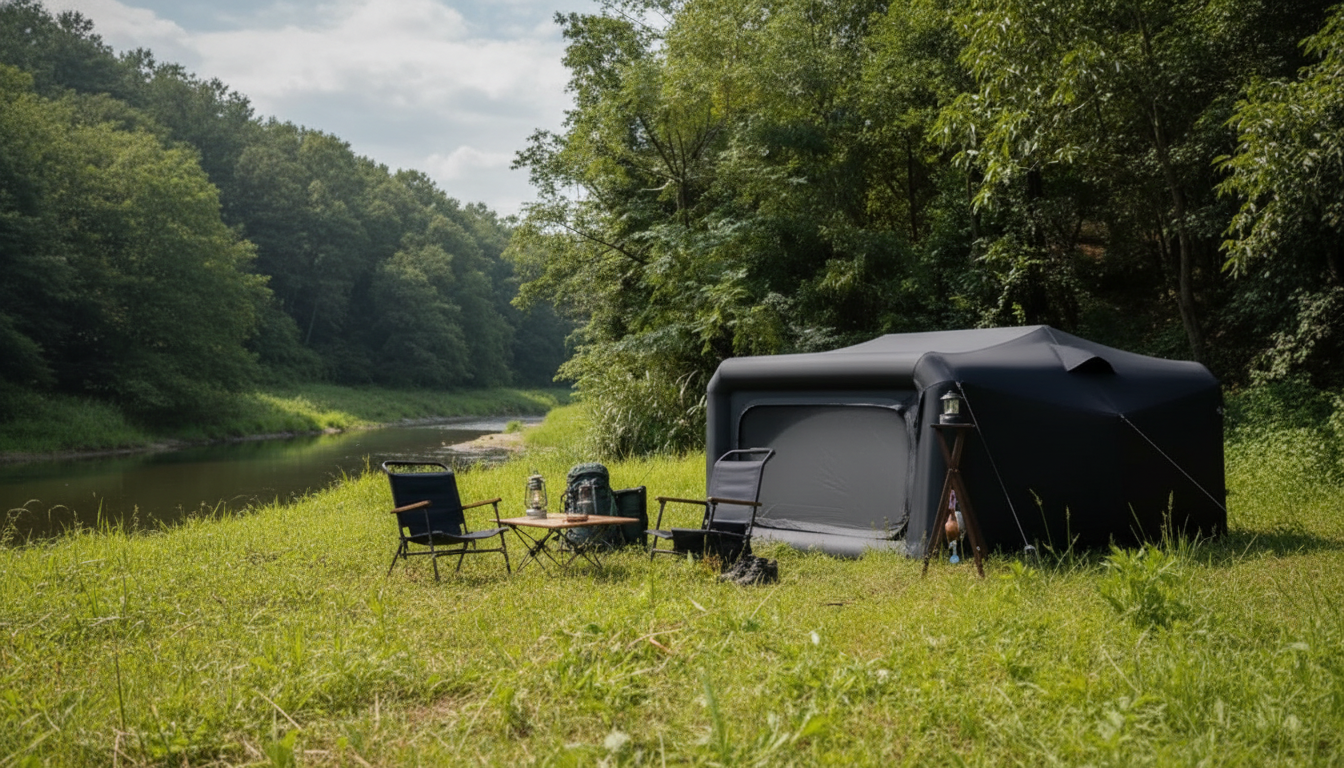
An inflatable tent built with Oxford cloth is designed for quick pitching, stable structure, and durable fabric performance across common campsite conditions. This guide covers what to look for in an inflatable Oxford cloth tent, how setup typically works, how it handles wind and rain, and how to maintain it for repeated trips.
If fast setup and a sturdy, family-friendly shelter are priorities, consider the Inflatable Oxford Cloth Camping Tent, which pairs an air-beam frame with a tougher fabric style commonly used in outdoor gear.
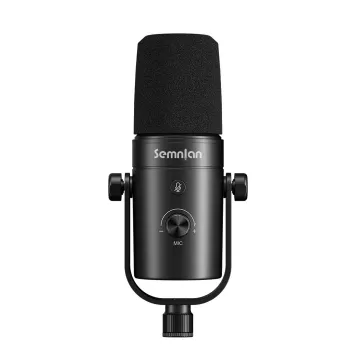
For added campsite comfort beyond shelter, some campers like to bring compact content-creation or comms gear for family videos or group calls; the USB Gaming Microphone Kit with Arm Stand can be a practical option when you have vehicle power or a portable power station.
A helpful habit is doing one full practice pitch at home. It clarifies where each guyline lands, how tight the fly needs to be to shed water, and how much pump time is normal for the correct pressure.
For campsite safety basics—especially around weather changes and situational awareness—review guidance from the National Park Service. If storms are possible, follow NOAA lightning safety recommendations and move to a safer location rather than “riding it out” in any tent.
| Factor | Inflatable air-beam tent | Traditional pole tent |
|---|---|---|
| Setup speed | Typically faster with fewer parts; inflate and tension | Can be slower with multiple poles and clips |
| Failure mode | Can lose pressure; often repairable with patches/valves | Poles can bend/snap; replacement parts vary |
| Wind response | Flexes and rebounds when well-guyed | Can be very strong, but rigid poles may fail under severe gusts |
| Packed size/weight | Often bulkier and heavier | Wide range; lightweight backpacking options common |
| Best for | Car camping, base camp comfort, quick pitch | Backpacking, mixed use, widely available price ranges |
When packing away, fold along natural beam lines to push remaining air toward the valves. Store in a cool, dry place, and avoid compressing it under heavy items for long periods. For low-impact camping habits that also protect the places you pitch, follow Leave No Trace’s 7 Principles.
Small pressure changes overnight are common because cooler temperatures reduce air pressure, so a quick morning top-off can be normal. If pressure drops quickly, check that valves are fully seated and free of grit, and inspect beam sleeves for abrasion. Multi-chamber beams help because one section losing pressure doesn’t always collapse the entire structure.
Oxford cloth can perform well in heavy rain when it’s paired with a quality coating, taped or sealed seams, and a well-designed bathtub floor. Rainfly coverage and proper tensioning matter just as much as fabric choice, since sagging panels can pool water and allow seepage at stress points.
Wind stability depends heavily on using all guy points, choosing stakes that match the soil (and upgrading for sand or soft ground), and maintaining the recommended beam pressure. Picking a sheltered site and orienting the tent to reduce broadside gusts usually makes a bigger difference than the frame type alone.











Leave a comment