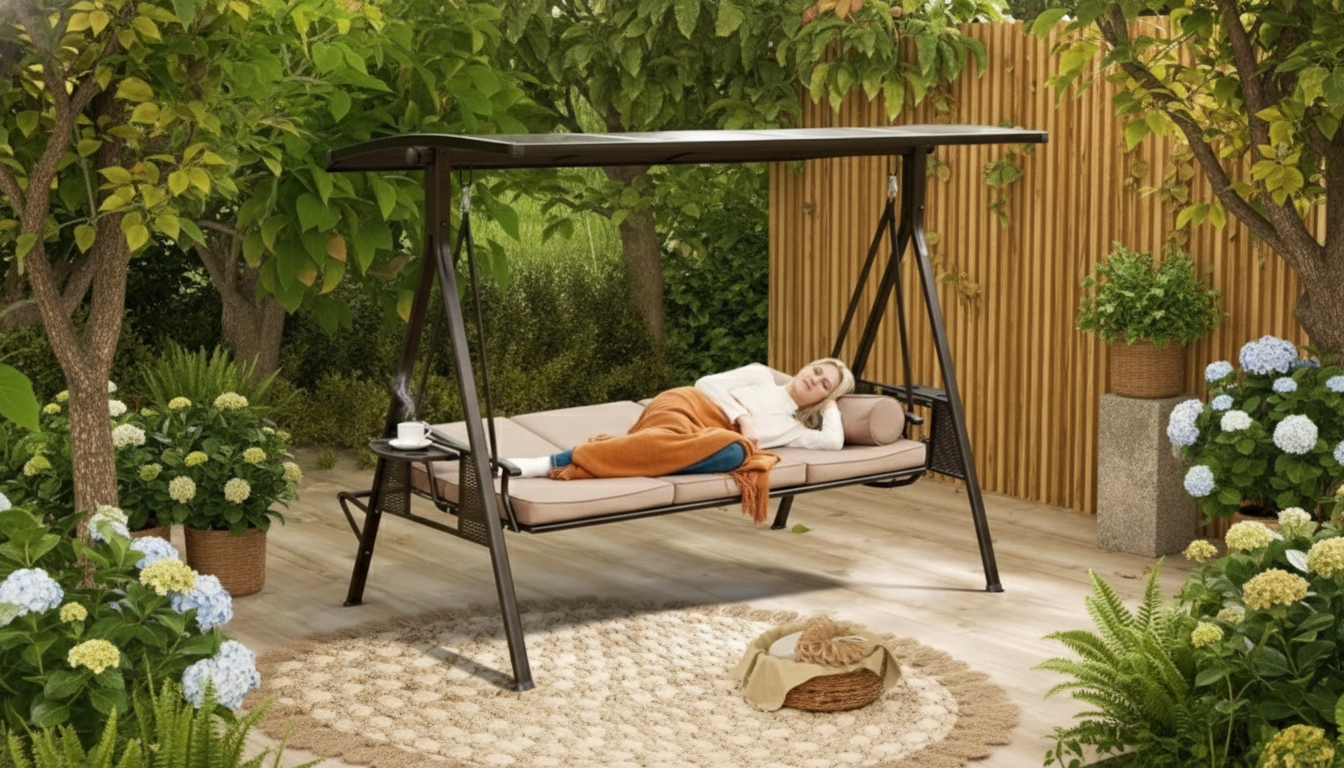
A patio swing with a hardtop canopy creates a shaded, breezy spot for reading, chatting, or unwinding outdoors. The right setup feels relaxing from day one and stays that way—without constant readjusting, wobbling, or weather-related wear. Below are the key comfort, stability, and care details to look for when choosing (and placing) a 71″ swing, plus easy upkeep habits that help it look polished season after season.
A hardtop canopy shifts a patio swing from “nice seating” to a more structured outdoor destination. It typically looks cleaner over time, delivers steadier shade, and can feel more architectural—especially on a deck, by a garden path, or in a poolside corner.
For sun safety, shade is one of the simplest upgrades you can add to an outdoor hangout. If you’re planning your placement around sun exposure, it helps to check the EPA’s UV Index guidance and general shade tips from the Skin Cancer Foundation.
| Feature | Hardtop canopy | Fabric canopy |
|---|---|---|
| Shade consistency | Stays rigid and provides stable coverage | Can ripple or sag depending on tension and wind |
| Light rain handling | Usually sheds water better (still avoid pooling) | May soak through or stretch when wet |
| Wind behavior | Can act like a sail; secure placement matters | May flutter; fabric can be removed seasonally |
| Maintenance | Wipe-clean surface; check fasteners | Needs periodic cleaning; fabric may fade over time |
| Seasonal storage | Typically stays assembled; cover recommended | Canopy may be removed and stored indoors |
A 71″ outdoor swing is a sweet spot for many patios: roomy enough to feel lounge-worthy, but not so wide that it dominates smaller decks. The important part is measuring the real footprint and planning how people will move around it.
Comfort is also about small habits: keeping a light throw nearby for cooler evenings, or adding a slim side table so drinks and books aren’t balanced on cushions.
A patio swing should glide—not shimmy. Stability comes from the frame’s geometry, the suspension hardware, and the surface underneath. Even a great swing can feel “off” if it’s placed on uneven pavers or a sloped concrete pad.
If children will use it, add extra clearance and set simple rules (no standing on the seat; no pushing from the side), which helps protect both the hardware and the riders.
Outdoor furniture lasts longer when it can dry quickly and avoid constant stress from sun, water, and wind. A hardtop canopy helps with shade, but placement still matters.
If you’re aiming for an instant, shaded seating upgrade, the 71″ Outdoor Patio Swing with Hardtop Canopy is a single-piece solution that brings gentle motion and overhead coverage to patios, decks, and garden corners. It works well as a stand-alone relaxation seat or as the focal point of a compact conversation zone—try pairing it with a small outdoor side table and a low-profile rug to define the area.
For homes that blend indoor and outdoor entertaining, a clean storage piece near the patio door can keep candles, throws, and hosting essentials organized. The Modern Nordic TV Stand and Storage Dresser can serve as a tidy staging area indoors while your swing becomes the outdoor destination.
Generally yes with a protective cover and periodic hardware checks. In harsh winters or frequent storms, storing cushions indoors and covering the frame helps prevent moisture damage and finish wear.
Plan extra clearance in front and behind for the swing arc, plus side clearance for arm movement and safe entry/exit. Leave more room if children will use it or if the swing will be placed near railings and planters.
Wipe it with mild soap and water, rinse, and dry. After storms, remove debris promptly to reduce staining and prevent water pooling.








Leave a comment