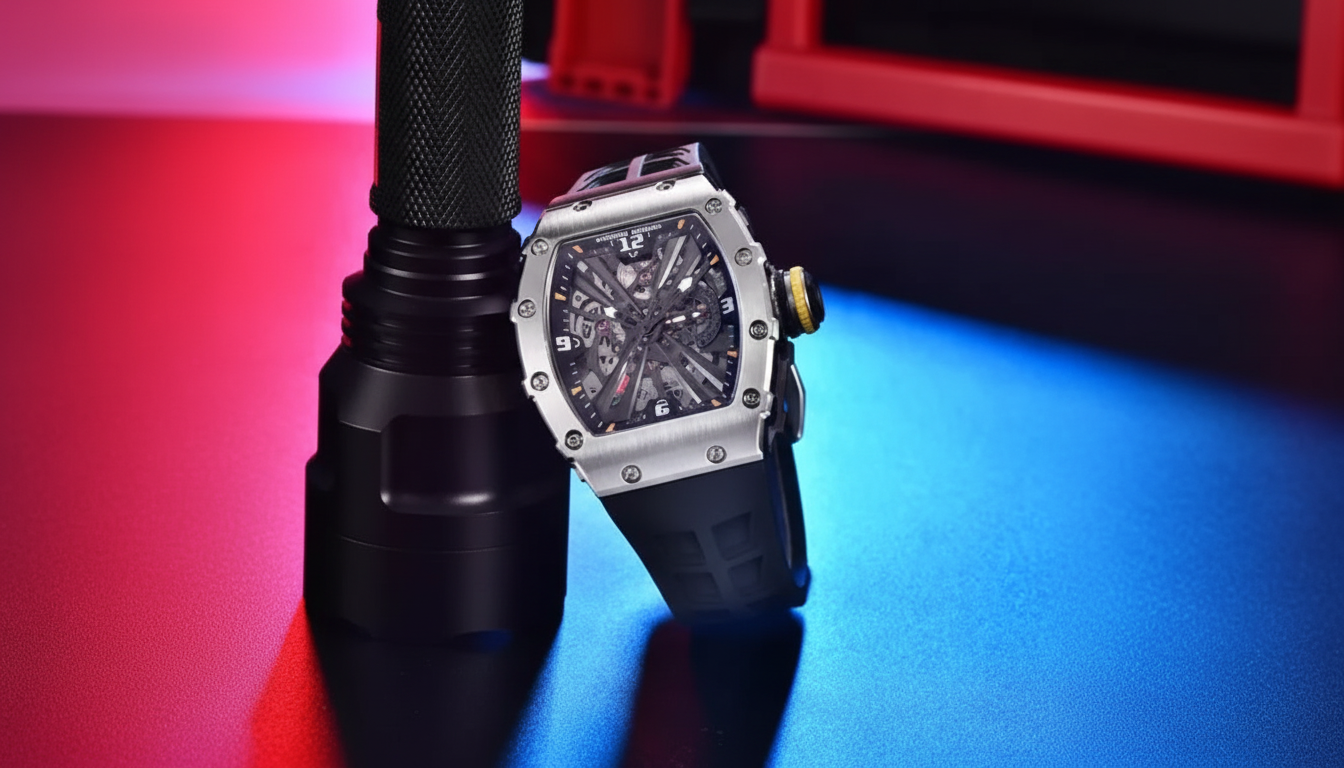
A skeleton dial brings mechanical style to the wrist, while a quartz movement keeps timekeeping simple and dependable. Pair that with sapphire glass for scratch resistance and a sport silicone strap for comfort, and the result is a watch built for daily wear—workdays, weekends, and workouts alike. This guide breaks down what matters most: materials, comfort, durability, and how to get the best fit and lifespan from a sporty skeleton watch.
This category stands out because it mixes “look at the mechanics” personality with practical, grab-and-go usability. A skeleton dial (open or partially open) gives a technical, modern aesthetic that’s more visually engaging than a standard solid dial—without requiring the lifestyle commitment of a fully mechanical watch.
If you want that modern “machine-on-the-wrist” style but prefer simple ownership, consider the Skeleton Quartz Watch for Men with Sapphire Glass and Sport Silicone Strap.
When a watch is meant for frequent wear, the two materials you’ll feel and see most are the crystal (the clear cover over the dial) and the strap. Choosing sapphire and silicone is a practical combination for keeping the watch looking sharp while staying comfortable through busy days.
Sapphire is prized because it resists scratches far better than mineral glass, helping the watch stay clear and “new-looking” longer—especially if your wrist meets laptop edges, door frames, countertops, or gym equipment. If you want a deeper explainer of crystal types, this overview from Hodinkee breaks down sapphire vs. mineral vs. acrylic in plain terms.
What sapphire doesn’t solve: it’s not a force field. Hard impacts can still chip or crack any crystal, especially if the edge takes the hit. Think “scratch-resistant,” not “drop-proof.”
Silicone is lightweight, flexible, and generally more forgiving in heat than leather. It also handles sweat and splashes well: rinse it, dry it, and you’re back to fresh. For comfort, leave a touch of airflow—overtightening can trap moisture and make the strap feel warm.
| Component | Option | Strengths | Trade-offs |
|---|---|---|---|
| Crystal | Sapphire | High scratch resistance; stays clear | Can still chip/crack with hard impact; higher cost |
| Crystal | Mineral glass | Affordable; decent clarity | Scratches more easily over time |
| Strap | Silicone | Sporty; water/sweat friendly; easy to clean | Can attract dust/lint; may feel warm if overtightened |
| Strap | Leather | Classic look; comfortable once broken in | Less ideal for sweat/water; needs conditioning |
| Strap | Stainless steel bracelet | Durable; dress-to-sport versatility | Heavier; sizing requires tools or a jeweler |
Quartz is the easy-living choice: it’s accurate, consistent, and doesn’t demand routine winding or special handling. Quartz timekeeping is driven by a battery and a vibrating quartz crystal; if you’d like the science background, the National Institute of Standards and Technology (NIST) offers general references on time and frequency standards.
Skeleton styling naturally draws attention, so sizing and fit matter as much for aesthetics as they do for comfort. A well-fitted watch should sit centered on the wrist without the case hanging past the edges.
If you like the idea of a sporty strap with a more technical dial presence, the Skeleton Quartz Watch for Men with Sapphire Glass and Sport Silicone Strap fits that “weekday-to-weekend” lane.
For scratch resistance, yes—sapphire typically stays clearer longer because it resists scuffs that can haze mineral glass over time. However, impact resistance is different: a hard hit can still chip or crack sapphire, so avoiding sharp knocks still matters.
Use a “one-finger snug” fit: secure enough that the watch won’t slide while you move, but not tight enough to trap sweat. After heavy sweating, rinse with mild soap and water and dry fully to help prevent irritation and odor.
It varies by movement and features, but many quartz watches need a new battery every 1–3 years. Replace it promptly when it dies, and if water resistance is important, consider having the seal checked during battery service.










Leave a comment