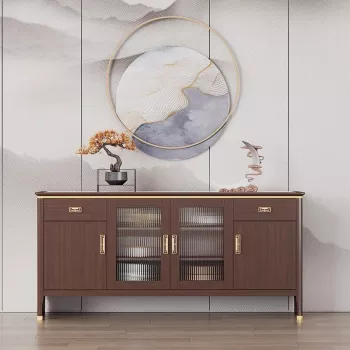
A modern minimalist sideboard keeps clutter out of sight while maintaining an airy, calm look. With long, low proportions and streamlined doors or drawers, it can act as a dining buffet, media credenza, or entryway organizer—adding storage without visually weighing down the room.
The end result is a piece that looks “quiet” in the room: it holds plenty, but it doesn’t ask for attention. That’s especially useful in open-plan spaces where too many visual interruptions can make a home feel busy.
Minimalist furniture tends to look best when it has space to breathe. Before choosing a sideboard, measure the wall and think about how people move through the room. The goal is simple: let the piece look intentional, and make sure every door and drawer can be used comfortably.
| What to measure | Why it matters | Tip |
|---|---|---|
| Wall width | Prevents overcrowding and looks intentional | Leave 6–12 in (15–30 cm) on each side if possible |
| Door/drawer clearance | Ensures functional access | Mock the swing/pull with painter’s tape on the floor |
| Baseboard depth | Avoids rocking or gaps at the wall | Look for a recessed back or add spacers if needed |
| Outlet locations | Helps plan lamps, chargers, or media gear | Note height and distance from edges |
| Floor type | Stability and scratch prevention | Use felt pads; consider leveling feet on uneven floors |
Minimalism works best when storage is tailored to real life. A sideboard that looks clean on the outside should also feel organized on the inside—so everyday items disappear quickly rather than migrating onto the top.
Material choice affects not only appearance, but also durability and how the piece behaves over time. Solid wood can show beautiful grain and can often be refreshed; engineered wood can offer stable panels that stay flatter in changing seasons when properly built.
For additional reading on emissions and responsible sourcing, see the U.S. EPA’s formaldehyde emission standards for composite wood and the Forest Stewardship Council (FSC) certification overview. Broader furniture sustainability and standards information is also available through BIFMA.
| Detail | Value |
|---|---|
| Product | Modern Minimalist Sideboard |
| Price | $1369.95 USD |
| Primary role | Closed storage with minimalist styling |
| Typical placement | Dining room, living room, entryway |
| Inventory note | Confirm stock and delivery details at checkout |
These terms overlap: sideboard and buffet are often dining-focused for serving and tableware storage, while credenza is commonly used in living rooms or offices. The biggest differences are typical height, interior layout, and where the piece is intended to live.
Leave about 6–12 inches on each side when possible so it doesn’t feel squeezed, and keep main walkways around 30–36 inches wide. Also confirm door and drawer clearance so you can fully open everything without hitting rugs, walls, or nearby furniture.
Yes, as long as the height, width, and stability suit your TV and viewing distance. Check for cable routing and ventilation, and avoid trapping heat-generating devices behind tightly sealed doors unless there’s adequate airflow.







Leave a comment