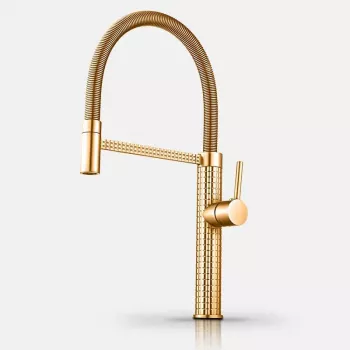
A statement-making kitchen upgrade that blends a warm gold brass look with a flexible, spring-style spout built for busy sinks. The rotatable design supports quick repositioning for rinsing, filling, and cleanup while keeping a premium, modern profile at the center of the kitchen. If you’re looking for a high-impact refresh without changing countertops or cabinetry, this style of faucet can deliver both day-to-day convenience and a polished, designer-forward finish. For more guidance, see Kitchen Faucets Antique Brass.
For a straightforward upgrade, consider the Luxury Gold Brass Kitchen Faucet with Rotatable Spring Design, which brings that “pro” visual presence into a residential kitchen while staying focused on practical movement and coverage. For further reading, see Double Handle High Arc Commercial Kitchen Faucet – Osina.
Kitchen faucets earn their keep during the busiest moments: rinsing produce, filling stock pots, cleaning sheet pans, and sweeping crumbs toward the drain. A rotatable spring-style design is built for that reality—especially in deeper basins or wider workstation sinks where a fixed spout can feel boxed in.
In day-to-day use, the “rotatable” advantage often shows up as fewer interruptions: you can aim water where you need it, keep big items in place, and transition from one basin to the other with less splashing and less repositioning of cookware.
A gold brass look brings warmth that plays well with popular kitchen palettes—think white quartz, natural oak, greige cabinets, marble-look surfaces, and matte black accents. If your kitchen already includes warm metals (brass pulls, champagne bronze lighting) this type of faucet can tie the room together and make the sink area feel intentional rather than purely utilitarian.
It’s also smart to pay attention to water performance and safety standards when choosing any faucet. If you’re comparing options, the EPA’s WaterSense guidance on faucets and accessories is a helpful reference point for water efficiency, and NSF/ANSI 61 explains a widely recognized health-effects standard for drinking water system components.
Spring-coil faucets tend to be taller and more visually prominent than standard gooseneck designs, so a quick check of your space can prevent surprises on install day. Before ordering, confirm the basics: hole configuration, clearance, and connection compatibility.
| Item to Check | Why It Matters | What to Measure/Confirm |
|---|---|---|
| Mounting holes | Ensures the faucet matches the sink/counter setup | Number of holes and spacing (if multi-hole) |
| Overall height | Prevents conflicts with cabinets or shelves above | Vertical clearance from deck to any obstruction |
| Spout reach | Determines how well water lands in the basin | Distance from faucet center to stream position |
| Rotation clearance | Ensures the rotatable design can move freely | Space around backsplash, windowsill, dish rack |
| Supply line compatibility | Avoids extra trips for adapters | Shutoff valve type and line size |
| Water quality | Affects maintenance routine and finish appearance | Hard-water spotting risk; filtration preferences |
If you’re coordinating a broader home refresh beyond the kitchen, pairing a standout fixture with clean-lined furnishings can keep the overall look cohesive. For example, the Modern Nordic TV Stand and Storage Dresser complements modern interiors with a streamlined profile and storage-forward design.
Many kitchens use a standard single-hole opening, but some sinks and countertops have multiple holes for separate handles or accessories. Measure how many holes you have (and their spacing if multi-hole) and plan for an optional deck plate/escutcheon if your setup needs wider coverage.
A rotatable spring design is intended to cover more sink area, which can be especially useful for double-bowl layouts. Confirm you have enough space around the backsplash or windowsill and check the product’s listed rotation range so movement isn’t blocked by nearby obstacles.
Use mild soap and water with a soft cloth, then dry the surface to reduce water spots. Avoid abrasive pads and harsh chemicals, and clean the aerator/spray outlet occasionally if mineral buildup appears.












Leave a comment