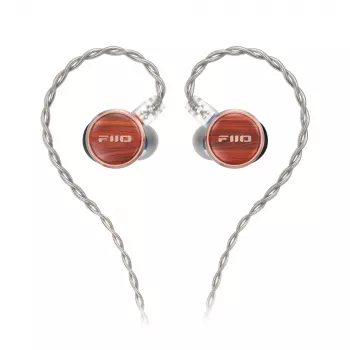
Planar in-ear earphones have earned a following for their speed, tight bass control, and clean layering—traits that help recordings sound organized even when the mix gets dense. This HiFi planar model pairs that technical character with a wood faceplate aesthetic and a detachable cable you can replace or upgrade over time. The result is a detail-forward, everyday-friendly setup for commuting, desk listening, and long sessions when comfort and practicality matter as much as resolution.
Most in-ear monitors use a dynamic driver (a voice coil moving a cone-like diaphragm) or balanced armatures (tiny drivers optimized for efficiency). Planar IEMs take a different route: they use a thin diaphragm driven more evenly across its surface. That approach can reduce certain types of distortion and deliver fast “start/stop” behavior, which listeners often describe as quick transients and crisp definition.
If you’re comparing guidance on fit, tuning, and general headphone selection, Wirecutter’s overview is a helpful baseline: How to Choose the Best Headphones.
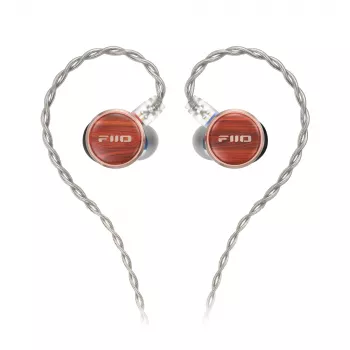
The wood faceplate adds a distinctive, premium look that stands out from typical all-resin or all-metal shells. Since wood is a natural material, grain and tone can vary slightly from unit to unit—part of the appeal if you like gear that feels unique rather than mass-uniform.
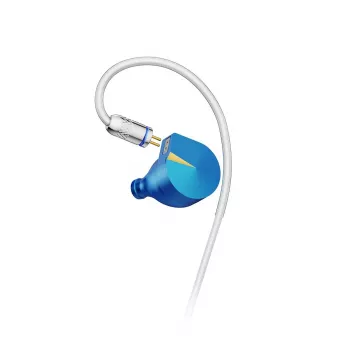
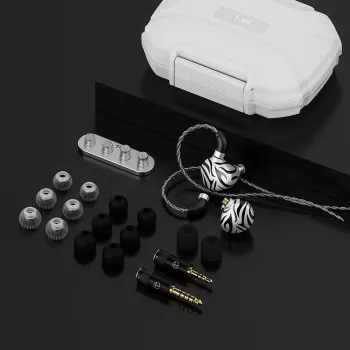
A detachable cable is a practical feature that can extend the life of your earphones. Instead of retiring an otherwise working set due to a worn plug or frayed wire, you can swap the cable and keep listening. It also opens the door to convenience upgrades, like different lengths or terminations, if your source supports them.
Planar IEM tuning varies by model, but many share a family resemblance: fast bass, clear mids, and a revealing top end that highlights details in recordings. Getting the best from that character depends heavily on fit and pairing.
| Aspect | Typical Planar IEM Trait | Practical Tip |
|---|---|---|
| Bass | Tight, quick, controlled | Prioritize a strong seal with tips to avoid bass drop-off |
| Midrange | Clean layering, clear vocals | Try a neutral source for most accurate tone |
| Treble | High detail, can be revealing | Use foam tips or gentle EQ if treble feels sharp |
| Dynamics | Fast transients, strong microdetail | A better dongle/DAC can improve punch and control |
For measurement concepts and terminology (like frequency response and what it does and doesn’t tell you), RTINGS maintains a useful reference: Headphones glossary and measurement concepts.
They can work from many phones, but a decent dongle or portable DAC/amp often helps them sound more controlled and dynamic. Power needs vary by model and your preferred listening volume.
A detachable cable makes it easier to replace a worn cable, extend product lifespan, and troubleshoot issues by swapping cables. It can also let you change terminations, as long as you match the connector type (like MMCX vs. 2‑pin).
Try foam tips, adjust to a slightly deeper fit, or pair with a warmer-sounding source. A mild EQ cut in the upper treble/presence region and keeping volume moderate can also reduce sharpness.








Leave a comment