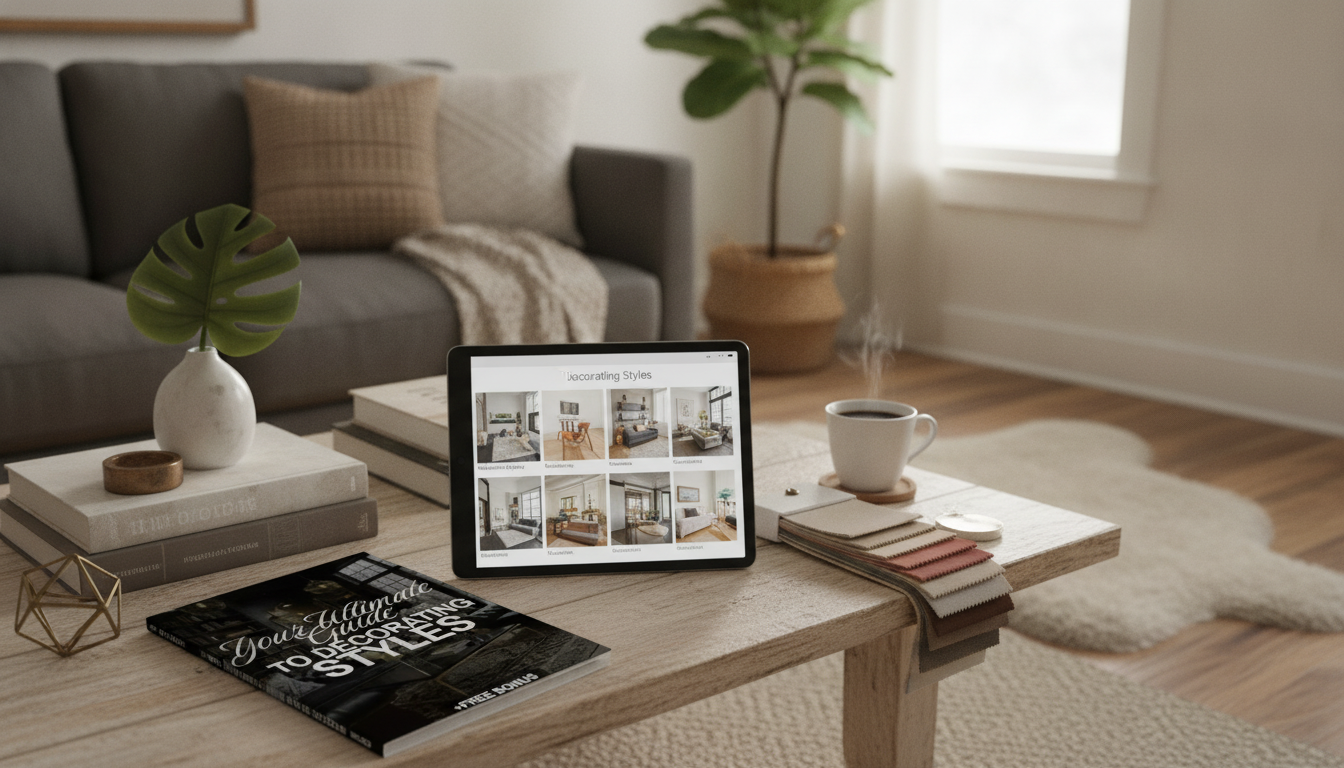
Decorating styles can feel overwhelming because many homes blend influences—modern lines with vintage accents, cozy textures with minimal palettes. The easiest way to get unstuck is to focus on visual cues: shapes, materials, color temperature, and a few “signature” pieces that repeat from room to room. Below is a clear breakdown of popular home decor styles, plus a simple method for choosing (and blending) a look that stays cohesive over time.
Before buying anything new, look at the rooms that already feel best and identify what stays consistent.
Use the chart to narrow down a leading style, then refine with accents and textures. If two styles appeal, compare their materials and choose the overlap as your unifying thread (for example, light oak can work for Nordic, Japandi, and modern).
| Style | Key hallmarks | Typical palette | Signature materials | Best for |
|---|---|---|---|---|
| Modern | Clean lines, open space, minimal ornament | Neutrals with bold accents | Glass, steel, smooth woods | Living rooms, condos, offices |
| Contemporary | Current trends, mixed finishes, flexible rules | Warm neutrals, black accents | Metal, stone, performance fabrics | Open-plan homes |
| Scandinavian / Nordic | Airy, functional, cozy layers | White, soft gray, pale wood | Light oak, wool, linen | Small spaces, family rooms |
| Japandi | Minimal warmth, calm textures, low-profile pieces | Beige, taupe, ink, muted green | Wood, clay, linen, paper | Bedrooms, reading nooks |
| Mid-Century Modern | Tapered legs, retro shapes, graphic contrast | Teak tones, mustard, olive | Walnut/teak, leather, brass | Dining rooms, lounges |
| Industrial | Exposed structure, utilitarian feel | Charcoal, rust, concrete gray | Metal, reclaimed wood, leather | Lofts, basements |
| Farmhouse (Modern Farmhouse) | Comfortable, practical, rustic touches | Cream, warm white, black accents | Wood, cotton, iron | Kitchens, gathering spaces |
| Traditional | Classic symmetry, rich details, heritage patterns | Warm neutrals, deep jewel tones | Dark woods, velvet, brass | Formal living, dining |
| Bohemian | Collected look, layered patterns, global accents | Earthy tones with saturated pops | Rattan, textiles, mixed woods | Studios, creative spaces |
| Coastal | Relaxed, light-filled, breezy textures | White, sand, sea glass blue | Linen, jute, weathered wood | Beach homes, sunrooms |
A storage-forward piece can do a lot of heavy lifting in this look—clean lines, light wood, and hidden clutter control. Consider the Modern Nordic TV Stand and Storage Dresser as an anchor for a living room that needs calm surfaces and quiet organization.
For a ready-to-use reference, explore Your Ultimate Guide to Decorating Styles: Explore Types of Home Decor Styles eBook for Every Home Aesthetic.
Scandinavian/Nordic, contemporary, and modern farmhouse tend to be the most practical because they favor simple surfaces, durable textiles, and functional layouts. Choose washable fabrics, closed storage, and a limited number of accent items to make tidying fast.
One dominant style with one supporting influence usually looks the most cohesive. Consistency comes from repeating a core palette, a few key materials, and a shared shape language across rooms.
Keep the palette restrained, then increase interest through texture (woven, matte, glossy, soft) rather than extra colors. Add one statement element—like bold art or a standout light—and prioritize multi-functional furniture and negative space so the room can breathe.












Leave a comment