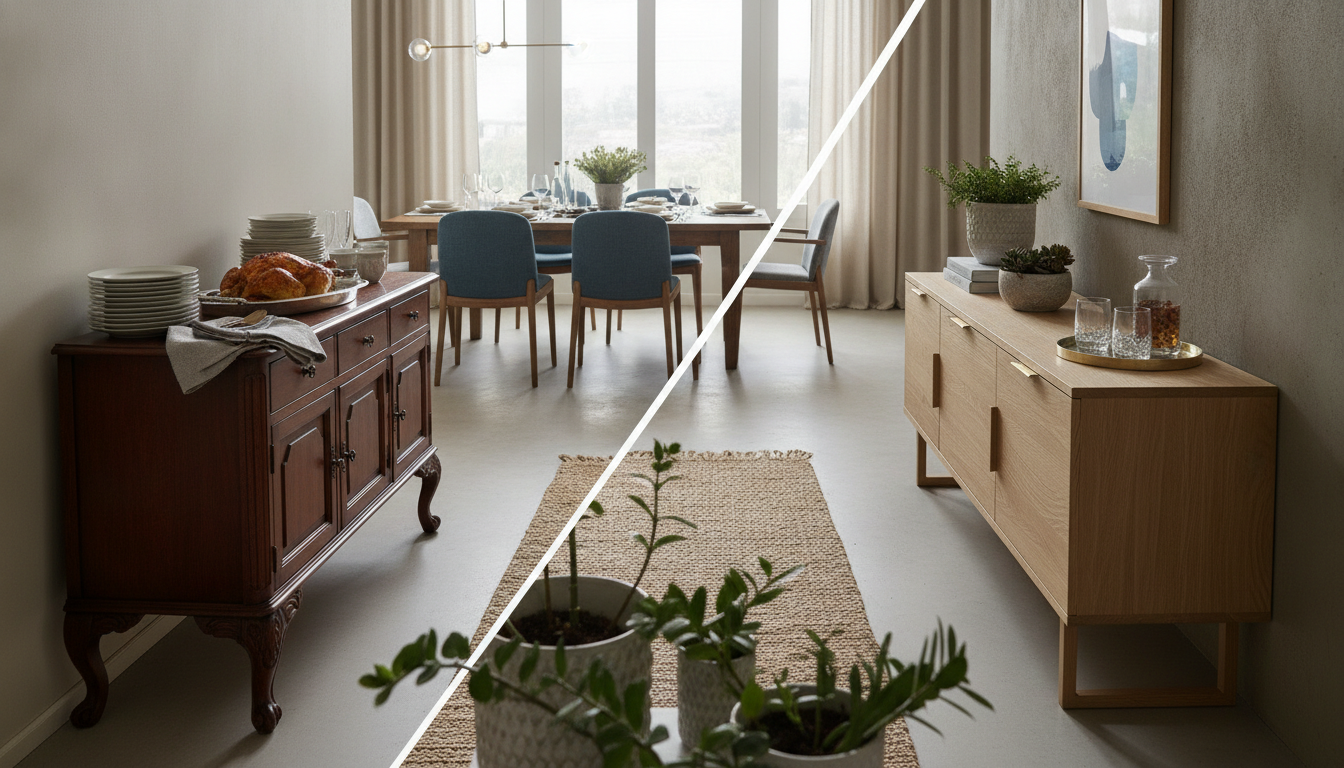
Sideboards and buffets are closely related storage pieces, and many retailers use the terms interchangeably. The clearest difference is the intended use and where they traditionally live: a sideboard is a versatile storage cabinet often used in dining rooms, living rooms, or hallways, while a buffet is designed to support serving food during meals, typically in the dining room.
A sideboard is usually a long, low cabinet meant for everyday storage—think dishes, linens, glassware, board games, or entryway essentials. Many sideboards have a clean, furniture-like silhouette that blends into different rooms. Because they aren’t strictly “serving” furniture, sideboards often prioritize closed storage (doors and drawers) and a tidy look.
A buffet is traditionally placed along a dining room wall and used during meals to hold platters, warming trays, or barware. The top surface tends to be treated as a functional serving station, so durability and easy-to-wipe finishes can matter more. Some buffets are paired with a hutch or upper cabinet, though modern versions may look identical to a sideboard.
If you want a piece that can move from room to room and still feel natural, “sideboard” is usually the safer mental model. If you primarily want a dining-room command center for hosting—extra plates, serving pieces, and a setup surface—“buffet” is the practical pick. In real shopping terms, dimensions, storage layout (drawers vs. shelves), and features like glass doors or adjustable shelves often matter more than the label.
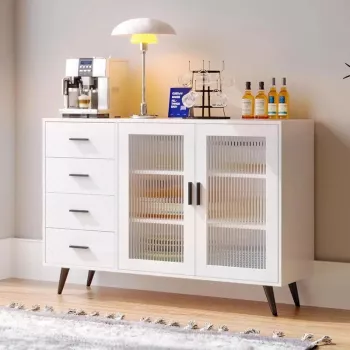
For a deeper look at a modern option that bridges both categories, see this guide: white sideboard buffet with glass doors and adjustable shelves.
A credenza is a low storage cabinet used to organize and display items, often in dining rooms, offices, or living rooms. It’s commonly used for dishes and serveware, or for media and office supplies depending on the room.









Leave a comment