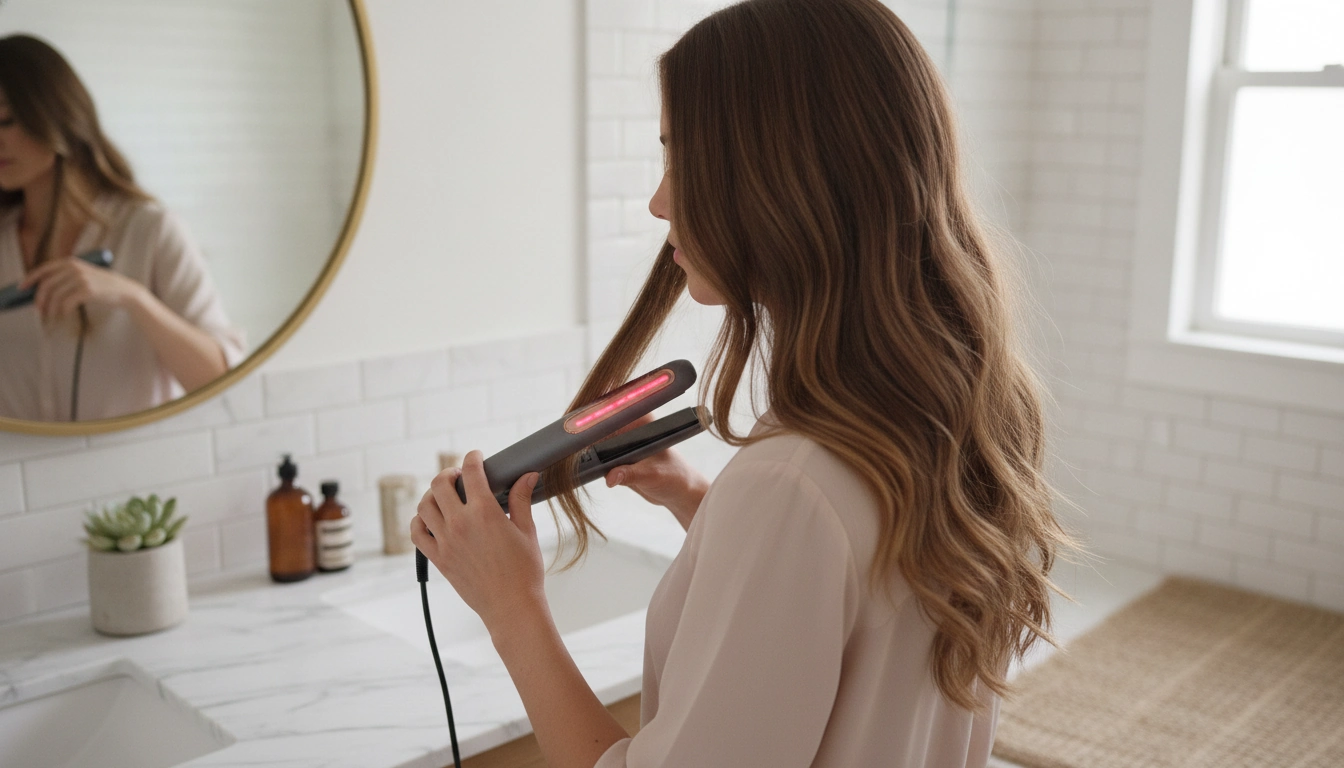
An infrared hair straightener can be worth it if heat damage, frizz, or uneven results are recurring problems. Infrared heat is designed to warm hair more evenly and gently than some traditional plates, which can help reduce scorching hot spots that lead to dryness and breakage. Many people also find they need fewer passes to get a smooth finish, which matters because repeated passes are often what do the most damage.
It’s especially useful for hair that’s prone to dryness or puffiness, since infrared styling is often paired with features like steam and conditioning treatments (such as argan oil) to help maintain softness and shine. The payoff is usually smoother results with less “fried” feel—provided the tool is used correctly and the temperature isn’t cranked higher than necessary.
Infrared straighteners tend to make sense if you straighten frequently, struggle with frizz in humidity, or have thick/coarse hair that normally takes many passes. They can also be a better match for color-treated or chemically processed hair because even heating and fewer passes may help preserve the hair’s condition over time.
If you only straighten occasionally, already get great results with a quality ceramic/tourmaline iron, or keep your styling routine very minimal, the difference may feel small. Also, “infrared” on the box doesn’t automatically mean better—plate quality, temperature control, and technique still determine the outcome.
For a deeper breakdown of how infrared and steam straightening work together—and what to look for in plate materials, heat settings, and conditioning add-ons—see the full guide here: infrared steam hair straightener with argan oil guide.
For Infrared Hair Straightener: Worth the Upgrade?, the best answer depends on fit, material, care instructions, and how the product will be used day to day.
Yes, as long as you use a lower temperature and minimal passes. Fine hair can straighten quickly, so precise heat control matters more than maximum heat.









Leave a comment