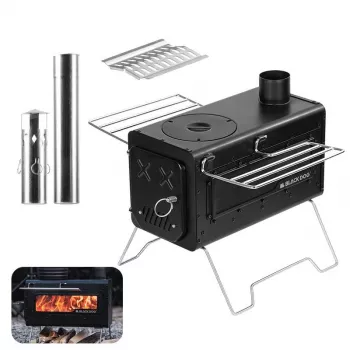
A compact wood-burning stove can turn a cold campsite into a warm, functional base for cooking and comfort—especially when gear space is limited. Stainless steel is a practical choice for repeated burns in damp mornings, windy ridgelines, and the constant pack-and-unpack rhythm of car camping and base camps. The result is a stove that’s easy to bring, straightforward to run, and tough enough to earn a spot in the “always comes along” camp tote.
This style of portable stove is designed around one simple advantage: heat on demand using small natural fuel you can often find nearby (where allowed). It’s a dependable option when fuel canisters are inconvenient, or when a backup heat source is the difference between a comfortable camp kitchen and a cold, complicated setup.
Stainless steel earns its reputation outdoors because it stays predictable through weather swings and repeated heating cycles. Compared with thin, coated metals that can flake or rust once the finish is compromised, stainless holds up well to condensation, soot, and the occasional hard knock in a packed bin.
Before committing a stove to your kit, it helps to think like a camp cook: what pot sizes you actually use, how often you want to feed sticks, and how much space you’re willing to dedicate in the vehicle. A quick test-burn outdoors before your first trip is the fastest way to learn ideal stick length and how the airflow “wants” to run.
| What to check | Why it matters outdoors | What to look for when testing |
|---|---|---|
| Stove body material | Affects durability, rust resistance, and long-term warping | Stainless panels feel rigid; seams and joints stay aligned after a hot burn |
| Firebox access | Controls how easily fuel is fed without losing heat | Door/lid opens smoothly; adding sticks doesn’t spill embers |
| Airflow control | Determines how fast the fire runs and how clean it burns | Flame responds when vents are adjusted; less smoke once the fire is established |
| Cooking surface stability | Prevents tipping with pots and pans | Pot supports feel steady; cookware doesn’t rock when stirred |
| Packability | Impacts whether it’s truly “bring-every-trip” gear | Fits in vehicle bins or camp tote; manageable carry and storage |
| Ash handling | Speeds cleanup and reduces mess in camp | Ash can be emptied without scattering; minimal sharp edges during cleanup |
Any indoor or semi-enclosed use must be treated as a carbon monoxide risk. Wood combustion can produce carbon monoxide (CO), and it can build quickly in low-ventilation spaces. For CO safety basics, see the CDC’s carbon monoxide poisoning prevention guidance and the NFPA carbon monoxide safety resources.
A cleaner burn is easier to cook on, wastes less fuel, and leaves less soot on cookware. The goal is simple: dry fuel, good airflow, and a steady coal bed.
Wood-burning is a privilege that depends on conditions and local rules. Always check restrictions and prioritize low-impact habits. Leave No Trace offers clear guidance on minimizing impacts when fires are permitted: Leave No Trace—Campfires.
It can be dangerous without continuous cross-ventilation and a proper heat-safe setup, because wood smoke can contain carbon monoxide that may build up quickly. Use a non-combustible base, keep generous clearance from fabric, never run it unattended, and use a camping-rated CO alarm when operating near enclosed spaces.
Dry, seasoned small sticks and split kindling burn the cleanest and are easiest to manage. Wet or very resinous wood tends to smoke more and can coat cookware quickly, so feeding smaller dry pieces more often usually works best.
Use dry fuel, keep airflow paths open between sticks, and build a hot coal bed before trying to cook for long. Avoid overloading the firebox, adjust vents if available, and manage wind so it doesn’t smother the flame or push smoke back toward the stove.









Leave a comment