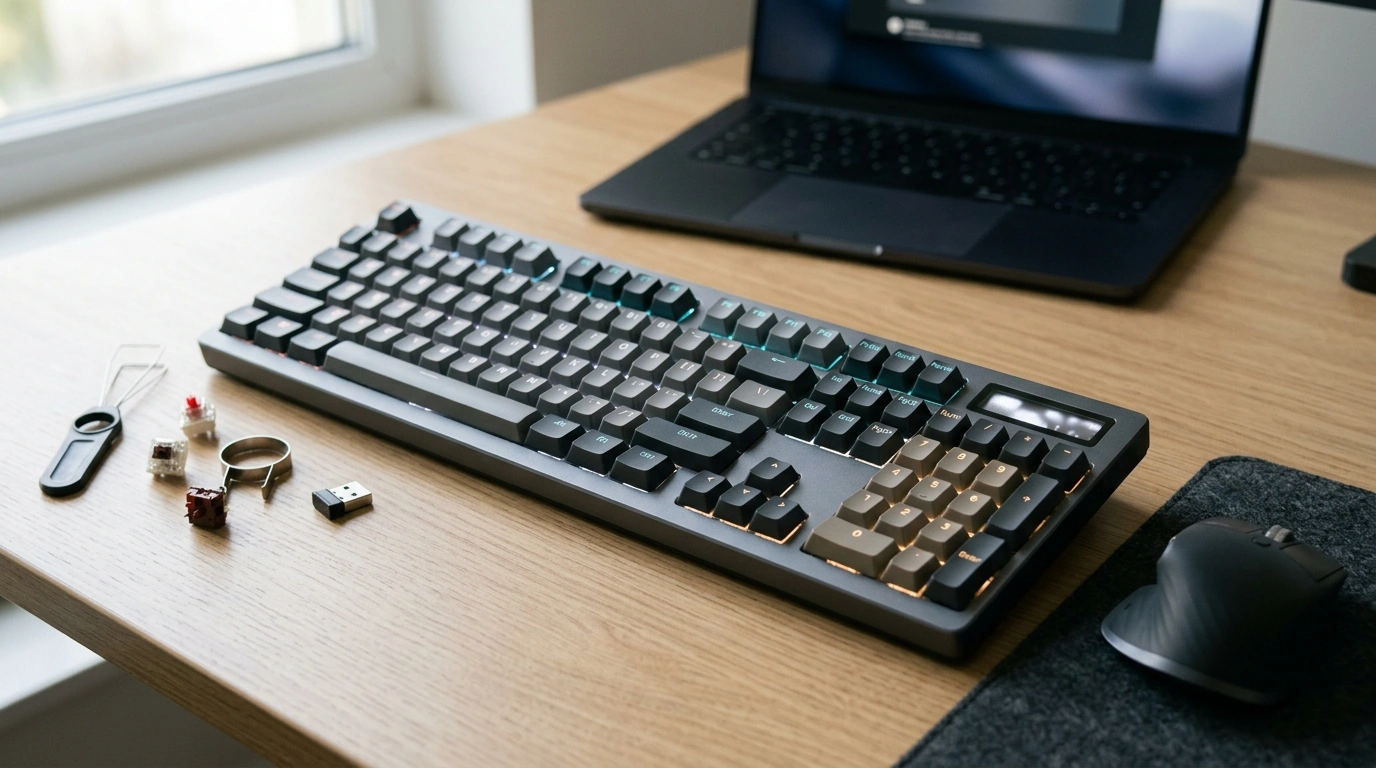
A full-size mechanical keyboard can streamline work and play with a dedicated numpad, responsive switches, and fast access to shortcuts. Add wireless flexibility, customizable RGB lighting, a built-in smart display, and hot-swap sockets, and the result is a setup that adapts to different devices, workflows, and preferences without committing to one switch type forever.
If you’re upgrading a home office, dialing in a gaming station, or building a clean multi-device desk, the Full-Size Wireless Mechanical Keyboard with RGB, Smart Display & Hot-Swap Keys combines the comfort of a familiar layout with modern customization that’s easy to maintain over time.
Use this checklist to match features to daily tasks: data entry, gaming, creative work, or mixed device use. Prioritize layout and connectivity first, then tune feel (switches) and ambiance (RGB/display).
| Feature | What it does | Why it matters day to day |
|---|---|---|
| Full-size layout (with numpad) | Adds numeric keypad and navigation cluster | Faster number input and familiar spacing for office workflows |
| Wireless connectivity | Works without a constant cable connection | Cleaner desk, easier laptop/tablet use, flexible positioning |
| RGB lighting | Customizable illumination across keys | Better visibility in dim rooms and quick visual identification of key groups |
| Smart display | Shows real-time keyboard info (varies by model/settings) | Fewer interruptions when checking modes or status |
| Hot-swap switch support | Swap switches without soldering | Test different switch types and replace worn switches easily |
| Mechanical switches | Distinct actuation and feedback compared to membranes | More consistent typing feel and clearer tactile/audio response |
| Multi-device compatibility | Works with common operating systems and devices | One keyboard for desktop + laptop setups |
Wireless is at its best when it feels invisible—no dropouts, no re-pairing headaches, no “why isn’t it connecting?” moments. Start by confirming which wireless modes are supported (commonly Bluetooth and/or a 2.4 GHz receiver). Bluetooth is convenient for laptops and tablets, while a dedicated receiver can be preferred when you want steadier low-latency behavior for fast-paced inputs.
For multi-device desks, assign profiles per device so switching is a button press instead of a full re-pairing cycle. If you run into connection hiccups, keep the keyboard within a reasonable range and avoid stacking wireless receivers right next to dense USB 3.0 hubs or crowded dongle clusters. For reference on Bluetooth standards and capabilities, see the Bluetooth Core Specification overview.
A smart display earns its spot when it saves time. Depending on the model and settings, it can show the active connection mode, battery status, or which profile is currently loaded—small details that prevent interruptions mid-task. Instead of guessing whether you’re on your work layer or your gaming layer, you can confirm instantly before you start typing.
If customization is available, keep it minimal for clarity. Status indicators beat clutter: the best display is the one you can read at a glance without thinking.
RGB is often treated as decoration, but it’s most useful when it becomes a visual map. Assign colors by zones: make the numpad one color for finance or data entry, set the navigation cluster to another for editing, or highlight WASD and nearby abilities for games. The goal is faster recognition and fewer “wrong key” moments in the dark.
Save at least two presets: a low-brightness “focus” profile for daytime and a brighter “night” profile for visibility. If battery life matters, dim the brightness and disable animations while in wireless mode—static lighting typically draws less power than complex effects.
If you plan to experiment with switches, swap a small cluster first—like WASD or the numpad—so you can compare feel and sound without redoing the entire board. And if you use a lot of peripherals, it can help to understand how USB devices are managed at a standards level via the USB Implementers Forum resources.
Compatibility depends on the socket type and the switch pin format. Many boards support MX-style switches, but you’ll still want to confirm whether the sockets accept 3-pin and/or 5-pin switches, and install carefully to avoid bending pins.
Yes—lighting effects and an active display typically increase power draw. Lower brightness, choose static lighting, and enable sleep/auto-off features to extend runtime between charges.
A full-size board is excellent for mixed use and for games that benefit from extra keys, but smaller layouts can free up mouse space. The best choice depends on desk space, whether you need a numpad, and how much room you want for mouse movement.









Leave a comment