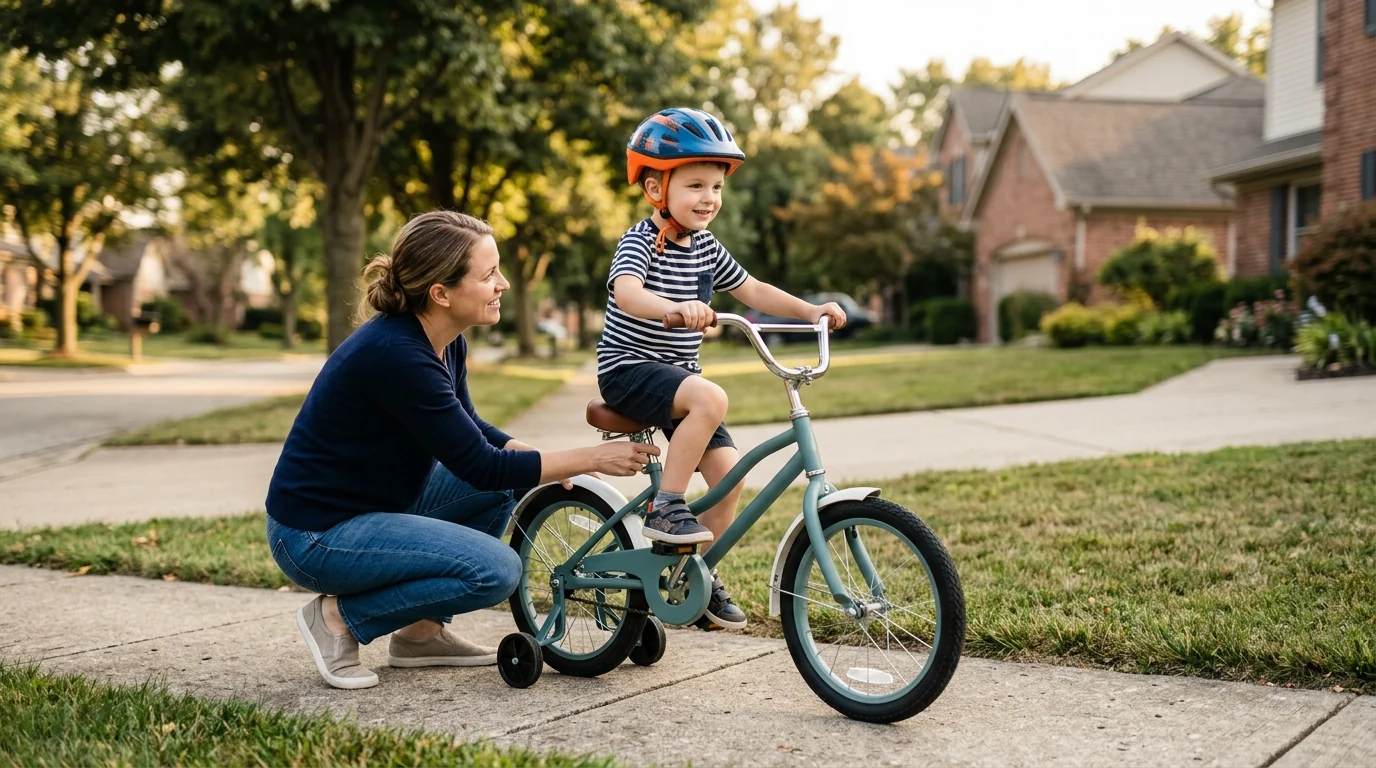
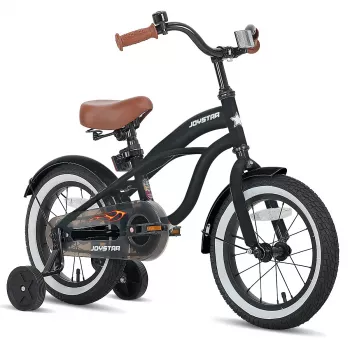
A cruiser-style kids bike with training wheels blends comfort, stability, and easy handling—ideal for early riders who want a smooth, upright ride. With relaxed geometry and a steady feel at low speeds, cruiser bikes help kids focus on the basics: starting, stopping, steering, and building confidence one short ride at a time.
If safety is top of mind, it’s worth reviewing helmet guidance from the U.S. Consumer Product Safety Commission and injury-prevention tips from the CDC before the first neighborhood cruise.
Not every first bike “feels” friendly to a new rider. Cruiser-style kids bikes tend to feel approachable because they’re designed for comfort and calm, predictable handling rather than speed.
Fit is the difference between “This is fun!” and “This feels scary.” Start with your child’s height and inseam, then confirm the basics: stand-over clearance, reach, and braking access.
| Fit item | What to look for | Why it matters |
|---|---|---|
| Seat height | Ball of the foot can reach the ground when seated (beginners), or toes down with confidence | Easier starts/stops and fewer tip-overs |
| Handlebar reach | Hands rest naturally; no straight-arm stretching | Better steering control and less fatigue |
| Brake levers | Child can squeeze smoothly with 2–3 fingers | Safer stopping and better confidence |
| Training wheel contact | Both wheels touch lightly and evenly when upright | Reduces rocking and sudden lifts |
Training wheels are most helpful when they provide a “safety net” without replacing balance entirely. A careful setup can encourage smoother steering and a quicker transition later.
New riders learn best when nothing hurts and nothing surprises them. Comfort keeps practice sessions longer; safety features help prevent common early mishaps.
Consistency beats marathon sessions. Short practice windows with one goal per day can reduce frustration and build momentum.
For families looking for a comfortable, beginner-friendly ride that supports early practice, the Kids Cruiser Bike with Training Wheels is designed for steady neighborhood cruising and confidence-building sessions.
For comfort upgrades on other bikes in the household, the Ultralight Carbon 3D Printed Bike Saddle – Painless Road & MTB Racing Seat can be a useful add-on for longer rides. And for family outings that include snacks, layers, or a small first-aid kit, the Elegant Women’s Leather Tote Bag – 14 Inch Laptop Briefcase for Work & Daily Use doubles as a sturdy carry-all.
| Item | Detail |
|---|---|
| Product | Kids Cruiser Bike with Training Wheels |
| Price | 182.97 USD |
| Availability | In stock |
They should provide stability without carrying all the rider’s weight. Set them to lightly and evenly contact the ground so your child can still learn balance while feeling supported.
Look for consistent starts and stops, straight riding without heavy leaning, and controlled turns. Raise the wheels slightly first, then remove them once coasting and balance look steady.
A properly fitted helmet is essential. Closed-toe shoes are strongly recommended, and optional knee and elbow pads can help during early practice sessions.







Leave a comment