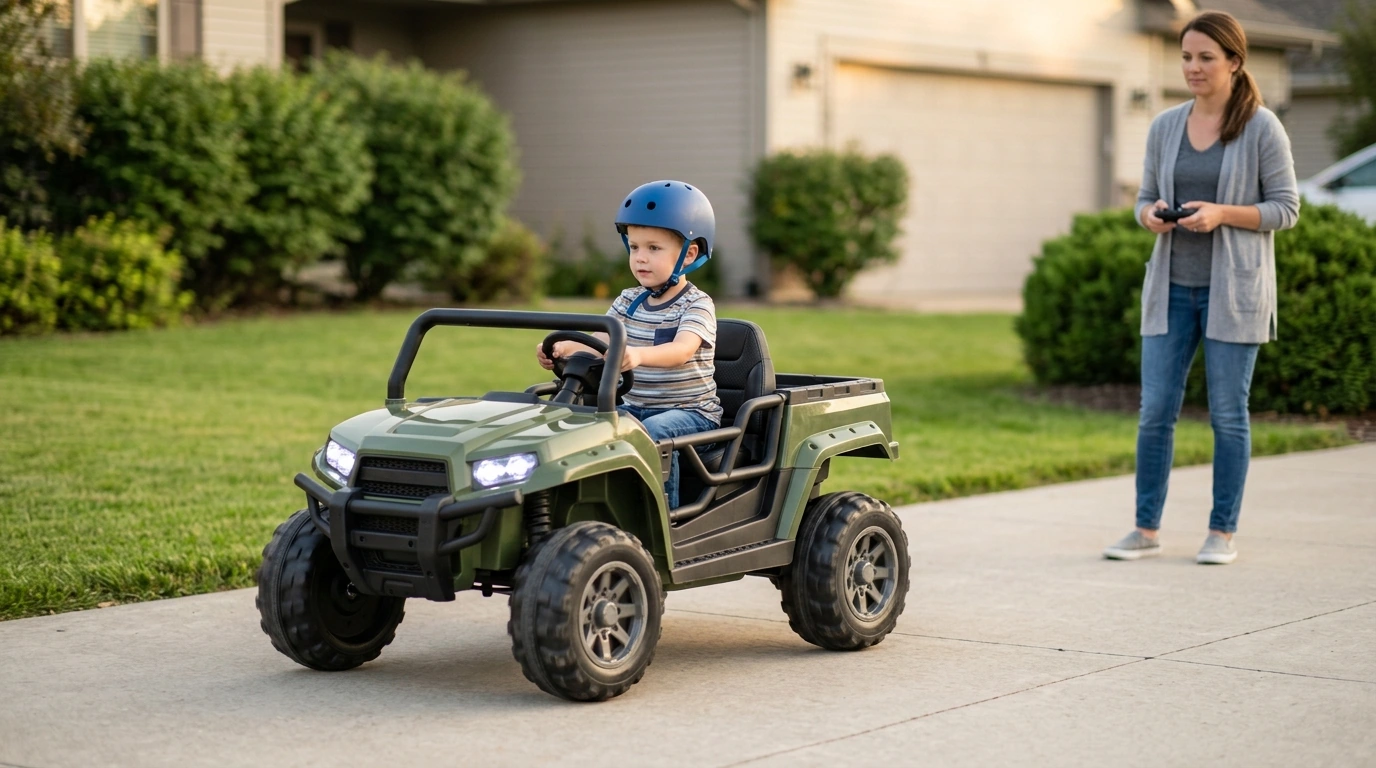
A 12V ride-on UTV can turn everyday play into confident, skill-building driving time—especially when it includes a parent remote, bright LED lights, and a roomy seat for comfort. The 12V Electric Ride On UTV Car with Remote Control, LED Lights & Large Seat is designed for backyard and driveway cruising with practical features that help kids learn and help adults supervise. Below is a clear look at how it performs day to day, what to watch for with safety and battery habits, and where it tends to work best.
This 12V battery-powered ride-on is styled like a UTV, giving kids a higher seated position and a rugged look that fits outdoor play. The parent remote control option adds an extra layer of oversight for younger drivers, while LED lights add a realistic “vehicle” feel and make it easier to keep the ride-on in sight as daylight fades (low-light riding should always be closely supervised).
For the smoothest experience, plan to use it on flat, dry surfaces such as pavement, patios, and short, even grass. Very thick grass, loose gravel, or uneven trails can increase resistance, reduce run time, and make steering feel less predictable.
What makes a ride-on fun isn’t only speed—it’s how confidently a child can control it, how easily an adult can step in, and how comfortable the seating feels during longer play sessions. This model’s standout combination is remote control guidance, LED visibility, and a larger seat that helps reduce shifting and fidgeting.
| Feature | Why it helps | Who benefits most |
|---|---|---|
| Parent remote control | Adds guidance and quick intervention in tricky spots | Toddlers, first-time drivers, busy driveways |
| LED lights | Better visibility and a realistic look | Evening play (supervised), driveway use |
| Large seat | More comfort and stability during longer rides | Bigger kids, siblings taking turns |
| 12V power system | Balanced power for typical outdoor play surfaces | Most preschool and early elementary riders |
| UTV-style body | Higher stance and rugged look for outdoor play | Kids who prefer off-road styling |
Remote control mode is ideal for early sessions—especially in smaller yards, shared driveways, or anywhere obstacles are close. It also helps when a child is still learning how steering and acceleration work together. As skills improve, switching to manual driving mode encourages coordination and confidence: gentle starts, planned stops, and wider turns become easier with repetition.
A helpful routine is to begin each play session with a quick remote-guided lap to confirm the area is clear, then let the child drive independently once they’re focused and calm.
Ride-on vehicles are safest when the child’s age, size, and skill level match the ride-on’s intended use, and when the play zone is chosen with care. Pick a flat area away from traffic, pools, stairs, steep slopes, and tight spaces where the ride-on could bump into walls, furniture, or landscaping.
Protective gear is a smart baseline. A properly fitted helmet and closed-toe shoes help reduce common injuries from falls or foot scrapes. For energetic drivers or kids who love quick turns, consider elbow and knee pads as well. Guidance on choosing and fitting helmets is available from the American Academy of Pediatrics at HealthyChildren.org and additional tips from Safe Kids Worldwide.
Before each ride, do a fast check: confirm the battery is charged, make sure tires are clean and in good condition, test steering response, and verify the remote/manual controls work correctly with no rider onboard. If anything seems off—delayed steering, inconsistent power, or unusual noises—pause play and troubleshoot first.
For broader product-safety awareness, it’s also worth periodically reviewing current toy and ride-on alerts through CPSC Recalls.
Daily performance depends heavily on charging habits. Always use the included charger (or a manufacturer-approved replacement) and follow the charging instructions. After a play session, topping up the battery is usually better than letting it sit deeply drained for long stretches, which can reduce performance over time.
The current listing shows the 12V Electric Ride On UTV Car with Remote Control, LED Lights & Large Seat available in stock. Check the product page for the latest price, stock updates, and shipping notes. Once it arrives, follow the assembly instructions carefully and do a quick function test (remote and manual) before a child takes the first ride.
Yes—models with both modes can be driven manually once the child is ready. Start with remote-assisted practice in a clear area, then transition to independent driving as steering and stopping become consistent, with continued supervision.
Run time varies with rider weight, terrain, and driving style. Flat surfaces, steady starts, and avoiding thick grass or loose gravel generally help extend play time between charges.
LED lights improve visibility, but night riding still adds risk. Use the ride-on only in well-lit areas with close supervision, and avoid streets, traffic, or any area where the rider could be hard to see.










Leave a comment