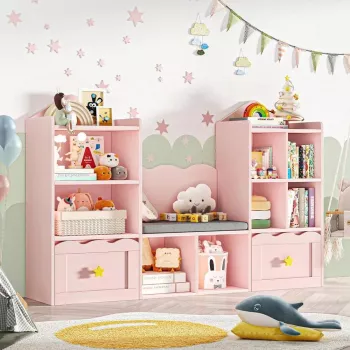
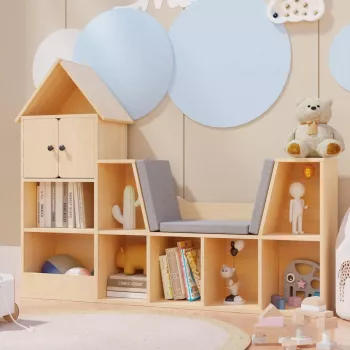
A reading nook built into a bookshelf turns book time into a daily habit, while drawers and cubbies make cleanup faster and less frustrating. This style of bookcase works especially well in playrooms and shared bedrooms because it combines three needs in one footprint: book display, toy storage, and a dedicated spot to sit and read. The result is a calmer room layout, fewer piles on the floor, and a child-friendly space that feels inviting rather than cluttered.
Kids naturally return to spaces that feel like “theirs.” A built-in nook creates a consistent destination for quiet time—without asking you to squeeze in an extra chair, bean bag, or floor cushion that constantly migrates around the room.
It also helps with transitions. When “read in the nook” becomes part of the after-school or bedtime rhythm, the nook becomes a cue that it’s time to slow down—especially useful in busy households where play spaces and sleep spaces overlap.
The best kids storage furniture doesn’t just “hold stuff”—it supports the way children actually clean up. That usually means large targets for quick wins (cubbies) plus contained storage for tiny pieces (drawers).
| Storage area | Best for | Tip to keep it neat |
|---|---|---|
| Top shelves | Books that are read together (series, bedtime picks) | Rotate a small selection weekly to prevent overcrowding |
| Middle shelves | Everyday picture books and early readers | Keep spines or covers visible and limit to one row deep |
| Open cubbies | Bins with toys, games, dress-up items | Assign one category per bin and use simple picture labels |
| Drawers | Small parts, art supplies, cards, mini-figures | Use shallow tray dividers or zip pouches inside the drawer |
| Reading nook area | A few “now reading” books and a blanket | Use a small basket so the seat stays clear |
A reading nook bookshelf works best when it feels easy to approach—no tight squeeze, no awkward knee space, and no constant collisions with doors or toy traffic. A few quick checks before choosing a unit can prevent instant buyer’s remorse.
For shared bedrooms, it helps to make the “rules” physical. Two labeled bins, two cubbies, or one drawer per child reduces daily negotiation and keeps cleanup from becoming a debate.
Because kids climb, lean, and pull, furniture safety is part of the design—not an afterthought. Anytime you add storage plus a built-in seat, stability matters even more.
For practical guidance on preventing tip-overs, review the U.S. Consumer Product Safety Commission recommendations: CPSC Furniture Tip-Over Prevention. For broader kid-safe home setup reminders, the American Academy of Pediatrics also provides home safety guidance: AAP home safety tips.
| Item | Details |
|---|---|
| Name | Kids Bookshelf with Reading Nook and Toy Storage, Bookcase with Drawers & Cubbies |
| Price | 205.82 USD |
| Availability | In stock |
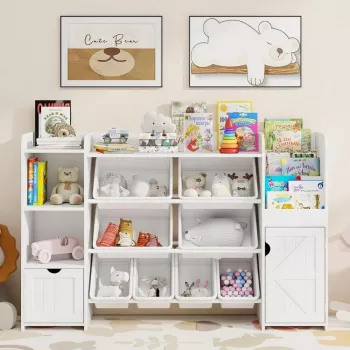
Use drawers for small, spill-prone items like mini figures, cards, crayons, and craft supplies. Use cubbies for bin-friendly categories like plush toys, blocks, puzzles, and dress-up gear, keeping the most-used items at child height.
Keep a manageable selection visible—often about 20–40 books depending on shelf size—and rotate the rest. One-row storage (instead of stacking) and easy cover or spine visibility helps kids choose and put books back independently.
Pick a low-traffic area with enough knee and leg room in front of the nook so kids can sit and stand safely. Avoid spots near doors, windows with cords, or places where climbing could create hazards, and keep lighting comfortable for reading.







Leave a comment