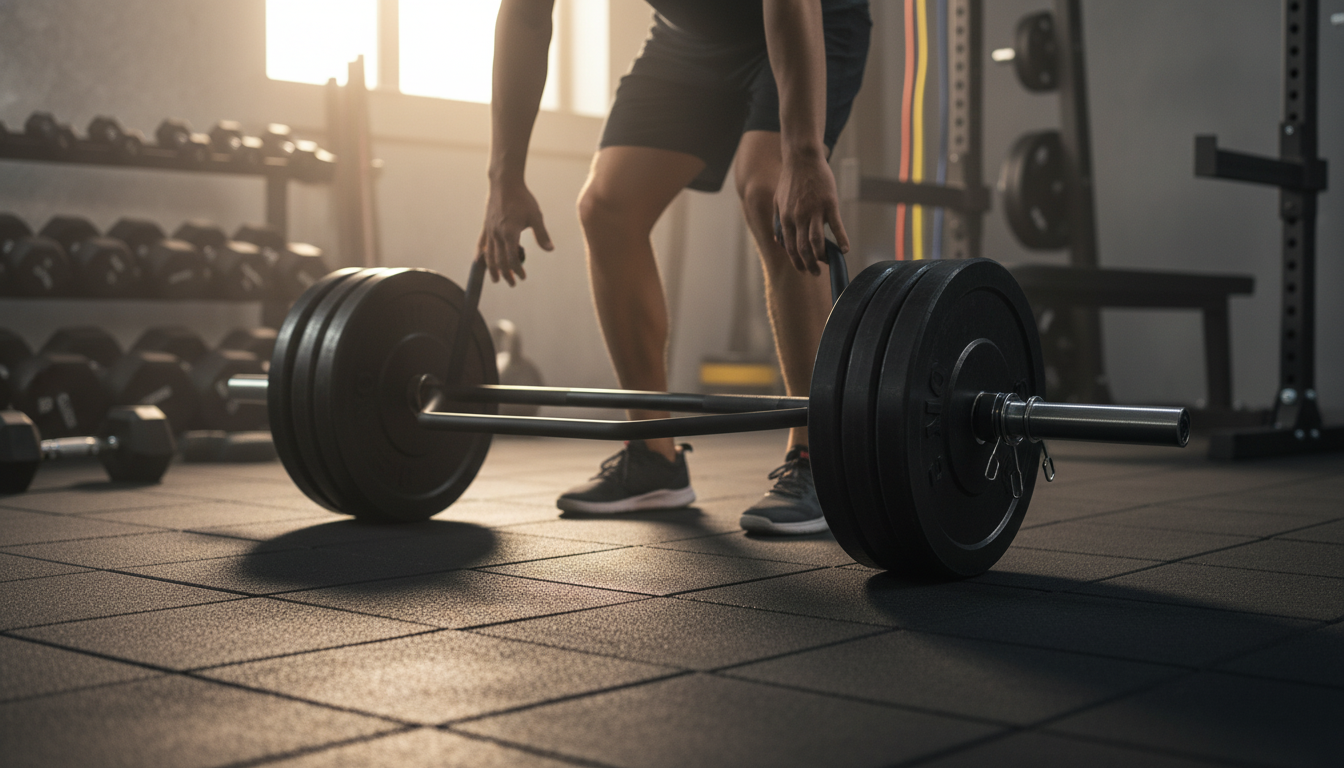
A hex trap barbell (often called a trap bar) makes heavy pulling and lower-body training feel more natural by keeping the load centered around your body instead of in front of your shins. For many lifters, that centered position supports a more upright torso and a steadier bar path, which can reduce lower-back stress compared with a straight-bar deadlift while still hammering the glutes, hamstrings, quads, and upper back. Below is a practical guide to what it is, how to use it well, what to check before buying, and how to build a simple week of training around it. For more guidance, see The Beginner’s Guide to the Open Trap Bar – Asphalt Green.
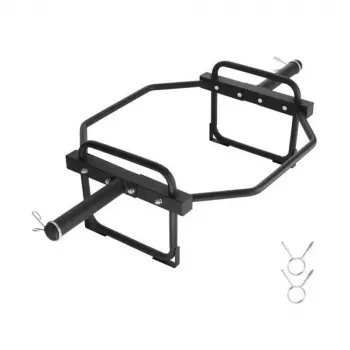
A hex trap barbell is a hex-shaped (or open-frame) bar with handles that let you stand inside the frame. That design keeps the load closer to your center of mass, which is why many lifters find it easier to stay balanced and braced during pulls. For further reading, see Trap bar – Wikipedia.
Progress at home often comes down to consistency—training hard while staying comfortable enough to repeat sessions week after week. A trap bar can help with that.
For additional technique notes and coaching points, authoritative references include the NSCA’s trap bar deadlift guidance and the exercise breakdowns on ExRx.
Most trap bar deadlift problems come from rushing the start or losing tension. Use these cues to clean up reps quickly.
If you’re building a general home strength plan, the ACSM’s resistance training guidance is a solid reference for frequency, progressive overload, and safe effort levels.
A trap bar is simple, but small design differences change how it feels and how well it fits your space.
| Feature | Why it matters | What to look for |
|---|---|---|
| Plate sleeve diameter | Determines which plates fit | 2-inch Olympic sleeves if using Olympic plates |
| Handle height options | Changes range of motion and comfort | Raised + standard handles if available |
| Frame clearance | Comfortable stance and shin clearance | Enough room for hip-width to slightly wider stance |
| Weight capacity/build | Stability and longevity | Sturdy welds, minimal flex, durable coating |
| Grip feel | Control during reps and carries | Comfortable diameter, secure knurling |
It depends on your goals and what feels best. A trap bar often allows a more upright torso and may feel easier on the lower back while still building full-body strength, while a straight bar can be more specific to conventional deadlift technique and certain strength sports.
The main drivers are the glutes, quads, and hamstrings, with the upper back helping you stay tight and tall. Your grip and forearms work hard as well, and handle height/torso angle can shift emphasis slightly toward quads or posterior chain.
Raised handles usually make it easier to start because they reduce the range of motion and can help you maintain a strong brace. Low handles increase depth and challenge, which can be great once technique and tolerance are solid.









Leave a comment