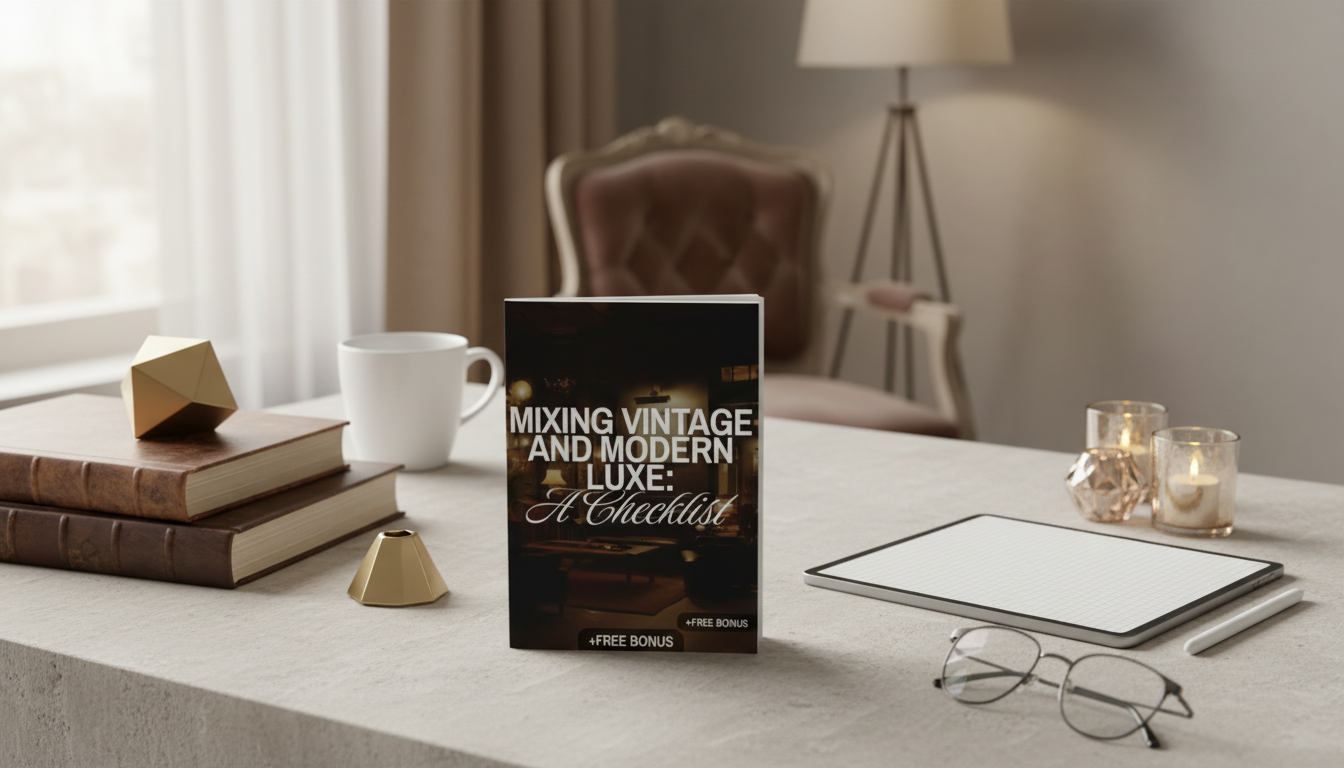
Mixing Vintage and Modern Luxe: A Practical Checklist for Balanced, High-Impact Rooms
A room that feels collected—not cluttered—usually follows a few repeatable rules: clear proportions, a controlled palette, and intentional contrast. Use the checklist below to blend vintage character with modern polish so the space reads cohesive, elevated, and livable, whether you’re styling a single corner or an entire home. For more guidance, see The Ultimate Guide to Mixing Vintage and Modern Design Elements. For further reading, see Vintage Modern Interior Design Ideas: Blending Timeless Charm ….
The core idea: contrast with control
- Pick a lead style. Decide if the room is vintage-leaning or modern-leaning, then use the other era as the accent. This creates tension without visual noise.
- Curate your contrast. Pair ornate with minimal, patina with gloss, and curves with clean lines—but limit how many “statement” moments show up in one sightline.
- Repeat a few unifiers. Echo 2–3 elements across the room (a finish, metal tone, shape, or fabric texture) so mixed eras feel related rather than random.
Step 1: Start with a tight palette and a finish story
- Build a neutral base. Warm white, greige, soft taupe, or charcoal keeps the room calm. Add one deep accent (ink, forest, oxblood, espresso) for a luxe anchor.
- Choose metals like a “capsule wardrobe.” Pick 1 primary metal and 1 supporting metal, keeping undertones consistent (warm metals with warm woods; cooler metals with cooler stones and paints).
- Use patina as texture, not chaos. Aged brass, worn oak, and timeworn leather read best when surrounded by cleaner surfaces so the eye has a place to rest.
- Calm vintage pattern with modern solids. Stripes, toile, and Persian-style motifs feel elevated when paired with high-contrast solids instead of more competing prints.
Quick palette map for vintage-meets-modern luxe
| Room foundation |
Vintage note |
Modern note |
Luxe booster |
| Warm white walls + natural oak |
Antique brass frame or lamp |
Black or bronze hardware |
Velvet or mohair in a deep tone |
| Charcoal walls + cream upholstery |
Gilded mirror or carved side table |
Minimal track or globe lighting |
Marble/stone tray + sculptural vase |
| Greige walls + walnut |
Persian-style rug in muted tones |
Low-profile sofa with clean arms |
Silk/linen drapery with heavy weight |
Step 2: Balance silhouettes (curves vs. straight lines)
- Make one piece do the talking. Pair a curved or ornate vintage item with a simplified modern counterpoint—like a carved mirror over a slab-front console.
- Avoid “embellishment stacking.” If the rug is intricate, keep nearby furniture profiles clean. If a chair has turned legs, choose a table with quiet lines.
- Repeat a shape language. Use arches (mirror, art, lamp) or cylinders (side table, vase, sconce) 2–3 times for a subtle throughline.
- Use negative space as luxury. Fewer, better-scaled items beat a crowded mix of “interesting” objects every time.
Step 3: Use the 70/20/10 mix to avoid a costume look
- 70% dominant era: Usually modern foundations (sofa, casework, large rug) to provide calm structure.
- 20% secondary era: A vintage credenza, antique mirror, or heritage rug for soul and history.
- 10% sparkle and edge: Art, lighting, and small decor for the “luxe” layer—where modern glam and vintage charm can overlap safely.
- Busy room fix: Reduce the 20% category first by removing one medium-size piece rather than many small ones.
Step 4: Make materials do the heavy lifting
- Mix material families. Aim for wood + metal + textile, then add one reflective element (glass, lacquer, mirror) for polish.
- Anchor vintage with contemporary neighbors. Place an antique next to stone, lacquer, smoked glass, or bouclé so it reads intentional and current.
- Let “old” be craftsmanship; let “new” be restraint. Dovetails, cane, carving, and patina can shine beside slab fronts, thin profiles, and seamless upholstery.
- One standout tactile moment per zone. A mohair chair, thick linen drapery, or a high-pile rug delivers richness without needing extra clutter.
Step 5: Create luxe cohesion with lighting and art
Room-by-room mini checklists (fast decisions)
Common mixing mistakes and quick fixes
Two easy upgrades to make the mix feel intentional
Further reading (design references)
- The Spruce: How to Mix Modern and Antique Decor
- House Beautiful: Tips for Mixing Design Styles
FAQ
How many vintage pieces are enough for a room to feel collected?
Aim for the 70/20/10 balance: keep the big foundations mostly one era, then add 20% vintage for character. A simple start is one hero vintage item (rug, mirror, or credenza) plus 1–2 small accents, then reassess before adding more.
What finishes look most “luxe” when mixing old and new?
Controlled, consistent finishes look the most expensive: choose one primary metal and one supporting metal, keeping undertones aligned. Aged brass, bronze, blackened steel, walnut, marble/stone, lacquer, and high-quality textiles (velvet, mohair, heavy linen) tend to read luxe without feeling fussy.
How can vintage decor feel modern instead of themed?
Use clean negative space, contemporary art scale, and simplified lighting so vintage pieces look curated rather than “period.” Limit ornate silhouettes and repeat one modern material—like glass, stone, or bouclé—near vintage elements to keep the room feeling current.
Recommended for you










Leave a comment