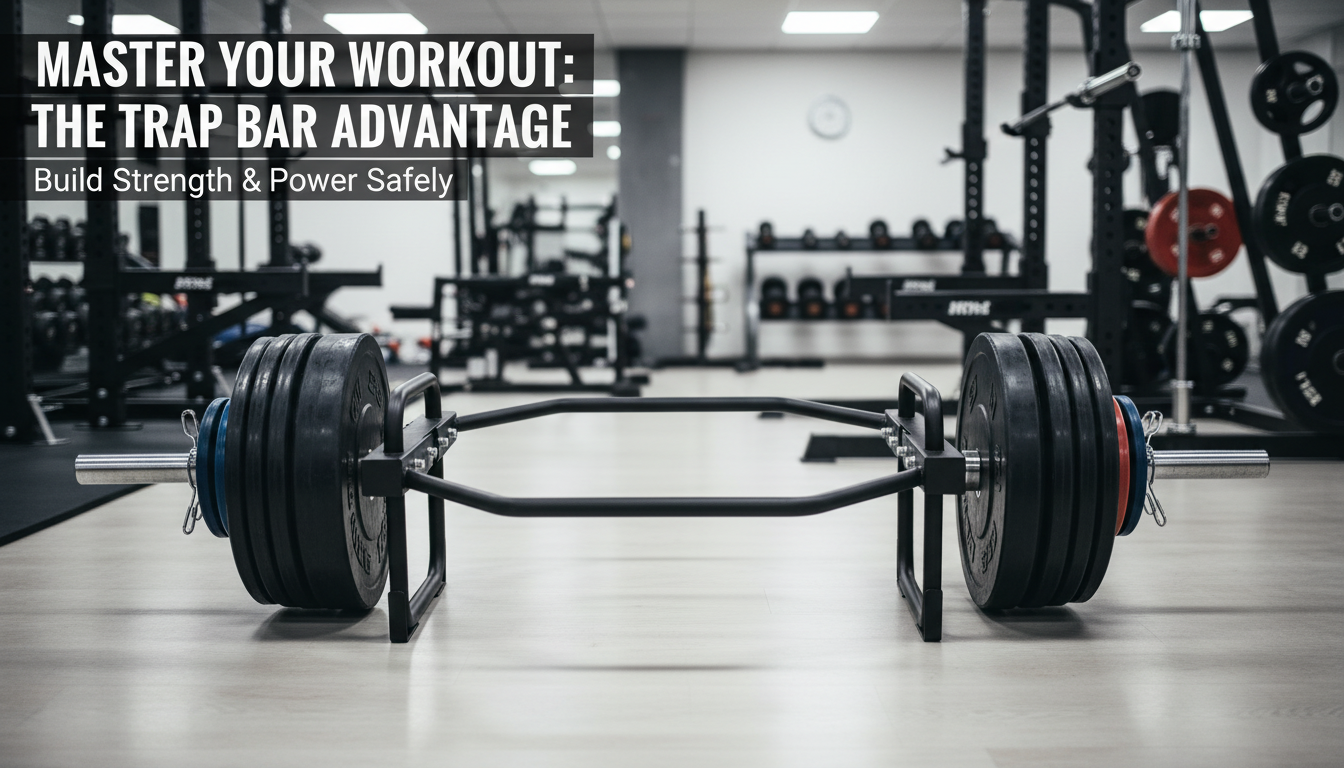
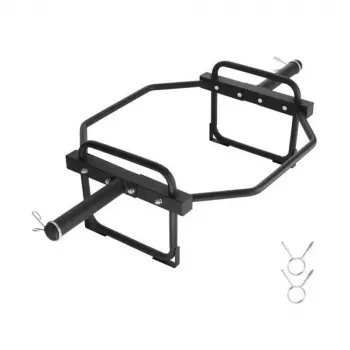
The hex (trap) bar is a full-body strength tool that emphasizes lower-body power while letting many lifters stay more upright than with a straight bar. That more neutral position often shifts some stress away from the lower back and can make heavy pulling feel smoother and more controlled.
Quadriceps (front of thighs): The trap bar deadlift typically allows deeper knee bend, which increases quad involvement—especially if you start with hips a bit lower and drive through the floor.
Glutes (butt): Glute max is a major mover for hip extension at lockout. The glutes help you stand tall and keep the pelvis stable under load.
Hamstrings (back of thighs): Hamstrings assist hip extension and help control the descent. Depending on your setup, they may be slightly less dominant than in a conventional deadlift but still work hard.
Spinal erectors (lower back): These muscles resist rounding and help maintain a strong torso. Even with a more upright torso, they’re still active to stabilize the spine.
Traps and upper back: The trapezius and upper-back musculature keep your shoulders packed and help you maintain posture while holding heavy weight at your sides.
Lats: The lats help keep the bar path steady and prevent the shoulders from drifting forward.
Core (abs and obliques): Bracing is essential. Your core resists spinal flexion and rotation so force transfers efficiently from legs to the bar.
Forearms and grip: Because you’re holding weight without resting it on your back, your hands and forearms get significant work—especially with higher reps or heavier loads.
Handle height (high vs. low), stance width, and hip position can change the emphasis. Higher handles tend to reduce range of motion and feel easier on the posterior chain; lower handles increase demand on legs and hips. A “squatty” setup usually boosts quads, while a more hinged setup increases hamstrings and glutes.
For a deeper breakdown and form tips, visit the main guide: https://brightfurniture.shop/what-muscles-does-the-hex-trap-bar-work/.
It’s still a deadlift, but the more upright torso and increased knee bend often make it feel more squat-like. Most lifters notice stronger quad involvement compared with a conventional deadlift.










Leave a comment