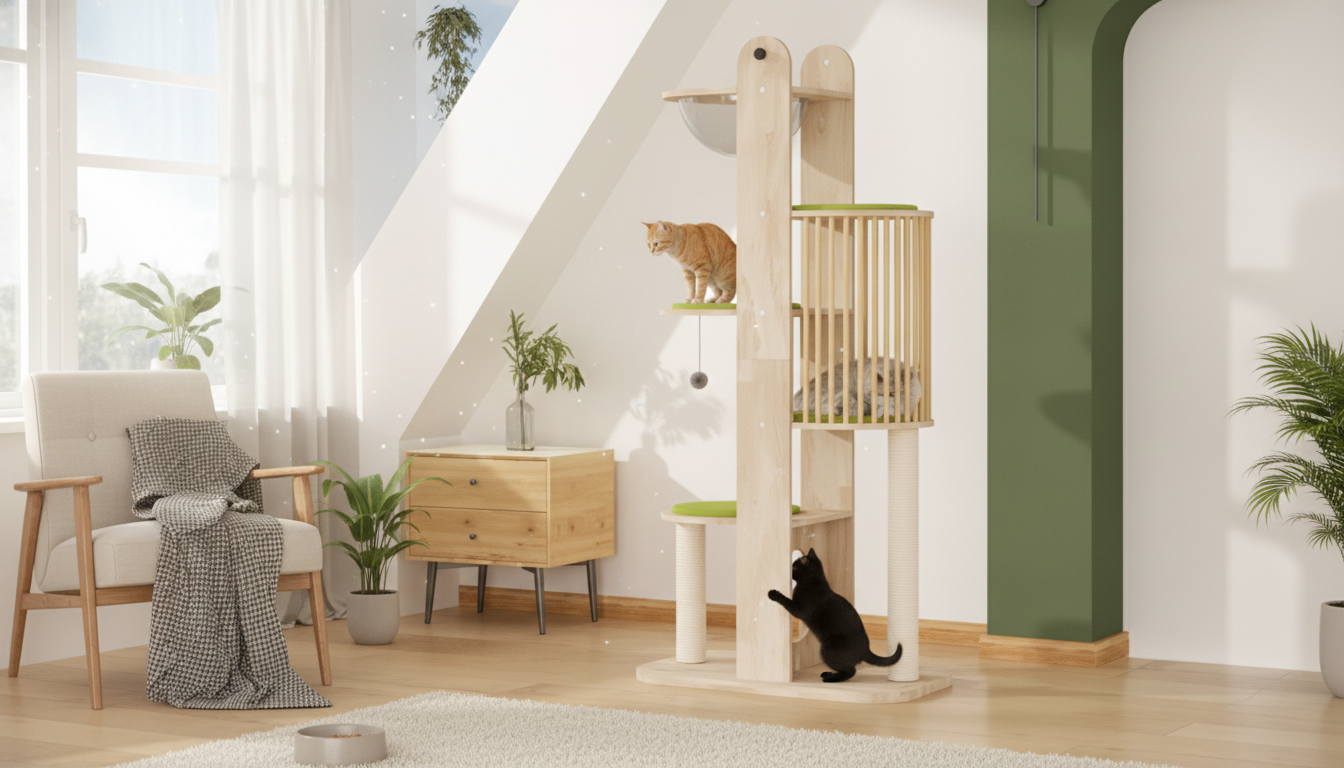
A well-designed cat tower can turn daily energy bursts into healthier habits—more climbing, more scratching in the right place, and more relaxing off the floor. This cute climbing scratcher tree tower is designed to keep cats busy and comfortable while helping protect furniture by offering a dedicated scratching surface and vertical territory to explore.
Cats are built for vertical living. Even in smaller homes, a tower gives them structure: a route to climb, a safe perch to observe, and a reliable place to rest. When these needs are met, many cats show fewer boredom behaviors—like grabbing curtains, swatting ankles, or repeatedly scratching the same corner of the couch.
For a deeper look at feline environmental needs and enrichment, helpful guidance is available through the American Association of Feline Practitioners (AAFP) and general care tips from the ASPCA cat care resources.
The best towers are the ones cats actually use. Small design details—like where the scratch zones sit or how stable the base feels—can make the difference between a favorite hangout and an ignored piece of furniture.
| Checkpoint | Why it matters | What to do |
|---|---|---|
| Stability | Prevents tipping and startle reactions | Choose a wide base; place on a flat surface |
| Scratch zones | Improves furniture protection | Pick towers with multiple scratch areas at different heights |
| Platform size | Cats avoid cramped perches | Measure your cat’s length; ensure lounging space |
| Step distance | Safer for kittens and seniors | Prefer shorter gaps or intermediate steps |
| Fabric care | Reduces odor and hair buildup | Vacuum weekly; spot-clean as needed |
A climbing scratcher tower can help nearly any indoor cat, but it’s especially useful when space is limited or when a cat needs a clear “yes spot” for scratching and perching.
Even a great tower can get ignored if it’s in the wrong place. Cats tend to choose locations that feel safe, have a view, and offer predictable traffic patterns.
If the tower will live in a shared space, pairing it with furniture that keeps the room organized can help the setup feel intentional. A storage-forward piece like the Modern Nordic TV Stand and Storage Dresser can help manage toys, grooming tools, and extra scratcher replacements so the cat zone stays neat.
Most cats warm up quickly when the first interactions feel rewarding. The goal is to make the tower the easiest, most satisfying option—especially for scratching.
The Cute Climbing Cat Scratcher Tree Tower is built to combine climbing routes, lounging spots, and scratching zones in one vertical setup. It’s a practical way to add daily activity without needing extra floor space for separate scratchers, beds, and perches.
| Item | Details |
|---|---|
| Product | Cute Climbing Cat Scratcher Tree Tower |
| Price | 645.95 USD |
| Availability | In stock |
| Link | View product |
Aim for a height that lets your cat climb and perch comfortably without hesitant jumps. Taller towers tend to suit active climbers, while shorter step spacing and intermediate platforms are often easier for kittens and older cats.
Near a window or close to a current scratching hotspot usually gets the fastest adoption. Choose a spot that doesn’t block walkways and gives your cat at least one calm approach path.
Place it on a flat surface, tighten the hardware regularly, and keep heavier lounging areas centered over the base. If needed, a low-pile rug can add grip and reduce sliding during jumps.











Leave a comment