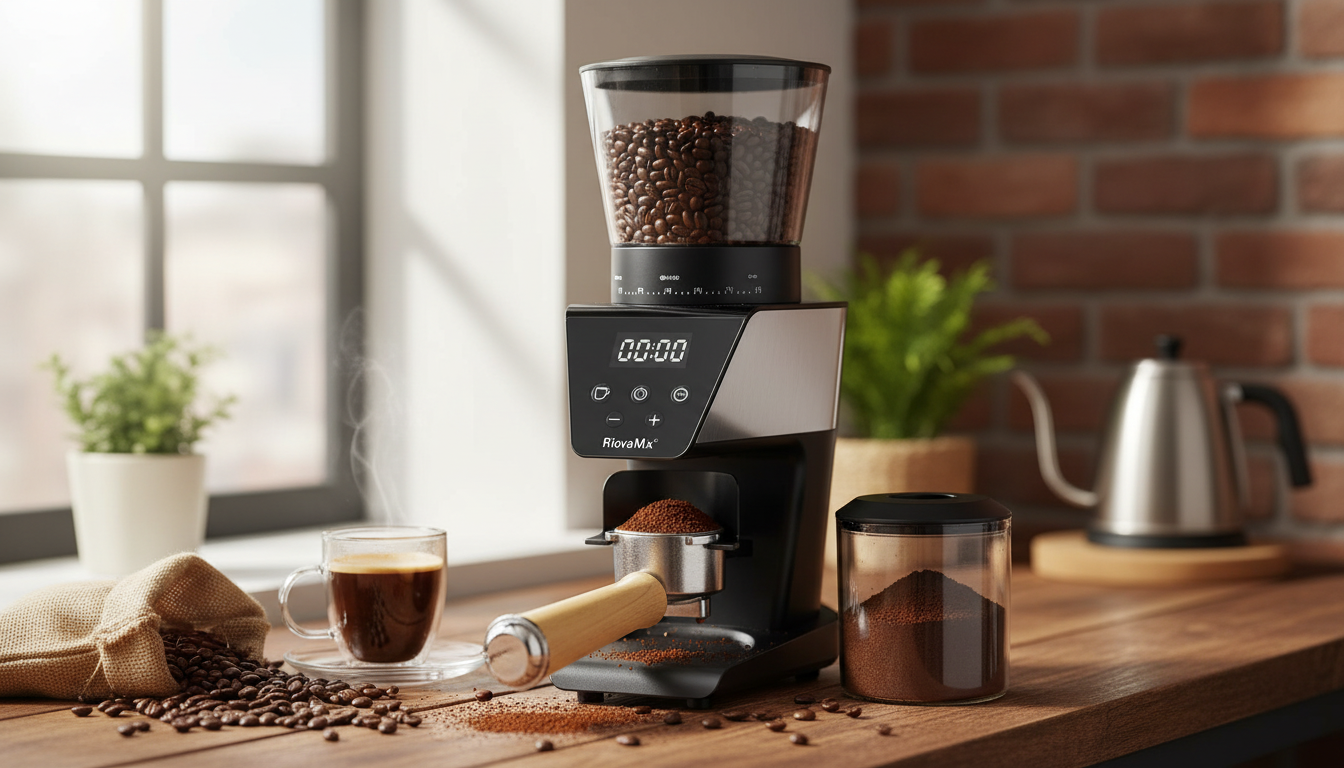
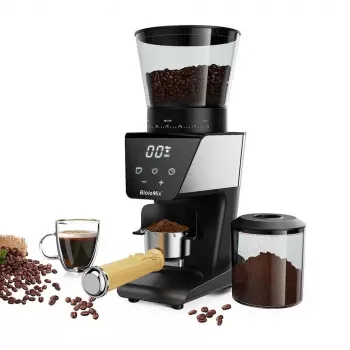
A consistent grind is the foundation of better-tasting coffee. The Automatic Conical Burr Coffee Grinder with 30 Settings and LCD Timer is built to help you dial in everything from espresso-style shots to French press with less guesswork and more repeatability. With a wide range of grind settings and a clear timer display, it’s designed for daily routines where speed matters—but cup quality still comes first.
Unlike blade grinders that chop beans into uneven fragments, conical burr grinders crush coffee between two shaped burrs, guiding beans through a controlled gap. That design tends to produce more uniform particle sizes, which supports cleaner flavor and steadier extraction.
When the grind is inconsistent, the smallest particles (fines) can over-extract and taste bitter, while the largest pieces (boulders) under-extract and taste sour or weak. A more even grind helps reduce those extremes, making it easier to get a balanced cup with clearer notes.
Another advantage is flexibility. Burr grinders change grind size in a controlled way, so adjustments feel more intentional rather than approximate. Pair that with an automatic workflow—set the grind level, set the time, and grind into your receptacle—and weekday coffee becomes simpler without turning into a measuring project every morning.
This grinder focuses on practical controls that support repeatability across multiple brew methods. The headline features are the 30 grind settings and the LCD timer, both aimed at helping you return to a “known good” setup after day-to-day changes.
| Feature | Why it matters |
|---|---|
| 30 settings | Makes it easier to match grind size to espresso, drip, pour-over, AeroPress, or French press. |
| LCD timer | Supports repeatable timed dosing for similar cup results day to day. |
| Conical burr set | Targets a more uniform grind for cleaner extraction and improved flavor clarity. |
| Automatic workflow | Reduces effort and speeds up routine brewing. |
A 30-step adjustment range gives you room to move between brew styles without forcing “one grind fits all.” Start with the method you’re brewing, then adjust based on taste while keeping your dose and brew time as stable as possible.
Espresso generally prefers finer grinds because water passes through the puck quickly and under pressure. Small grind changes can have a big effect on flow rate and flavor. If shots run fast and taste sharp or thin, go a little finer. If shots choke or taste harsh and bitter, go a little coarser. Make changes in small increments and re-test.
Most pour-over and drip brewers land in the middle range. Aim for a balanced cup: sweetness up front, clear finish, and no drying bitterness. If the brew tastes hollow or sour, move a step finer; if it tastes heavy and astringent, move a step coarser.
Immersion methods usually benefit from coarser grinds to reduce sediment and slow extraction. Coarser particles can keep the cup cleaner and help avoid muddy, over-extracted flavors—especially when steep times are longer.
Roast level, bean density, and freshness all influence how coffee breaks apart. When you open a new bag—especially if it’s a different roast—plan to re-check your grind setting. The goal isn’t a “perfect number,” but a repeatable result for that specific coffee.
Grinding by time can be a practical shortcut for consistency, particularly when you brew the same coffee regularly. The LCD timer makes it easy to return to a familiar setting, which helps reduce day-to-day variation when you’re trying to keep routines fast.
Timed dosing works best when a few variables stay stable: the grind setting, the coffee you’re using, and (ideally) a similar bean level in the hopper. To calibrate, weigh your dose for a few runs, note the timer value that hits your target amount, then use that time as your baseline.
If a new bag tastes different, keep the timer constant and adjust grind size first. Grind changes usually correct extraction more directly than changing dose. For multi-cup brewing, increase the timer in small steps and confirm with a scale until you hit your preferred dose.
For deeper learning on extraction basics and how grind impacts flavor, reputable resources include the Specialty Coffee Association (SCA), Barista Hustle, and educational reviews from James Hoffmann.
If you’re ready to build a more repeatable coffee routine, you can find the featured grinder here: Automatic Conical Burr Coffee Grinder with 30 Settings and LCD Timer. Price: $174.32 (USD). Availability: In stock.
Yes—finer settings can work well for espresso-style brewing, but dialing in usually takes small adjustments and consistent dosing. Try a few adjacent settings and judge results by shot timing and taste, then fine-tune from there.
It can be consistent within a practical range, especially when the bean type and grind setting stay the same. For best results, calibrate the timer with a kitchen scale at first and re-check when you switch coffees.
Empty and wipe it frequently to prevent buildup, then do a deeper clean every few weeks to monthly depending on use. Keep moisture out of the burr area, and purge with a small amount of coffee after cleaning before brewing.









Leave a comment