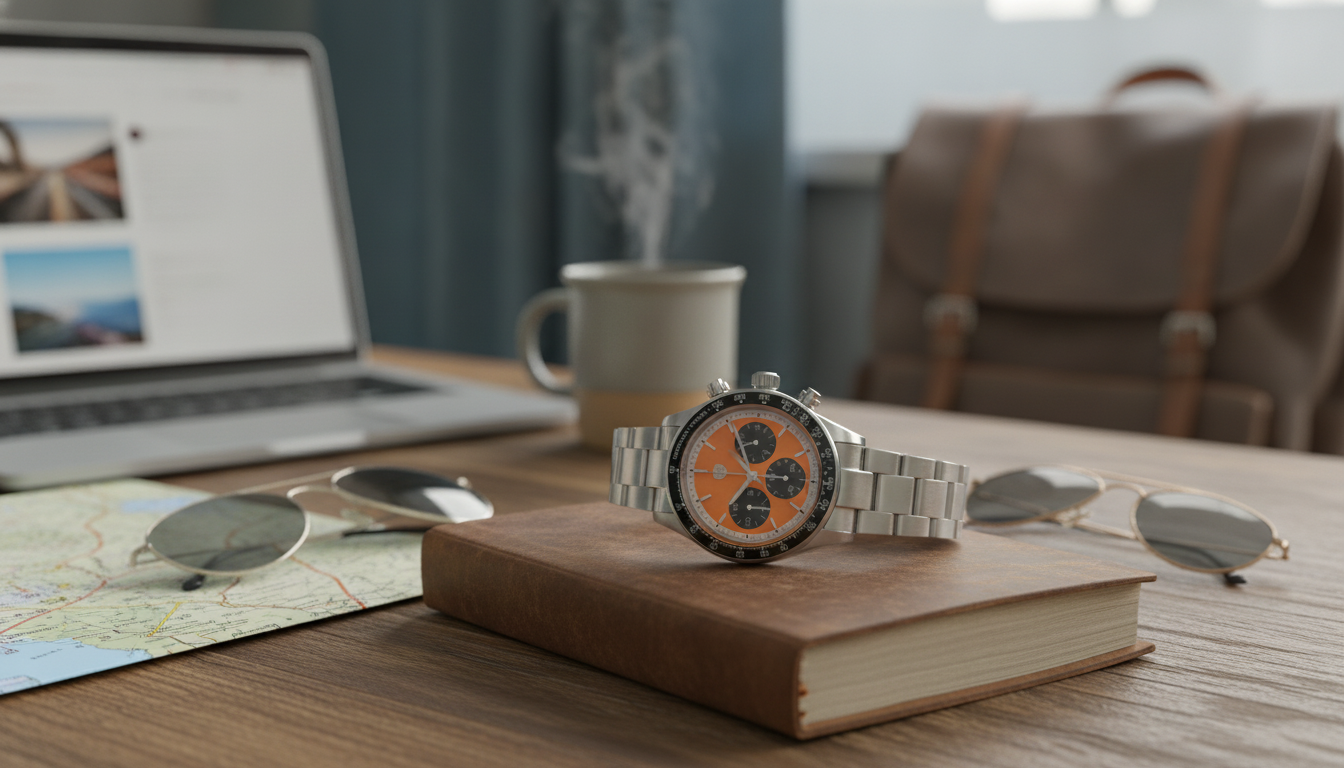
A stainless steel chronograph with quartz accuracy and a 100M waterproof rating is built for busy schedules, active weekends, and polished everyday wear. The right model feels substantial on the wrist, stays easy to read under pressure, and keeps time reliably without the fuss of constant adjustments. Below is a practical guide to what makes a sports chronograph feel premium, how to use the timing function confidently, and how to keep the watch looking sharp for the long run.
“Premium” isn’t just about shine—it’s about the details that stay satisfying after months of wear. Quartz timekeeping is a big part of that: it delivers consistent accuracy with minimal upkeep, drawing on battery-powered stability rather than frequent manual corrections. For time-sensitive days, a chronograph adds real utility, letting you measure runs, commutes, meetings, or even a quick cooking timer without pulling out your phone.
Stainless steel also matters. A well-finished steel case and bracelet offer durability while keeping the look refined enough for business-casual. The best dials balance style and legibility: subdials should be positioned so your eyes can find information quickly, and contrast should be strong enough to read at a glance in changing light.
Comfort seals the deal. A secure clasp, easy bracelet adjustability, and a case thickness that doesn’t feel top-heavy help the watch wear confidently from morning through late night—especially if you’re moving between desk work, travel, and errands.
This style of watch is designed as a men’s sports chronograph with a stainless steel build and quartz movement for low-maintenance reliability. A 100M water-resistance rating is a strong everyday advantage, but it’s still important to treat the crown and pushers correctly: operate them only when the watch is dry and never underwater to reduce the risk of moisture intrusion.
| Feature | What it means for daily wear |
|---|---|
| Quartz movement | Steady accuracy and simple battery-powered operation |
| Chronograph function | Start/stop timing plus reset for measured intervals |
| Stainless steel case/bracelet | Scratch-resistant feel with a classic, versatile look |
| 100M waterproof rating | Suitable for splashes, rain, shower considerations, and surface swimming depending on seals/conditions |
| Sport-luxury styling | Transitions from casual to business-casual outfits easily |
A chronograph is essentially a stopwatch built into the watch, and once you know what to look for, it’s straightforward. First, identify the chronograph seconds hand versus the regular seconds hand (some designs use a small seconds subdial for normal timekeeping, while the long center hand is reserved for the chronograph).
Most chronographs follow a common control layout: the top pusher starts and stops the timing, and the bottom pusher resets the chronograph hands after you’ve stopped it. That makes it ideal for everyday “measured moments”—timing intervals at the gym, tracking a parking meter, checking a presentation segment, or monitoring a layover window while traveling.
Two handling habits keep things trouble-free. One: avoid pressing the pushers underwater or when the watch is wet. Two: if the chronograph hands don’t land perfectly at zero after a reset, consult the model’s instructions for recalibration or have a watchmaker correct it during service.
A 100M rating generally handles everyday exposure like handwashing, rain, and incidental splashes with ease. In many real-world situations, it’s also appropriate for poolside wear and surface swimming—provided the crown is fully secured and the gaskets are in good condition. Standards like ISO 22810 explain how water resistance is tested, which is helpful context for understanding why condition and correct use matter as much as the number on the dial.
Where caution is smart: high-pressure water (like jet sprays), hot tubs, saunas, and diving without a dedicated dive rating. Heat and chemicals can also speed up gasket aging; chlorine and saltwater are especially tough over time. After swimming, a simple rinse with fresh water and a thorough dry can help preserve the case, bracelet, and seals. For long-term confidence, periodic water-resistance checks during servicing are a practical habit—especially if the watch sees frequent water exposure.
While quartz is stable, basic storage habits still help. Keep the watch away from strong magnetic sources and avoid extreme temperature swings when possible. For timing accuracy context, the National Institute of Standards and Technology (NIST) offers a useful reference point on how precise timekeeping is measured and maintained.
In many cases, yes for surface swimming—if the crown is fully secured and the gaskets are in good condition. Avoid pressing chronograph pushers in the water, and consider periodic water-resistance checks to keep protection reliable over time.
It’s best not to operate the pushers underwater. Pressing pushers while submerged can increase the risk of moisture intrusion unless the watch is specifically engineered for underwater pusher operation.
Typically every few years, depending on the movement and how frequently the chronograph is used. Replace the battery promptly when it runs low, and have the gaskets inspected during the change to help maintain water resistance.










Leave a comment