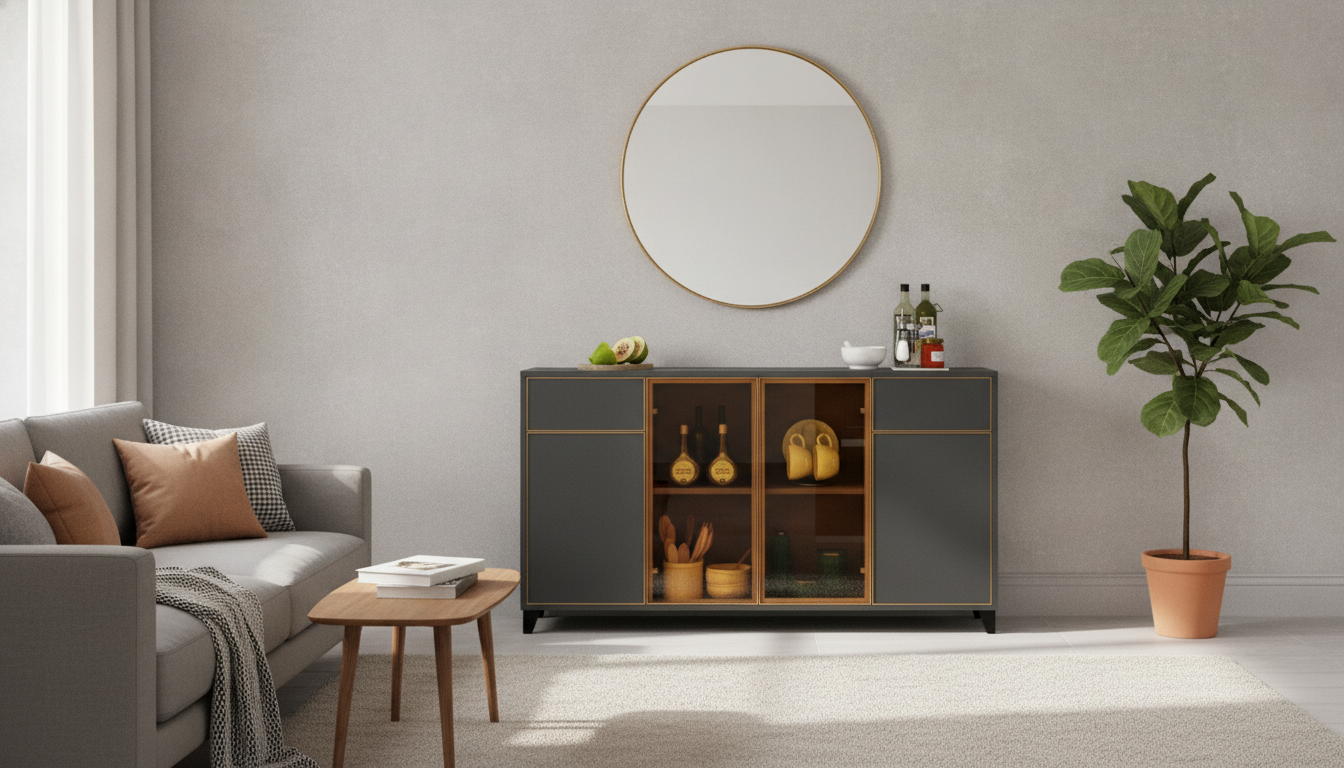
A glass display sideboard brings together storage and presentation in a calm Nordic silhouette—ideal for dining rooms, living spaces, and open-plan layouts where curated objects deserve a dedicated home. The right piece can feel architectural and serene, while still doing the daily work of organizing glassware, serveware, books, or decor. Below is a practical guide to what makes a display sideboard feel truly luxurious, what to check before buying, how to style it, and how to keep glass and finishes looking pristine.
What Makes a Glass Display Sideboard Feel Luxurious
“Luxury” in Nordic design rarely means loud. It’s more about restraint, precision, and balance—details that quietly elevate a room.
- Balanced proportions: A low, wide profile reads calm and intentional, creating an anchored look without feeling bulky.
- Glass-front display zones: Everyday storage becomes a curated vignette—objects feel collected rather than hidden away.
- Refined detailing: Tight seams, consistent door gaps, and smooth edges signal careful construction and a higher-end finish.
- A calm Nordic palette: Neutrals and soft tones pair easily with warm woods, stone, linen, and matte metals.
- Statement without shouting: The best silhouettes hold presence on a wall, but still let the rest of the room breathe.
Materials and Build Details to Check
A glass display sideboard gets touched, opened, and cleaned often—so durability and alignment matter as much as aesthetics.
- Glass: Look for thicker, well-finished panels with clean edges. Tempered glass is a smart upgrade for better impact resistance, especially in active homes.
- Frame and carcass: The structure should resist racking (side-to-side looseness). Doors should open smoothly and sit evenly when closed.
- Shelving: Adjustable shelves make the cabinet more flexible for barware, ceramics, books, and collectibles.
- Feet/base: A solid base prevents wobble; slightly raised legs can visually lighten the piece and make floor cleaning easier.
- Hardware: Soft-close hinges protect glass doors and reduce slamming over time.
Quick checklist for evaluating display sideboards
| Feature |
Why it matters |
What to look for |
| Glass doors |
Protects items while showcasing them |
Even door alignment, smooth swing, secure handle/pull |
| Shelves |
Determines what fits and how it looks |
Adjustable heights, sturdy feel, minimal sag |
| Back panel |
Affects visibility and light bounce |
Clean finish, consistent color, no warping |
| Base/legs |
Stability and visual weight |
No rocking, level stance, floor-friendly pads |
| Finish quality |
Long-term appearance |
Consistent tone, smooth surfaces, clean edges |
Where It Works Best at Home
Because a Nordic display sideboard is visually light but storage-strong, it adapts well across rooms—especially where you want order without visual clutter.
- Dining room: Store serveware, glassware, and linens while keeping special pieces visible behind glass.
- Living room: Display books, art objects, or a bar setup up top, with concealed storage below for everyday items.
- Entry or hallway: A refined drop zone for decor and seasonal items—just measure depth so walkways stay clear.
- Home office: Display awards, collectibles, or design books while hiding cables and accessories out of sight.
- Open-plan spaces: Use it to anchor a wall and create a focal point that feels intentional, not improvised.
Styling Ideas That Suit a Nordic Display
Glass-front storage looks most elevated when it’s styled like a small gallery: edited, cohesive, and breathable.
Lighting and Display: Making Glass Do the Work
Care and Maintenance for Glass and Finishes
- Glass cleaning: Use a microfiber cloth and a streak-free glass cleaner; avoid abrasive pads. For general cleaning guidance, the American Cleaning Institute is a helpful reference for safe surface care.
- Dusting routine: A quick weekly dusting inside the display prevents items from looking dull and reduces the need for deep cleaning.
- Protect shelves: Use thin liners under heavy or sharp-edged decor to help prevent scratches.
- Humidity and heat: Keep the piece away from direct heat sources and aim for stable indoor humidity to protect materials and joints.
- Floor protection: Add felt pads under feet and re-level periodically so doors stay aligned and close smoothly.
For additional consumer safety perspective on glass in household products, the U.S. Consumer Product Safety Commission is an authoritative resource.
A Refined Option to Consider
If your goal is a statement storage piece that feels clean and architectural while still being practical, consider the Luxury Nordic Glass Display Sideboard. It’s well-suited for curated barware, ceramics, books, and decor that looks best protected behind glass.
For a coordinated Nordic look in the same room—especially if you’re balancing media storage and display—pairing with the Modern Nordic TV Stand and Storage Dresser can help keep the overall silhouette consistent and visually calm.
FAQ
How do glass display sideboards stay looking clean day to day?
Use a microfiber cloth for quick wipe-downs, and keep a small streak-free glass cleaner nearby for touch-ups. Pull by the handles instead of pushing on the glass to reduce fingerprints, and avoid abrasive cleaners that can scratch or haze the surface.
Is tempered glass important for a display sideboard?
Tempered glass is more impact-resistant than standard glass, making it a practical choice for homes with kids, pets, or busier walkways. Even with tempered glass, placement matters—give doors clearance and avoid tight corners where bumps happen.
What should be displayed inside for a balanced look?
Try a 60/40 approach: about 60% filled and 40% open space for a relaxed, premium feel. Group by color or material, vary heights, repeat a few tones, and mix functional pieces (like glasses) with a couple of sculptural objects.
Recommended for you









Leave a comment