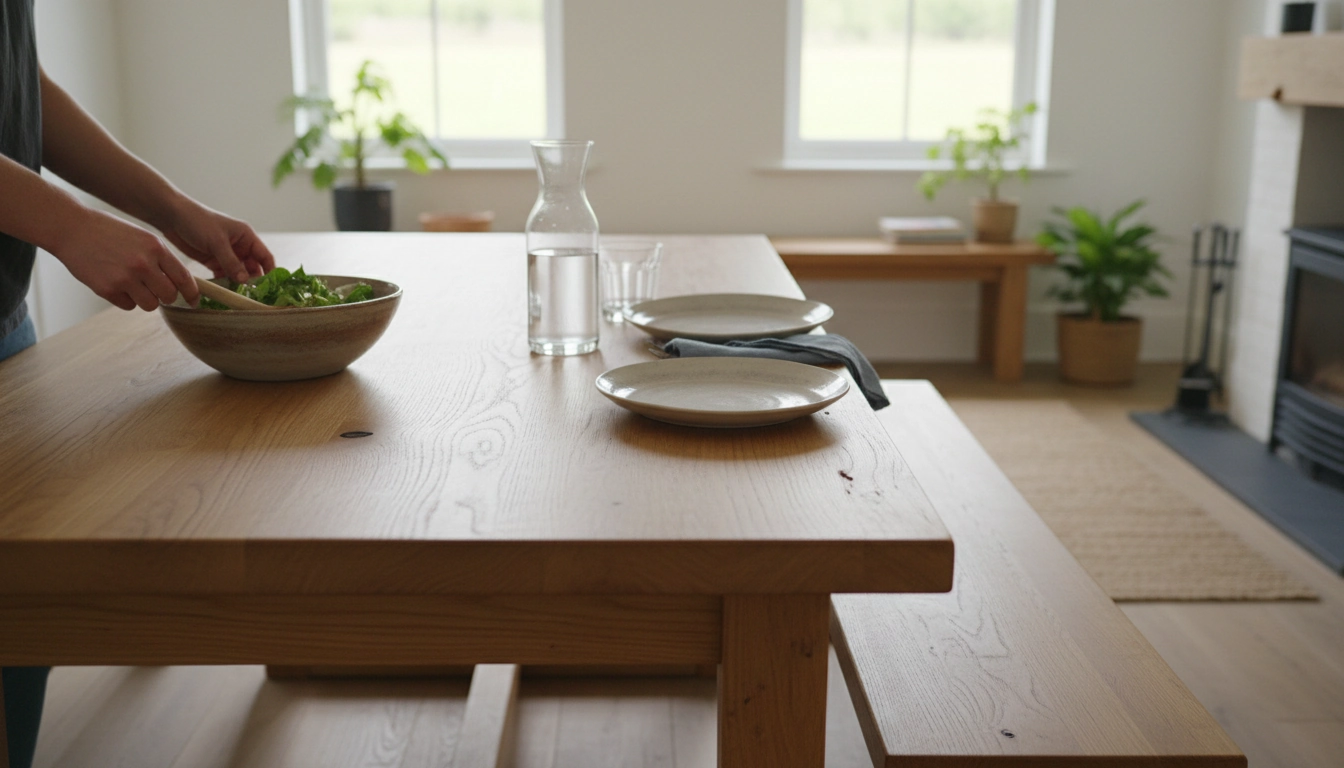
If you want a table that can handle years of meals, homework, and holidays without feeling disposable, a solid wood dining table is usually a smart buy. Solid wood brings natural strength, visible grain, and the ability to be refinished when life happens—scratches, dings, and water rings are often fixable instead of permanent.
Solid wood is a strong choice when durability and long-term value matter more than the lowest upfront price. Many solid tops can be sanded and refinished, helping the table stay presentable even after heavy use. It also tends to feel more stable and substantial than lightweight alternatives, which is noticeable when the table is used daily.
It’s also a great fit when you care about craftsmanship details like joinery and how parts are connected. Well-made construction helps a table resist wobble and looseness over time.
Not every “wood” table is solid wood. Some are veneer over engineered wood, which can look great but usually can’t be refinished the same way if the surface gets damaged. Ask what parts are solid, what parts are veneer, and what the finish is (a tougher film finish versus an oil/wax style that may need more upkeep).
Wood is also responsive to humidity and temperature. Seasonal movement is normal, so design details that allow the top to expand and contract help prevent cracking or warping. For practical ownership tips—how to evaluate fit, joinery, and care—see the full guide here: https://brightfurniture.shop/guide-solid-wood-dining-chair-guide-fit-joinery-care/.
Buy a solid wood dining table if you want longevity, repairability, and a warmer, more substantial feel. If you prefer a worry-free surface with minimal maintenance and a lower price, a veneer or engineered option may suit daily life better.
Use coasters and placemats daily, wipe spills quickly, and consider a table pad for big gatherings. Maintain stable indoor humidity and avoid placing hot items directly on the surface.








Leave a comment