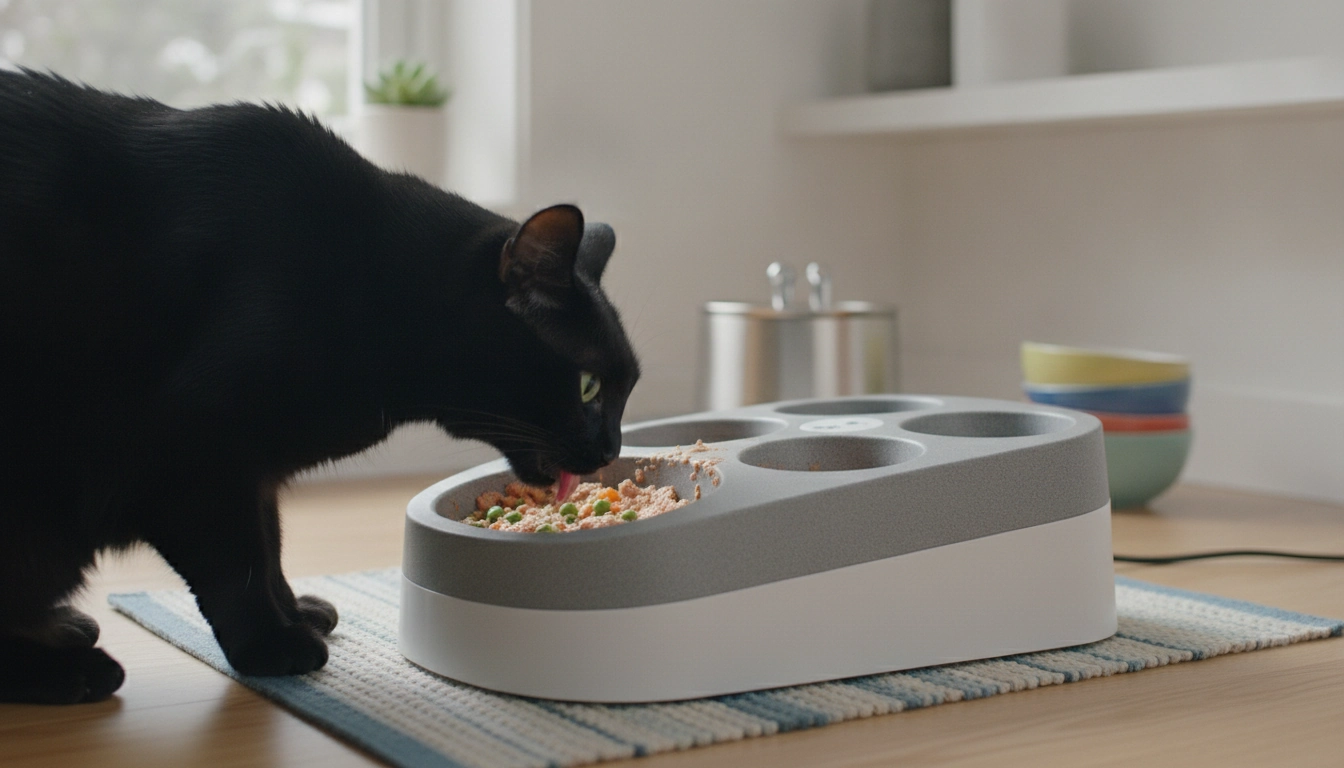
Some automatic cat feeders can work with wet food, but only specific designs handle it safely and reliably. Most standard feeders are built for dry kibble because it pours cleanly, doesn’t spoil quickly, and won’t gum up the mechanism. Wet food is heavier, messier, and time-sensitive—so the “right feeder” matters.
Wet-food-friendly feeders are usually tray-style models with rotating compartments rather than a hopper that dispenses through a chute. The tray portions are pre-loaded, then a lid opens or the tray turns to reveal the next meal. This setup avoids clogging and makes it easier to portion pate or chunky recipes without jam risk.
Wet food shouldn’t sit at room temperature for long. Look for feeders that include an ice pack slot, insulated tray, or tight sealing lid to help keep food cooler and reduce odor. Even with cooling features, many owners use wet food primarily for meals that will be served soon (like the next scheduled feeding), not for an all-day schedule.
Wet food can smear on moving parts, dry around edges, or cause lingering smells. Choose a feeder with removable, dishwasher-safe trays and a smooth interior that wipes clean easily. If the feeder uses a rotating mechanism, avoid overfilling compartments so the tray can turn without dragging food against the lid.
Wet food portions are best pre-measured and packed flat into each compartment so the lid opens cleanly. If the feeder allows multiple meals per day, use smaller servings more often to keep food fresher. For a deeper look at scheduling, portion control, and meal planning, see the full guide here: 6-Meal Automatic Cat Feeder Portion Control & Scheduling Guide.
As a general rule, wet cat food shouldn’t sit out for more than 1–2 hours at room temperature. In warm rooms, reduce that time and clean the feeder promptly to prevent bacteria growth and odors.








Leave a comment