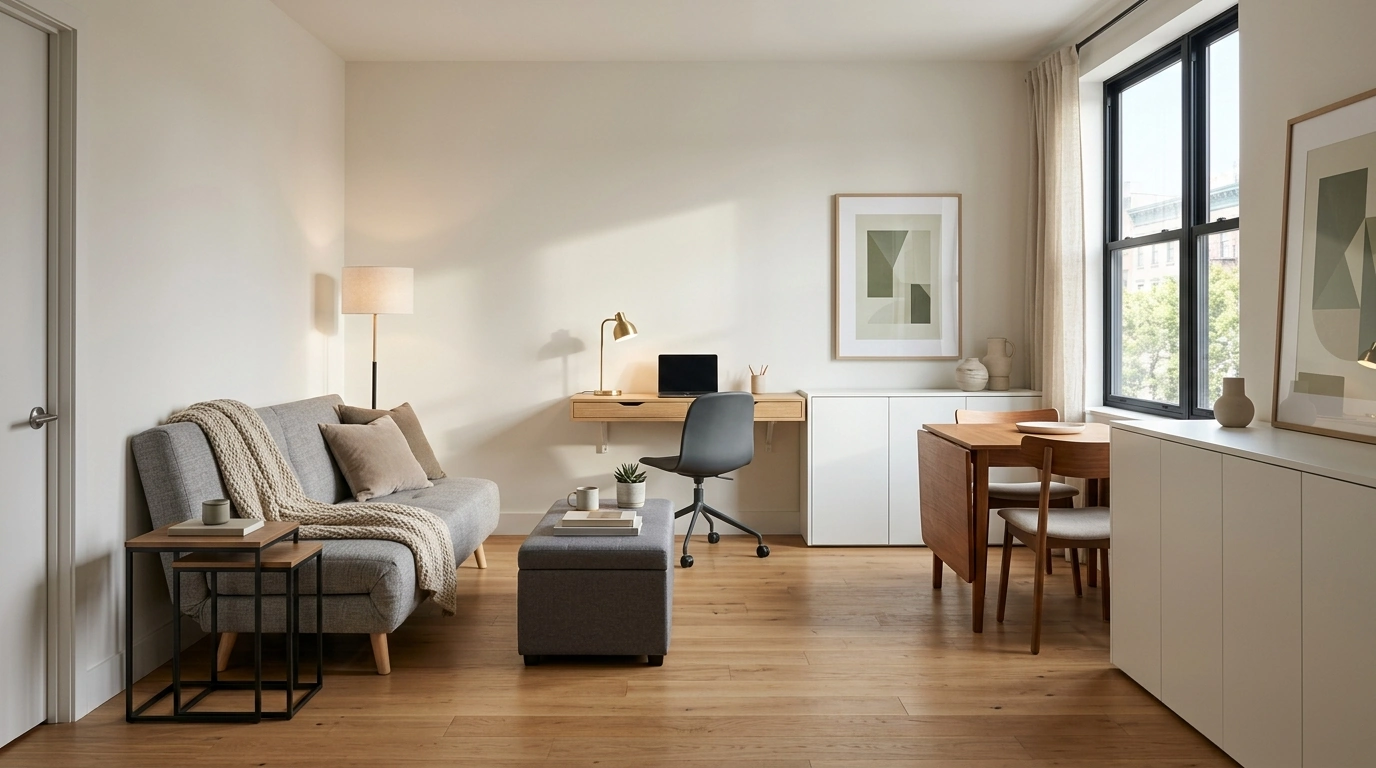
A well-designed home can feel calmer, larger, and easier to maintain—without sacrificing personality. Multifunctional space planning pairs modern interior principles with practical home organization so every room supports the way daily life actually happens. The goal isn’t to cram more furniture into less space; it’s to define clear zones, choose flexible pieces, improve storage, and set simple routines so your home stays intentional even on busy weeks.
Every successful small-space design starts with two decisions: what the room must do, and how you want it to feel. Begin with purpose by listing the top three activities that have to run smoothly—sleeping, working, dining, relaxing, hobbies, or hosting. This instantly clarifies what deserves prime real estate.
Next, set style guardrails: pick two to three consistent cues (a color family, a metal finish, a wood tone, or rounded vs. sharp shapes). When a space is tight, mixing too many “almost-matching” items reads as clutter, even when it’s technically organized.
Constraints can be design prompts. A small footprint often looks better with fewer, higher-performing pieces that do more than one job. Aim for “visual quiet”: keep surfaces curated, limit competing patterns, and use closed storage for busy categories (paperwork, cords, kids’ gear).
Before buying anything, sketch the room and mark what can’t move: doors, windows, radiators/vents, and outlets. Then identify traffic paths—clear routes to the entry, seating, and storage. A room can be beautiful and still feel stressful if you have to sidestep furniture to grab a sweater or carry a plate to the table.
Assign zones by behavior, not furniture. Instead of “desk area,” think “bill-paying zone” or “study zone.” Instead of “console table,” think “landing zone” for keys, bags, and mail. When zones match real habits, mess has fewer chances to migrate.
Pay special attention to friction points: the places where items pile up. Those piles are data. They usually mean either (1) storage is missing at the point of use, or (2) the reset routine is too complicated. Lighting can also reinforce zones: task lighting for work, warmer ambient lighting for winding down, and small accent lights for display. For credible guidance on lighting’s impact on comfort and alertness, see CDC/NIOSH resources on lighting.
In compact homes, each piece should justify its footprint. Prioritize convertible essentials—sleeper sofas, daybeds, drop-leaf tables, nesting tables, wall-mounted desks, and storage ottomans. Modular seating can also transform a layout quickly: armless units, a movable chaise, or lightweight accent chairs make it easier to switch between “movie night,” “work mode,” and “hosting.”
| Room | Primary need | Multifunctional solution | Best for small spaces because |
|---|---|---|---|
| Living room | Seating + hosting | Sleeper sofa or daybed | Replaces guest bed and keeps a single focal piece |
| Living room | Storage + surfaces | Storage ottoman / lift-top coffee table | Hides everyday items and reduces extra side tables |
| Dining area | Eat + work | Drop-leaf or extendable table | Expands only when needed; stays compact daily |
| Bedroom | Clothes + calm | Bed with drawers / lift-up storage | Moves bulky storage under the bed instead of extra dressers |
| Entry | Landing zone | Bench with shoe storage + hooks | Creates a contained drop spot that prevents spread into other rooms |
| Studio | Work + relax | Wall-mounted fold-down desk | Frees floor area and clears visual clutter when closed |
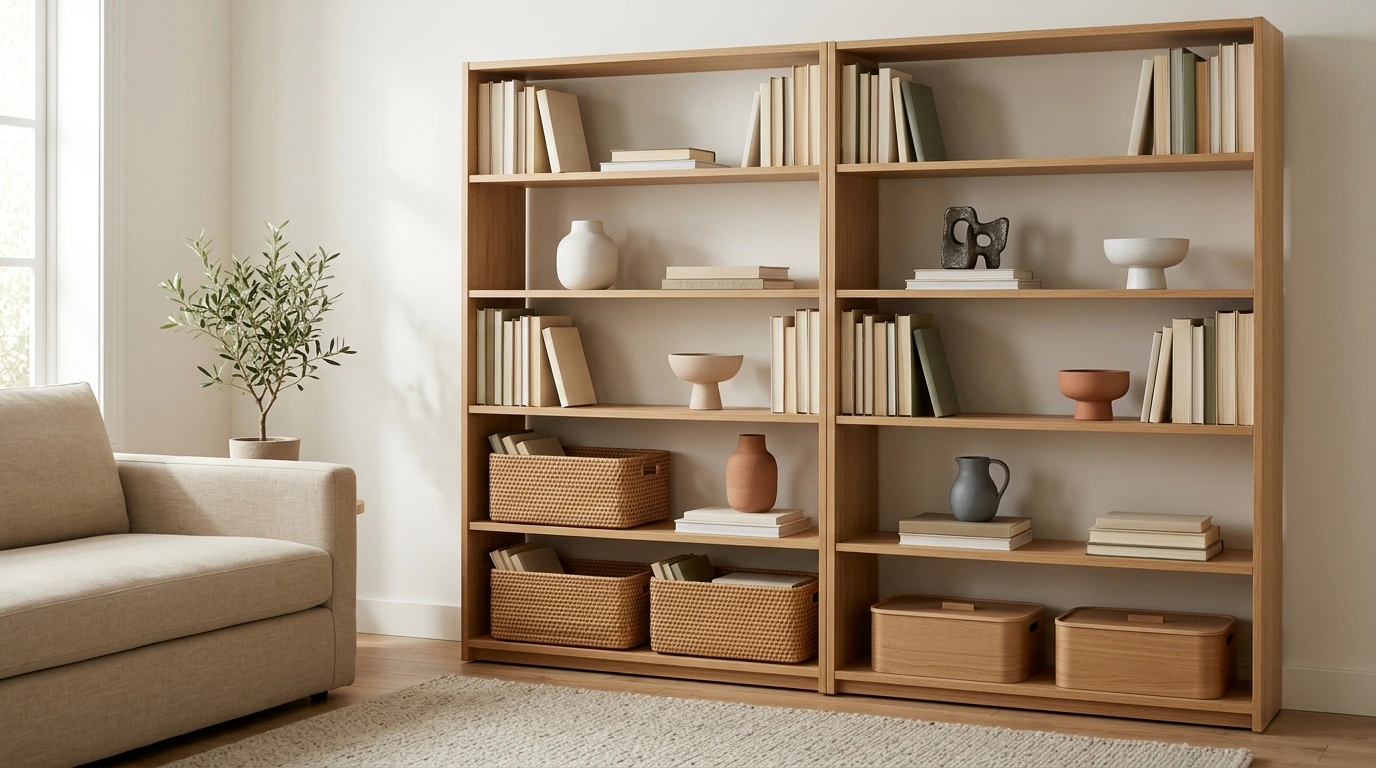
Create one intentional focal point per room: a piece of art, a feature pendant, a statement chair, or a styled shelf. Then balance open and closed storage—open shelves for curated display, closed cabinets for visual calm. Keep decor functional: trays to corral daily items, attractive boxes for remotes and cables, and baskets that are sized to a specific category (not “miscellaneous”). For more on how environments affect behavior and wellbeing, explore the American Psychological Association’s overview of environmental psychology.
If you want a more structured approach—measurements, zone mapping, storage strategy, and styling rules that align with modern interiors—use a step-by-step resource that keeps decisions simple and repeatable. Start with Transform Your Home with Style and Purpose | Multifunctional Space Design eBook for Small Spaces, Modern Interiors & Home Organization, then apply the principles to a few high-impact upgrades.
For practical furniture touches that support a multifunctional lifestyle, consider seating that adapts to kitchen-dining overlap, like the Luxury Adjustable Swivel Bar Stool – Modern Nordic Style Metal Bar Chair. And if your entry “landing zone” struggles because work items move room to room, a dedicated carry solution such as the Elegant Women’s Leather Tote Bag – 14 Inch Laptop Briefcase for Work & Daily Use can help keep essentials contained and easy to put away.
A room is truly multifunctional when it has behavior-based zones, flexible furniture that supports more than one activity, and storage systems that make switching modes easy without constant rearranging.
Use “visual quiet” (fewer competing patterns), a cohesive palette, and layered lighting, and reduce surface clutter with closed storage. Raised-leg furniture and strategic mirrors can also make a room feel lighter and more expansive.
Set category containers with clear capacity limits, store items by frequency of use, and keep the reset routine short enough to do daily. When every item has a home and the home has a limit, clutter is less likely to return.










Leave a comment