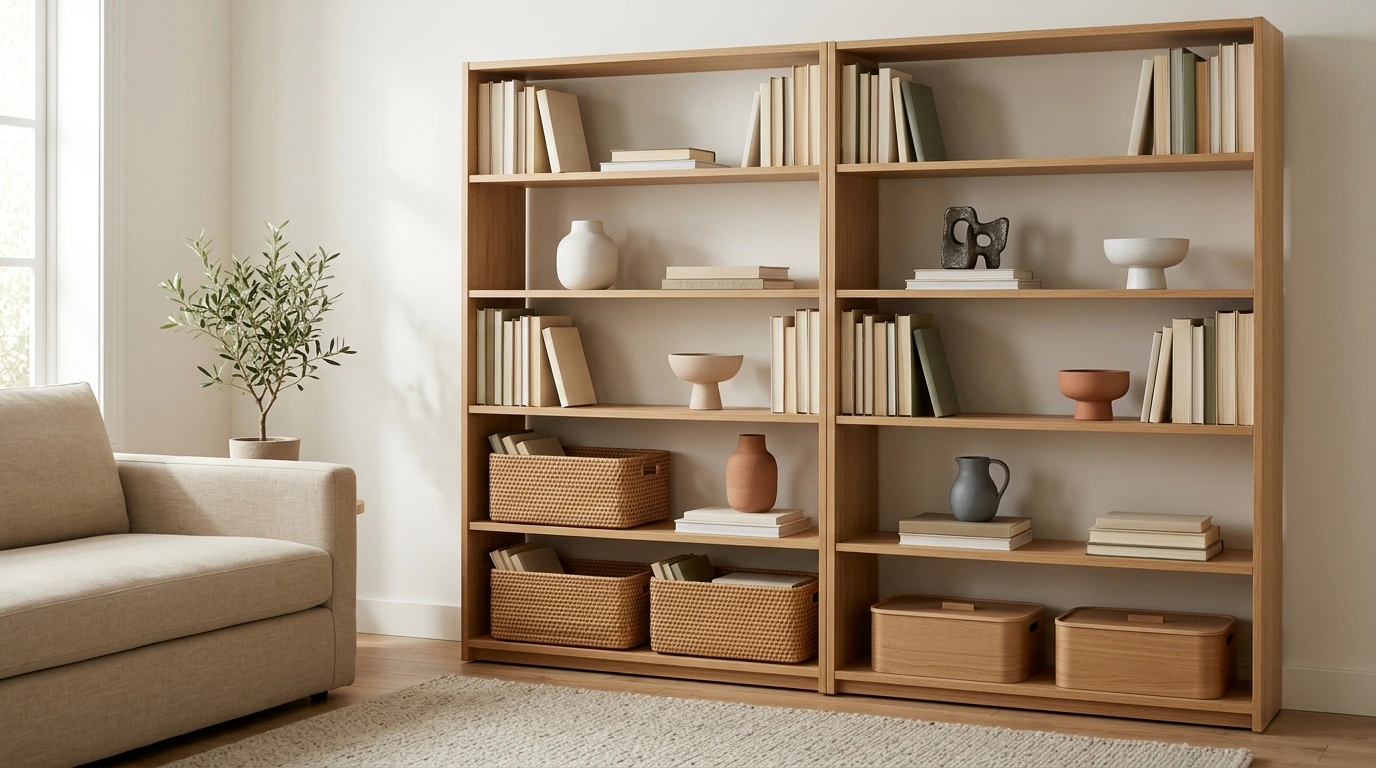
A modern minimalist bookshelf can do more than hold books: it can define a living room wall, create calm visual structure, and keep everyday items easy to find. When the lines are clean and the styling is intentional, shelving becomes part storage, part architecture—quietly elevating the entire room. Below is a practical guide to where this style works best, how to style it so it stays elegant (not sparse), and what to check before placing it in a living room, bedroom, office, or entryway.
What Makes a Modern Minimalist Bookshelf Feel Elegant
Minimalist design reads as “high-end” when the form feels deliberate and the negative space is treated as part of the composition. These details create that refined, gallery-like effect:
- Clean lines and open space: Simple geometry and breathable shelf spacing keep the room from feeling crowded, even when you add books and baskets.
- Balanced proportions: A consistent rhythm between shelf height and width helps decor look intentional rather than cluttered or accidental.
- Neutral finishes that layer well: Light wood tones, matte black, and soft whites pair easily with rugs, art, and textiles, so the shelf blends instead of competing.
- Fewer, better accessories: Minimalist shelving looks most polished with curated objects and a limited color palette—think repeats, not randomness.
- Practical elegance: Concealed or tidy storage zones (like uniform bins) keep surfaces calm enough to stay that way day-to-day.
If you’re looking for a clean-lined option designed for versatile rooms, consider the Modern Minimalist Bookshelf: Elegant Multi-Use Storage for Living Room and More as a streamlined foundation that’s easy to style up or down.
Where It Works Best: Living Room and Beyond
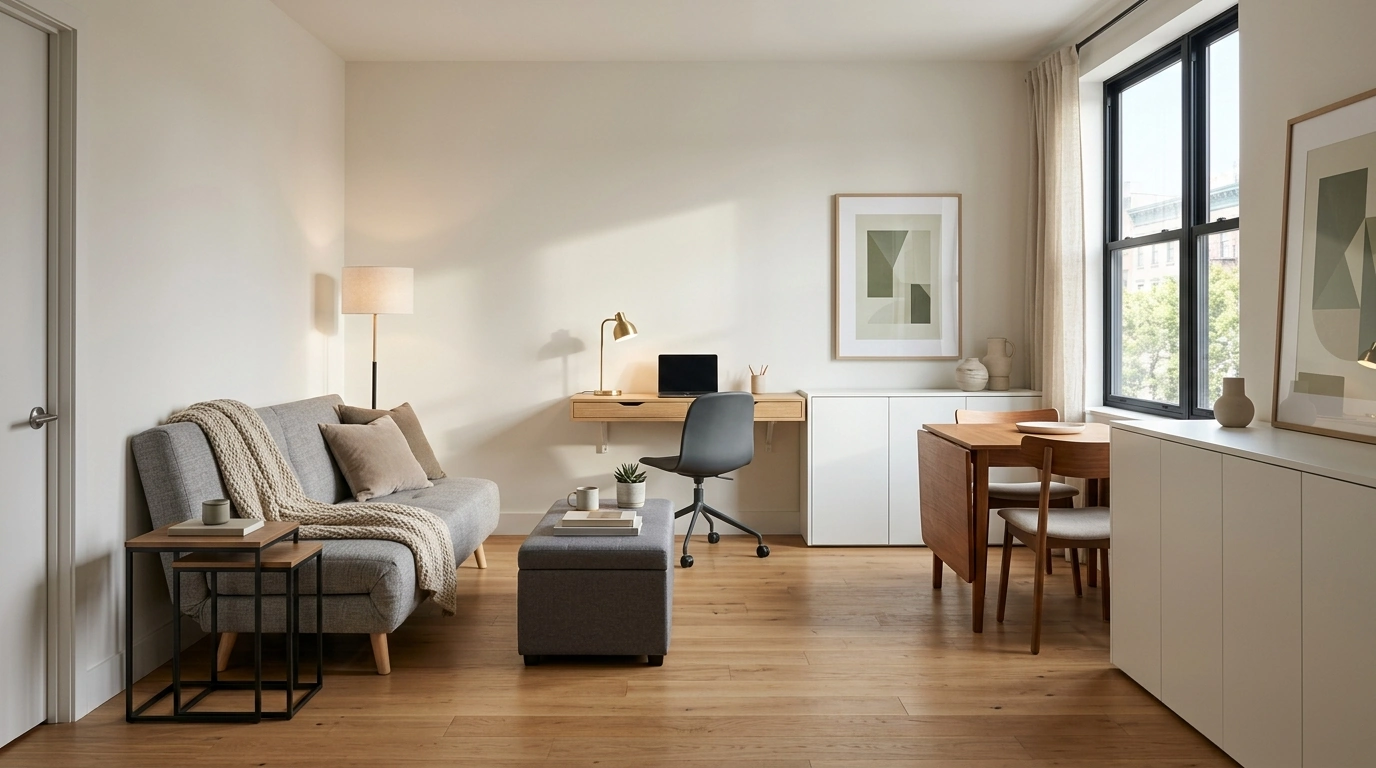
The biggest advantage of minimalist shelving is flexibility: it can support a “featured wall” moment or quietly organize a small corner without adding visual weight.
- Living room focal wall: Use it as an anchor behind a sofa or along a media wall to frame books and decor without closing in the space.
- Dining room side storage: Display cookbooks, serving pieces, and glassware while keeping the look airy and uncluttered.
- Home office organization: Mix books with labeled bins so cables, notebooks, and supplies stay out of sight but easy to reach.
- Bedroom calm corner: Store bedtime reads, fragrances, and baskets for accessories while keeping the room restful.
- Entryway drop zone: Style lower shelves with baskets for shoes or bags; keep the top shelf minimal for keys and a single decorative piece.
Placement and Styling: A Simple Formula That Stays Minimal
The easiest way to keep a minimalist bookshelf looking elevated is to treat styling like a repeatable system. That way, it still looks “done” even after everyday use.
- Start with the heavy items: Place larger objects and heavier books on lower shelves to stabilize the look and prevent top-heaviness.
- Use the 60/40 rule: Aim for about 60% closed or uniform items (books, matching bins) and 40% decor to preserve breathing room.
- Group by height and texture: Mix horizontal and vertical stacks and add one contrasting texture (ceramic, woven, metal) for depth.
- Repeat one accent color: Choose a single tone—black, brass, muted green—and echo it across 2–4 objects for cohesion.
- Leave intentional negative space: Empty sections are part of the design; they keep the bookshelf reading as “minimalist,” not unfinished.
Minimal Styling Plan by Shelf Level
| Shelf level |
Best items |
Styling tip |
| Bottom shelves |
Heavier books, baskets, closed bins |
Keep visual weight low; choose bins in matching tones for a calm base. |
| Middle shelves |
Everyday books, small trays, framed photos |
Mix vertical and horizontal stacks; keep frames to one finish for consistency. |
| Top shelves |
Light decor, small plants, sculptural pieces |
Limit to a few objects; avoid tall clutter that crowds the ceiling line. |
Multi-Use Storage Ideas for a Cleaner Daily Routine
Minimalist shelves work best when they support habits. The goal isn’t to hide everything—it’s to reduce friction so items naturally return to their place.
Safety, Materials, and Care
- Wall anchoring matters: Tall shelving or heavily loaded units should be secured to reduce tip-over risk—especially with kids or pets. For general guidance, see the U.S. Consumer Product Safety Commission’s safety resources at cpsc.gov.
- Weight distribution: Keep heavier items low and avoid overloading one section more than others to prevent bowing and wobble.
- Material awareness: If indoor air quality is a priority, look for low-emitting engineered wood and finishes. Helpful background is available at EPA Indoor Air Quality (IAQ) and the CARB composite wood formaldehyde standard.
- Surface protection: Add felt pads under ceramics or metal decor and avoid dragging heavy objects to reduce scratches.
- Routine care: Dust weekly with a microfiber cloth; wipe spills promptly with a barely damp cloth, then dry immediately.
A Minimalist Pairing: Seating That Complements Clean-Lined Storage
For a bold, modern option that complements clean-lined storage, explore the Luxury Adjustable Swivel Bar Stool – Modern Nordic Style Metal Bar Chair to add a sculptural accent with a sleek profile.
FAQ
How do minimal bookshelves avoid looking empty?
Use intentional negative space while grouping items in odd numbers and mixing vertical and horizontal book stacks. Add a few textured objects (like a ceramic piece or a woven basket) to create structure without visual clutter.
Should a bookshelf be anchored to the wall?
Yes for many setups—especially taller units or homes with kids and pets—because anchoring helps reduce tip-over risk. Use the included hardware when provided and follow the manufacturer’s instructions for your wall type.
What should go on the top shelf for a clean look?
Keep the top shelf light: a small plant, a single sculptural object, or a short stack of books works well. Leave open space and avoid tall items near the edges so the shelf line feels calm and uncluttered.
Recommended for you









Leave a comment