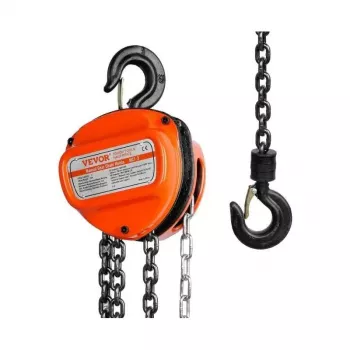
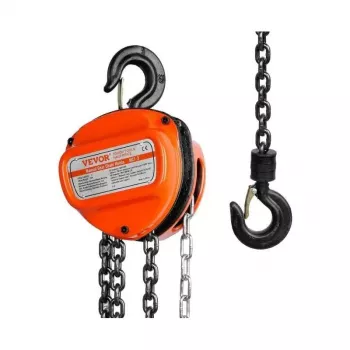
A hand chain hoist is a practical choice for controlled lifting where power isn’t convenient or desired. This 1T/2T model pairs manual lifting control with a 360° rotating hook to help align loads in tight garage bays, workshops, and factory workstations. Whether you’re setting an engine onto a stand, positioning a gearbox for service, or nudging a fixture into perfect height for fit-up, a manual chain hoist gives you measured, incremental movement without relying on outlets, compressors, or hydraulics.
What This Hand Chain Hoist Helps You Do
- Lift and position equipment, motors, machinery parts, and fixtures without electricity.
- Fine-tune height in small increments for safer alignment during installs and repairs.
- Reduce awkward pulling angles by rotating the hook to match the load direction.
- Support common tasks in garages, maintenance rooms, fabrication areas, and small industrial bays.
Why a 360° Rotating Hook Matters
Getting the load to “face” the right way is often the hardest part of lifting in real spaces—especially when the load’s pickup point isn’t perfectly centered under your beam or trolley. A 360° rotating hook helps the connection follow the most natural line of pull, which can make rigging cleaner and positioning more predictable.
- Improves load alignment when the hanging point and the pickup point aren’t perfectly centered.
- Helps reduce side-loading on hooks by letting the hook follow the line of pull.
- Makes it easier to attach slings or lifting straps when access is limited.
- Useful when repositioning a load repeatedly during assembly, welding fit-up, or engine work.
Rotation doesn’t make angled pulling acceptable—it simply helps the hook and rigging settle into a straighter, safer orientation when you’re setting up correctly.
1T vs 2T: Choosing the Right Capacity for the Job
Capacity should be selected from the heaviest load you expect to lift, including fixtures, slings, spreaders, and any attached tooling. For routine work, it’s smart to leave headroom rather than living at the limit—manual hoists tend to operate smoother when they aren’t constantly near maximum rating.
- Choose capacity based on the heaviest load expected, including fixtures, slings, and any attached tooling.
- Avoid operating near the limit for routine work; leave headroom for smoother operation and longer service life.
- Match the hoist capacity to the strength of the supporting structure (beam, trolley, anchor point), not just the load.
- If uncertain, verify load weight and consult the building/rigging specification before lifting.
Quick capacity selection guide
| Capacity option |
Typical use cases |
Best fit environments |
Notes |
| 1T (1 ton) |
Engines, shop equipment, small machinery components |
Home garages, light workshops |
Good for frequent lighter lifts; confirm anchor strength and lift height needs |
| 2T (2 ton) |
Heavier machine parts, industrial fixtures, denser loads |
Factories, maintenance bays, fabrication shops |
Extra margin for heavier assemblies; ensure supporting beam/trolley is rated accordingly |
Core Components and What to Check Before Every Lift
A short pre-lift check reduces surprises once the load is in the air. If any part looks questionable, stop and correct it before applying full tension.
- Hooks: confirm safety latches function and hooks are not bent, cracked, or twisted.
- Load chain: look for damaged links, rust, or uneven wear; keep chain properly seated in the wheel.
- Hand chain: ensure smooth pull and no kinks; keep a clear pull path to avoid sudden jerks.
- Brake/action: test with a light load to verify the hoist holds and lowers smoothly.
- Markings: confirm the rated capacity label is readable and matches the planned lift.
For general workplace guidance, consult OSHA resources and applicable ASME B30 standards used in many hoisting and rigging programs.
Safe Setup for Garage and Factory Lifting
- Use only rated lifting points: beams, trolleys, or anchors designed for overhead lifting.
- Keep the line of lift vertical; do not side-pull or drag loads with the hoist.
- Center the load under the hook to minimize swing; use the rotating hook to align connections.
- Keep hands clear of pinch points and maintain a stable stance while operating the hand chain.
- Never lift or move loads over people; set controlled exclusion zones in busy work areas.
Operation Tips for Smoother, More Controlled Lifts
Manual lifting is all about feel and consistency. Small technique improvements can reduce shock loading and make placement more accurate.
- Start with slight tension to remove slack before fully lifting.
- Use steady pulls rather than sharp yanks to reduce shock loading.
- If the load twists, lower slightly and re-seat slings or rotate the hook to correct alignment.
- For precise placement, lift a little above target height and lower into position under control.
- If anything feels abnormal (binding, slipping, uneven chain movement), stop and inspect.
Care, Storage, and Service Basics
Product Snapshot
Shop in-stock picks
FAQ
Can a hand chain hoist be used for pulling or angled lifting?
No. Manual chain hoists are intended for vertical lifting; side-loading or angled pulls can damage the hoist, hooks, and rigging and can create an unstable load. Reposition the anchor point to keep the lift vertical, or use equipment specifically designed for pulling.
How often should a manual chain hoist be inspected?
Do a quick visual check before every use (hooks, latches, chains, and operation). Add periodic detailed inspections based on how often it’s used and your workplace requirements, and follow the manufacturer guidance and applicable safety standards.
What does a 360° rotating hook improve during lifting?
It helps you attach slings more easily in tight spaces, improves alignment when positioning a load, and reduces unwanted twisting at the connection point. It supports a cleaner line of pull, but it does not make side-loading acceptable.
Recommended for you











Leave a comment