Foldable Password Chain Locks: Practical Security for Bikes and E‑Scooters
A solid lock helps reduce the chance of a quick grab-and-go theft, especially for e-scooters and commuter bikes left outside stores, stations, and campuses. A foldable, heavy-duty lock with a resettable password aims to balance real-world security with daily convenience—no keys to lose, and a compact shape that’s easy to carry. For more guidance, see Best Bike Lock of 2026: Strong and Practical | Ultimate Bicycle Security.
What Makes a Foldable Password Lock Different
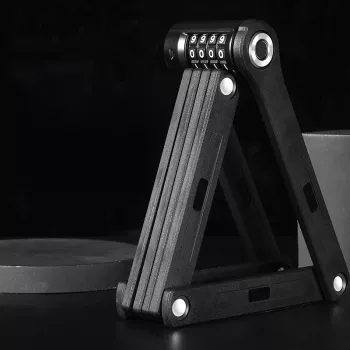
Foldable locks use linked segments that collapse into a compact bundle, creating a “packs small, reaches far” approach that suits modern commuting. For further reading, see Best bike chain locks 2026: Our pick of versatile bike locks.
- Foldable link design: Packs down smaller than many U-locks while offering more wrapping flexibility around racks, poles, and scooter stems.
- Resettable combination: Removes key management hassles for shared bikes, families, or commuters rotating bags and jackets.
- Heavy-duty build intent: Designed to deter opportunistic attacks like prying and quick snips (no portable lock is invincible against determined power tools).
- Protective outer layer: Helps reduce frame scratches during transport and while locked.
For riders who want a reference point for security ratings and testing standards, organizations like Sold Secure explain how different products are evaluated for theft resistance.
Best Use Cases for Bikes, E‑Scooters, and Daily Commuting
Foldable combination locks shine when parking situations change throughout the day and speed matters.
- Urban errands: Quick stops where theft risk is moderate but time spent locking/unlocking needs to be minimal.
- Campus and transit parking: Combination access helps when bikes are used by multiple riders or frequently relocked between classes or transfers.
- E‑scooters: The foldable shape can route through smaller frame openings and around thicker street fixtures that a rigid lock can’t fit.
- Apartment and workplace storage: Compact folding is easier to stow in a backpack or scooter bag than bulkier chains.
How to Lock It for Better Security
A strong lock works best when the lockup technique makes cutting, prying, and leverage attacks harder. Even small habit changes can meaningfully improve outcomes.
- Prioritize the frame: Secure the bike frame to a fixed object; for scooters, secure the main stem or a frame point that can’t be easily removed.
- Reduce slack: Keep the lock off the ground to make leverage attacks harder and to limit space for tools.
- Pick smart anchors: Choose thick, immovable objects (bike racks, solid posts) and avoid fences or thin poles that can be cut or lifted over.
- Hide the combination a bit: Position the combination away from easy viewing and keep it facing down or inward when possible.
- Layer security in high-risk situations: For long parking durations, add a second lock to cover wheels or accessories.
If you want a visual checklist for common lockup methods, Kryptonite’s locking guidance is a useful quick review of frame-first technique and anchor selection.
Combination Setup and Care Tips
Combination locks are most convenient when the code is memorable, the mechanism stays clean, and the folding joints move smoothly.
- Choose a non-obvious code: Avoid 0000, 1234, birth years, or repeating digits.
- Store it safely: If the lock is used infrequently, keep the code in a secure password manager rather than on a note in your bag.
- Clean periodically: Wipe dust and grit from joints; road grit can shorten the smoothness of folding mechanisms over time.
- Weather care: After heavy rain or winter slush, dry the lock before folding it into a bag to reduce corrosion risk.
- Mounting check: If your lock includes a mounting option, make sure it’s tight so it won’t rattle or rub the frame.
For broader theft-prevention habits beyond locks—like registration, documentation, and parking strategy—BikeRegister’s theft prevention advice offers practical steps many riders overlook.
Comparing Lock Styles for Real-World Parking
Quick comparison of common lock types
| Lock type |
Carry convenience |
Flexibility around objects |
Typical use |
Notes |
| Foldable combination lock |
High |
High |
Commuting and mixed parking scenarios |
Good balance of packability and anchoring options |
| U-lock |
Medium |
Medium |
High-theft areas with standard racks |
May require a secondary cable for wheels |
| Chain + padlock |
Low |
High |
Longer outdoor parking |
Heavier; quality varies widely |
| Cable lock |
Very high |
Very high |
Short stops / secondary security |
Best paired with a stronger primary lock |
What to Expect from a Heavy-Duty Lock (and Its Limits)
Product Options for Commuters
FAQ
Is a combination lock secure enough for an e-scooter?
It can be, as long as the lock’s construction is robust and you lock to a solid anchor with minimal slack. For high-risk areas or longer parking, adding a second lock for accessories or removable parts provides better overall protection.
How do you set or reset the password on a foldable bike lock?
Generally, open the lock with the current code, locate the reset mechanism, choose the new digits, then return the mechanism to the locked position. Test the new code several times before heading out, and follow the included instructions for the exact steps.
What’s the best way to lock a bike to avoid wheel theft?
Lock the frame and at least one wheel to a fixed object whenever possible. If you have quick-release wheels or accessories, use a second lock or cable for the remaining wheel and remove easily detachable items.
Recommended for you







Leave a comment