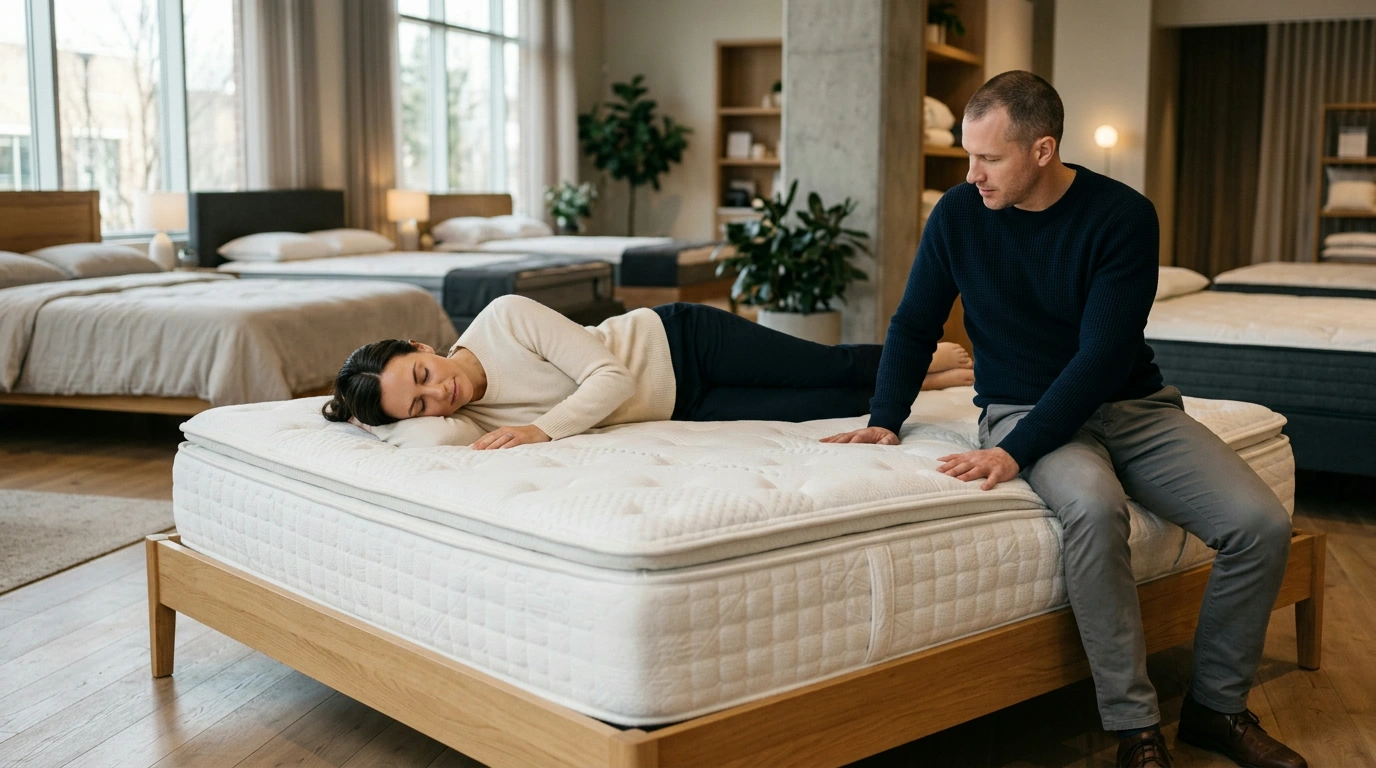
A luxury mattress should feel effortless for years—not just during a five-minute showroom test. The smartest way to shop is to use a repeatable checklist that compares support, comfort materials, temperature control, motion isolation, edge stability, and the policies that protect your investment. When the details match your body and sleep style, “high-end” becomes a nightly upgrade rather than a short-lived splurge.
A premium mattress earns its status through performance and transparency—not vague buzzwords. Start by looking for consistent support across the surface, durable comfort layers that resist impressions, quality cover materials that breathe well, and customer-friendly policies.
Instead of settling for marketing terms like “cooling foam” or “luxury plush,” look for clear disclosures: foam density (when available), latex type (Talalay vs. Dunlop), coil construction (pocketed vs. interconnected), coil gauge, edge reinforcement, and fiber blends in the cover. When brands provide real specs and straightforward warranty language, it’s easier to predict how the bed will feel in year three—not just night one.
Finally, prioritize outcomes you can actually evaluate: spinal alignment, pressure relief, heat regulation, motion isolation, edge support, and noise. For broader background on how these factors affect comfort and long-term satisfaction, see the Sleep Foundation mattress buying guide.
High-end comfort is personal. A mattress that feels “cloud-like” to one person can cause shoulder numbness or lower-back tension for another. Begin with the basics:
| Sleep style / need | What tends to help | Common red flags during testing |
|---|---|---|
| Side sleeping, pressure relief | Plush-to-medium comfort layer, responsive contouring, zoned support if needed | Shoulder tingling, hip pain, ribs/shoulders feel “jammed” |
| Back sleeping, alignment | Medium-to-firm with steady lumbar support, minimal sink at hips | Lower back gap (too firm) or hips sinking (too soft) |
| Stomach sleeping, flatter feel | Firm support core, thinner comfort layer, strong edge support | Lower back sway, feeling “stuck” in a dip |
| Hot sleeping | Breathable cover, open-cell foams/latex, coil airflow, phase-change textiles | Heat build-up within 10–15 minutes, sweaty lower back/torso |
| Partner movement sensitivity | Good motion isolation, stable support, minimized bounce if preferred | Waking when partner turns, ripple effect across surface |
For practical sleep-health fundamentals that support better rest beyond the mattress itself, the NIH (NHLBI) overview on healthy sleep is a helpful reference.
If you want a structured way to shop, use Choosing the Best High-End Mattress Checklist (digital download) to record specs, test notes, and policy details for each finalist in one place.
Many sleepers need 2–4 weeks to fully adapt as foams relax slightly and the body adjusts to new support. Mild, short-lived soreness can be normal; persistent numbness, sharp pressure points, or worsening back pain is usually a sign the fit is off and the sleep trial should be used.
No—durability depends on material quality and construction (foam density, latex type, coil design, and edge reinforcement), not price alone. Review disclosed specs when possible and make sure the warranty and return policy are strong enough to back up long-term performance.
The best firmness depends on sleep position and body type, but the consistent goal is neutral spinal alignment with enough pressure relief. Test in your primary sleep position and look for steady lumbar support without hip sink; zoned support can help when the hips and shoulders need different levels of give.










Leave a comment