Solid Wood Rattan Counter & Bar Chair with Handrails for a Modern Minimalist Kitchen
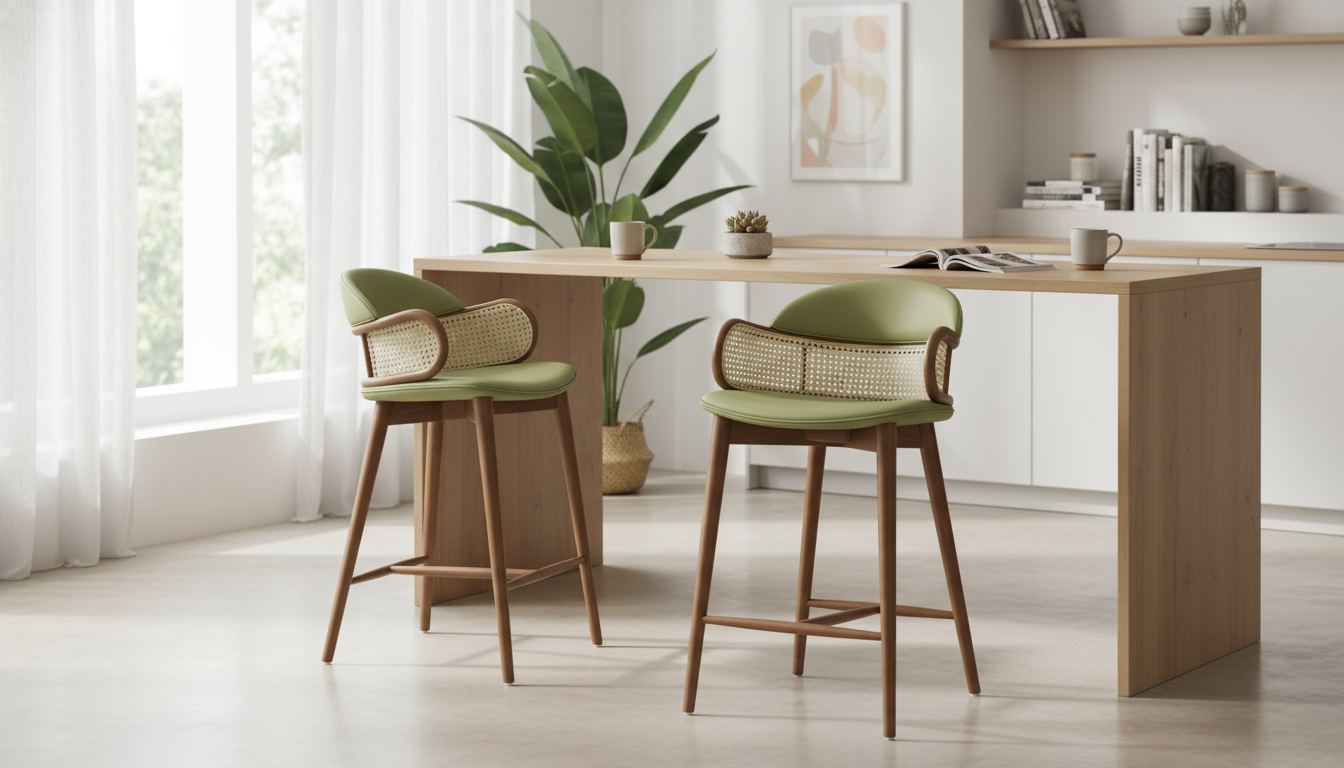
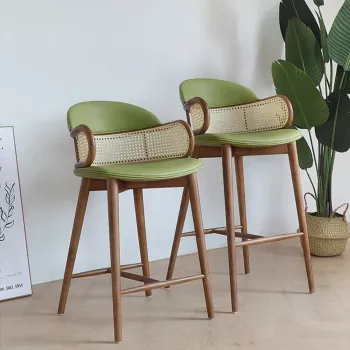
A counter or bar chair should look calm in the room and feel dependable every day. This solid wood and rattan chair pairs a warm natural frame with breathable woven texture, while handrails add comfort and stability for longer sits at an island, counter, or home bar. The result is a piece that reads minimal, not bare—inviting, not fussy. For more guidance, see Little kitchen refresh with my new @nathanjames bar stools So ….
What Makes This Chair Work in Modern Minimalist Spaces
- Natural materials soften clean-lined kitchens without adding visual clutter, so the chair feels quiet and intentional.
- Rattan weave adds texture while keeping the silhouette light and airy—useful when your space already has strong geometry (flat fronts, slab counters, straight tile lines).
- Solid wood framing feels substantial, which matters for high-traffic seating where the chair gets pulled, scooted, and leaned on daily.
- Handrails create balance: they visually “anchor” the chair at the counter and make it feel more secure when shifting positions.
Materials and Build: Solid Wood Frame + Woven Rattan
- Solid wood structure supports long-term rigidity and everyday durability. Wood is widely used in furniture for its strength-to-weight performance and predictable structural behavior when properly constructed and cared for (see the USDA Forest Service Wood Handbook).
- Rattan surfaces are breathable, helping reduce heat buildup during longer meals, coffee chats, or laptop time at the island. For a quick material overview, Encyclopaedia Britannica’s rattan entry explains why it’s valued for weaving and furniture.
- Handwoven character is part of the look. Subtle variation in the weave can feel more authentic in minimalist interiors, where a little texture prevents the room from feeling flat.
- Best practice for longevity: keep the chair in stable indoor humidity and avoid prolonged direct sun, which can dry the weave over time and shift color on natural materials.
Comfort Details: Handrails, Back Support, and Everyday Use
- Handrails give your arms a place to land and can make sitting down and standing up smoother—especially helpful at taller seats where leverage matters.
- Supportive back shaping works well for casual dining and “in-between” moments—checking email, helping with homework, or lingering after dinner.
- Foot support is non-negotiable. Aim for relaxed knees and feet resting comfortably on a footrest rather than dangling, which can add pressure behind the thighs during longer sits.
- Optional minimal cushion: if the counter doubles as a work zone, a thin seat pad can take the edge off extended sessions while keeping the clean profile. Neutral linen or cotton blends tend to look most natural here.
For posture basics while seated, the American Academy of Orthopaedic Surgeons recommends a balanced, supported sitting position—something handrails and a stable back can help encourage when used at the right height.
Choosing the Right Height for Counters and Bars
- Measure first: floor to the top of the counter or bar surface is the number to start with.
- Comfort clearance rule: leave about 10–12 inches between the seat height and the countertop height so legs fit naturally and you don’t feel cramped.
- Mixed-height households: if multiple people use the same seating, prioritize stable foot support and easy entry/exit—handrails can make a noticeable difference.
- When in doubt, choose based on the surface used most often: standard kitchen counter-height vs. a taller bar-height ledge.
Quick Height Guide for Counter & Bar Seating
| Surface type |
Typical surface height |
Typical seat height range |
Comfort clearance (seat to top) |
| Counter / kitchen island |
34–36 in (86–91 cm) |
24–26 in (61–66 cm) |
10–12 in (25–30 cm) |
| Bar / raised bar |
40–42 in (102–107 cm) |
28–30 in (71–76 cm) |
10–12 in (25–30 cm) |
Placement Ideas: Where This Chair Fits Best
- Kitchen island seating: pairs naturally with stone, quartz, or butcher block tops—especially when the rest of the room leans sleek and minimal.
- Home bar corner: rattan texture keeps the area welcoming without visually competing with bottles, glassware, or metallic accents.
- Breakfast nook: handrails make it feel like a “real chair,” not a perch—good for slower mornings and longer conversations.
- Open-plan layouts: coordinates easily with light wood floors, matte black fixtures, and neutral textiles, bridging kitchen and living zones without a hard style shift.
Care and Maintenance for Wood and Rattan
Styling Tips: Minimal, Warm, and Intentional
What to Check Before Ordering
Featured Pieces to Complete the Look
FAQ
Will the handrails fit under a standard kitchen counter overhang?
Measure from the floor to the underside of the counter overhang, then compare it to the chair’s arm/handrail height. Also check overhang depth—thicker countertops or shallow overhangs can reduce usable clearance and may require more careful sizing.
How do wood and rattan hold up in a busy kitchen?
Solid wood provides a stable structure, while rattan stays breathable and comfortable for everyday use. Routine dusting, quick spill cleanup, avoiding soaking, and keeping the chair away from prolonged heat or direct sun will help both materials age well.
Is this better for counter height or bar height seating?
It depends on the seat height version you choose and the height of your surface. Use the 10–12 inch clearance guideline between the seat and the top of the counter/bar, and measure your space to select the appropriate seat-height range.
Recommended for you












Leave a comment