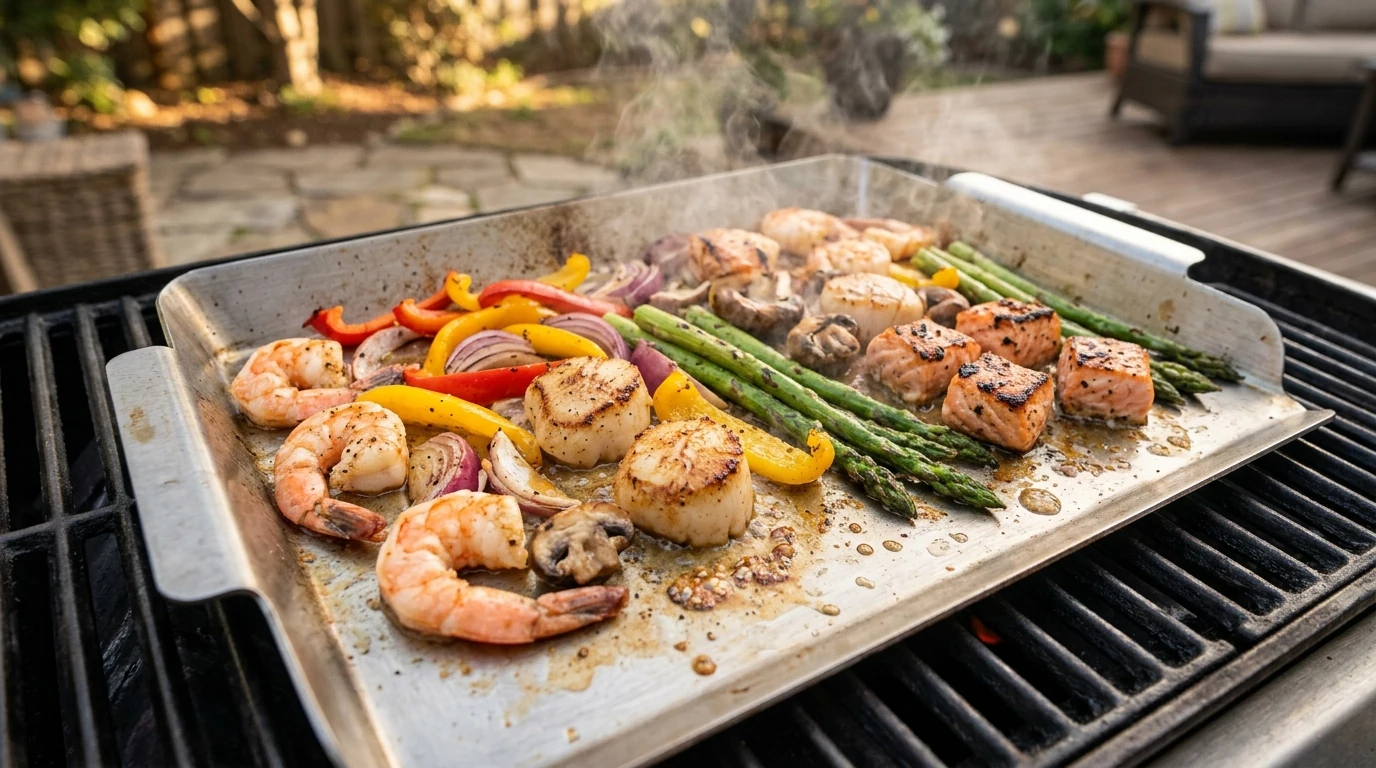
A rectangular stainless steel grill plate adds control to outdoor cooking and oven baking—keeping delicate seafood from falling through grates, capturing flavorful juices, and helping vegetables and small items cook evenly. It’s a simple upgrade that turns “hard to manage” foods (shrimp, scallops, chopped veggies, sauced bites) into reliable, repeatable cooks—without giving up the high-heat browning that makes grilling worth it.
What a Rectangular Grill Plate Does Well
- Creates a stable surface for shrimp, scallops, chopped vegetables, and thin fish fillets that can stick or break on open grates.
- Helps retain marinades and butter-based sauces while still allowing high-heat searing and browning.
- Supports batch cooking: multiple portions can be arranged without rolling or slipping.
- Works as a bridge between grilling and baking—use it for oven-finished dishes after searing outdoors.
- Encourages even cooking by reducing flare-ups from dripping fats and sugars.
Why Stainless Steel Is a Practical Choice
- Resists rust and staining better than many carbon steel or coated surfaces when properly cleaned and dried.
- Handles high heat on grills and in ovens without the coating worries associated with some nonstick options.
- Neutral surface that won’t add cast-iron seasoning flavors to delicate seafood or baked dishes.
- Often dishwasher-safe depending on construction, though handwashing can preserve the finish longer.
- Pairs well with metal utensils when needed (avoid aggressive scraping that can leave deep gouges).
Best Uses: BBQ, Baked Dishes, and Seafood
A rectangular plate shines when foods are small, delicate, or saucy—anything that’s frustrating on open grates. A few crowd-pleasers:
- Seafood: shrimp, scallops, salmon bites, mussels with garlic butter, mixed seafood medleys with lemon.
- BBQ sides: sliced onions and peppers, asparagus, mushrooms, corn kernels, diced potatoes (par-cooked, then crisped).
- Baked dishes: sheet-pan style nachos, baked feta with tomatoes, roasted vegetable mixes, broiled finishing for casseroles.
- Sauced items: teriyaki vegetables, honey-garlic shrimp, chili-lime fish chunks—less sauce lost to the fire.
- Breakfast on the grill: bacon pieces, hash, sautéed veggies for omelets (use moderate heat to limit smoke).
If you want a dedicated surface built for these jobs, the Stainless Steel Rectangular Grill Plate for BBQ, Baked Dishes & Seafood keeps everything in one manageable zone, from quick shrimp sears to oven-finished sides.
Heat Management for Better Browning (Without Burning)
Stainless steel rewards good heat habits. Once you dial in preheat and spacing, sticking and scorching become far less common.
- Preheat the plate: 5–10 minutes on the grill over medium to medium-high helps reduce sticking and improves sear.
- Use two-zone grilling: keep one side hotter for searing and a cooler side for finishing thicker pieces.
- Watch sugary marinades: cook over medium heat and stir/flip more often to prevent scorching.
- Add oil strategically: lightly coat the plate or the food; avoid pooling oil which can smoke at high heat.
- For oven use: preheat the plate in the oven for crisp edges, or start cold for gentler roasting.
For safety reminders and smart grill setup, the NFPA’s grilling safety guidance is a solid reference—especially when you’re cooking with higher heat and hot metal surfaces.
Quick Guide to Cooking Times and Handling
- Seafood cooks fast: use a timer and remove as soon as opaque and firm to avoid dryness.
- Cut uniformly: even sizes cook evenly; small cubes and thin slices brown quickly but can overcook fast.
- Leave breathing room: space between items lets steam escape so browning can develop.
- Use a thin spatula: it slides under delicate pieces; tongs can squeeze soft fish and push out juices.
- Finish off-heat: add lemon, vinegar, and herbs after cooking to keep flavors bright.
Common Foods on a Stainless Steel Grill Plate
| Food |
Suggested Heat |
Typical Time |
Handling Tip |
| Shrimp (medium) |
Medium-high |
2–4 min |
Flip once; remove when pink and curled. |
| Scallops |
High |
3–5 min |
Sear undisturbed to build crust, then turn. |
| Salmon cubes |
Medium-high |
6–10 min |
Turn gently; finish on cooler zone if needed. |
| Mixed vegetables (sliced) |
Medium |
8–15 min |
Toss occasionally; avoid overcrowding. |
| Nachos (grill-safe toppings) |
Medium |
5–10 min |
Use indirect heat to melt without burning chips. |
When cooking proteins, use safe temperature targets and dependable thermometers. The USDA safe minimum internal temperature chart is a straightforward guide for finishing meat and seafood safely.
Cleaning and Care That Keeps Stainless Steel Looking Good
Safety and Compatibility Notes
When a Rectangular Plate Beats a Basket or Griddle
Featured Picks for Outdoor Hosting
FAQ
Can a stainless steel grill plate be used in the oven as well as on a BBQ grill?
Most stainless steel grill plates can move between grill and oven, but it’s best to confirm the manufacturer’s temperature guidance. Preheating the plate (grill or oven) helps browning, and heat-resistant gloves are essential when transferring hot metal.
How to keep seafood from sticking to a stainless steel grill plate?
Preheat the plate, lightly oil the plate or seafood, and pat seafood dry before cooking. Let it sear without moving too soon; once a crust forms, it releases more easily. For sugar-based marinades, reduce heat slightly and turn more often to avoid scorching.
What is the best way to clean browned-on residue from stainless steel after grilling?
While the plate is still warm (not blazing hot), deglaze with warm water and lift residue with a soft spatula. If needed, soak in warm soapy water, then use a baking-soda paste or stainless cleaner for stubborn discoloration; avoid bleach and harsh abrasives.
Recommended for you










Leave a comment