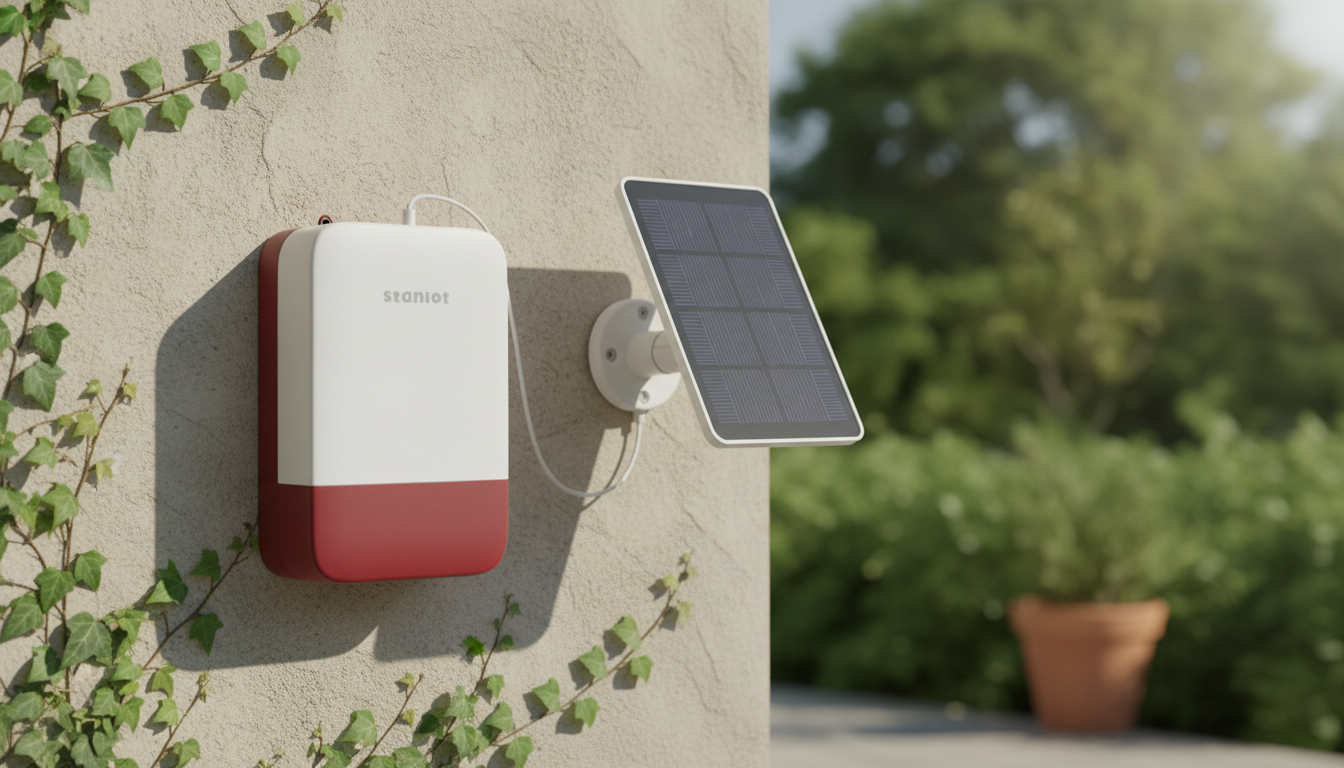
A loud siren is one of the fastest ways to deter intruders, alert neighbors, and signal an emergency on a property. This wireless indoor/outdoor siren pairs a high-output 120dB alarm with flexible power options—battery backup for outages and an optional solar charging approach for low-maintenance protection in off-grid or hard-to-wire areas.
This type of wireless siren is built to add an unmistakable audible layer to a security setup—something that can be heard quickly and at a distance when a sensor, alarm panel, or rule triggers it.
For shoppers comparing options, the 120dB Wireless Indoor/Outdoor Siren Alarm with Battery Backup & Solar Option is designed for flexible placement and resilience, especially in areas where wiring is inconvenient.
120dB is intended to be attention-grabbing, but real-world effectiveness depends heavily on where it’s mounted and what sits between the siren and the listener. Walls, insulated garage doors, trees, and even wind direction can noticeably reduce perceived loudness, particularly at distance.
If sound exposure is a concern during testing or installation, it’s worth reviewing general guidance on loud environments from OSHA’s occupational noise resources. Keep tests short, and confirm household members know when a test is happening.
Power strategy often determines whether a siren stays dependable when it’s needed most. A unit with battery backup can continue operating through outages, while solar-assisted operation can reduce the maintenance burden in outdoor installations that are hard to access.
| Power setup | Best for | Pros | Watch-outs |
|---|---|---|---|
| Battery backup only | Homes with occasional outages | Works during power loss; simple setup | Requires recharge/replacement on a schedule |
| Solar-assisted + battery | Outdoor/off-grid placements | Lower maintenance; better long-term readiness | Needs sunlight; performance varies with shade and seasons |
| Mixed placement (indoor battery, outdoor solar) | Whole-property alerting | Redundancy across zones; flexible coverage | Requires routine checks for each location |
For a practical overview of solar performance factors (cloud cover, panel orientation, seasonal changes), see NREL’s solar research and basics. For outage planning and what to expect during extended disruptions, Ready.gov’s power outage guidance is a useful reference.
Good placement improves two things at once: audible reach and tamper resistance. The goal is to make the siren difficult to disable while keeping it audible where it matters—inside the home, outside near entry points, and across the property line where a neighbor might notice unusual activity.
For outdoor setups, think about “line of hearing.” A siren tucked behind thick beams, deep alcoves, or dense landscaping may be harder to notice from the street. Under-eave mounting often balances shelter with better dispersion.
Wireless sirens shine when speed of installation and flexibility matter. They’re especially practical for properties with changing needs, limited wiring access, or multiple structures spread across a lot.
It can be very loud at close range, especially in small enclosed spaces. Place it centrally but away from bedrooms, keep tests to brief bursts, and consider sensitivity for kids and pets.
Solar panels can still charge in indirect light, but charging rates drop in heavy cloud cover and short winter days. Good placement and battery backup help bridge low-sun periods.
Monthly or quarterly tests are common, with visual inspections after storms or extreme heat. Check battery health on a schedule that matches usage and the manufacturer’s guidance.









Leave a comment