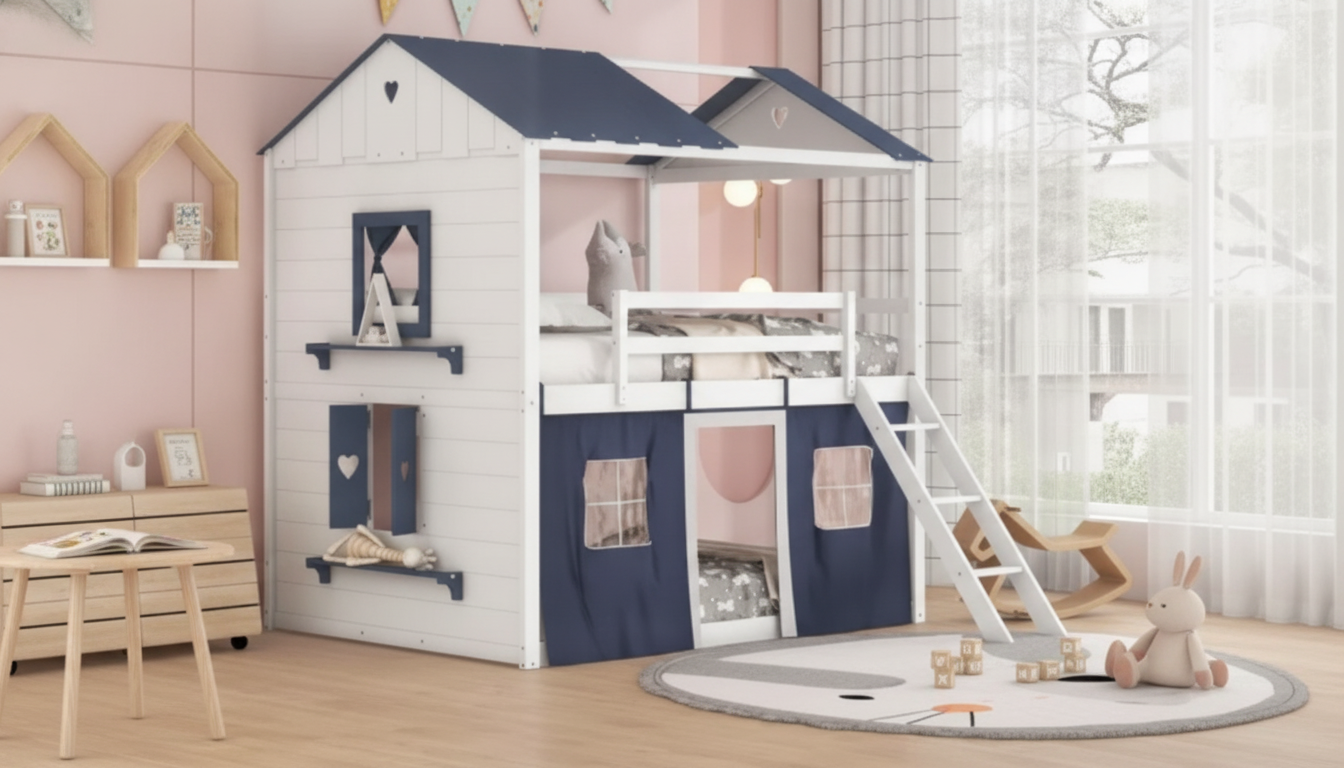
A full loft bed with a tent and playhouse-style space turns one footprint into two zones: a comfortable sleeping area up top and an imaginative hideout below. The result is a room that feels bigger without adding more furniture—especially helpful when you want sleep, play, and storage to coexist without constant clutter.
If you’re shopping for a centerpiece bed that supports both rest and everyday play, start with a well-built frame and a layout that fits your room. The Full Loft Bunk Bed with Tent and Playhouse Design is made for that “sleep upstairs, play downstairs” rhythm—giving kids a place to recharge and a place to imagine, all in one setup.
What makes this loft-and-playhouse setup different
- One footprint, two usable zones: The loft layout opens space under the mattress for play, reading, toy storage, or a compact desk—without expanding the bed’s floor space.
- More room up top: A full-size sleeping surface offers extra width versus a twin loft, which can be helpful for growing kids, weekend sleepovers, or bedtime storytime.
- A built-in “toy home base”: Tent and playhouse elements encourage independent play and can make cleanup easier because toys naturally migrate back under the bed.
- Shared-room friendly: One child can rest while another uses the lower area for quiet activities like books, puzzles, or pretend play.
Key features to look for in a full loft bed with tent
- Guardrails that feel truly secure: Look for full-length guardrails and a height that still protects once your mattress is on the slats. Avoid designs with large openings that could create entrapment risks.
- A ladder that works with your room: Check that it attaches firmly, has comfortable rung spacing, and doesn’t block doors, drawers, or closet access when placed in the intended corner.
- Breathable, kid-friendly fabric: Tent panels should have smooth seams, secure attachment points, and a fit that stays taut (so it’s less likely to snag during climbing or everyday play).
- Practical underbed clearance: Kids should be able to sit and play comfortably below, while adults can still supervise easily.
- Rounded edges and an easy-clean finish: A sealed surface helps with real-life messes—spills, crayons, fingerprints—without constant worry.
Safety essentials for loft beds
Loft beds can be a smart space-saver, but they do require clear rules and consistent checks. For baseline guidance, review the CPSC bunk bed safety information and the American Academy of Pediatrics bunk bed safety tips before deciding who sleeps on the upper level.
- Age readiness matters: Upper sleeping areas are commonly recommended for children 6 years and older, and only when they can climb safely and follow rules reliably.
- Rail and ladder habits: Keep it simple and consistent—one person on the ladder at a time, no jumping down, and no rough play on the upper level.
- Use the recommended mattress thickness: A mattress that’s too thick can reduce the effective height of the guardrails, making them less protective.
- Stability checks prevent surprises: Tighten fasteners after the first week of use, then monthly. Movement, play, and settling can loosen hardware over time.
- Smart placement reduces hazards: Keep the loft away from ceiling fans, dangling cords, and climbable furniture that could tempt risky transfers.
Room Planning Checklist for a Full Loft Bed
| What to measure |
Why it matters |
Quick method |
| Ceiling height |
Comfort and safety clearance above the sleep area |
Measure floor to ceiling; allow headroom for sitting up |
| Wall-to-wall width |
Ensures the frame and ladder fit without blocking pathways |
Measure the intended wall span and note baseboards/trim |
| Door swing and closet access |
Prevents daily pinch points and blocked storage |
Open doors fully and measure the arc/clearance |
| Outlet and cord locations |
Avoids cords near ladder/rails and supports reading lights |
Map outlets; plan cord routing along walls, not across walkways |
| Play zone depth under the loft |
Determines whether the tent area feels roomy |
Measure open floor area under the bed footprint |
Setting up the tent and playhouse area so it stays tidy
If you want the room to feel calmer overall, pairing the loft with dedicated storage helps. A piece like the Modern Nordic TV Stand and Storage Dresser can work as a “drop zone” for games, crafts, and spare bedding—keeping the playhouse area from becoming the only storage solution.
Assembly, care, and long-term durability
Styling ideas for a playhouse look that grows with the room
FAQ
What age is appropriate for sleeping on the top of a loft bed?
Upper sleeping areas are generally recommended for children ages 6 and up. Beyond age, the child should be able to use the ladder safely, sleep without wandering at night, and follow rules like no jumping or roughhousing on the top level.
Can a full-size loft bed work in a small bedroom?
Yes, as long as you measure carefully for ceiling height, walking paths, and door/closet clearance. The underbed tent area can replace a separate play corner or reading nook, which often makes a small room feel more functional overall.
How should the tent and playhouse fabric be cleaned?
Check the care instructions first. For everyday messes, spot-clean with mild soap and water; if the panels are removable and designed for washing, use a gentle cycle and let everything air-dry completely to prevent lingering odors or mildew.
Recommended for you









Leave a comment