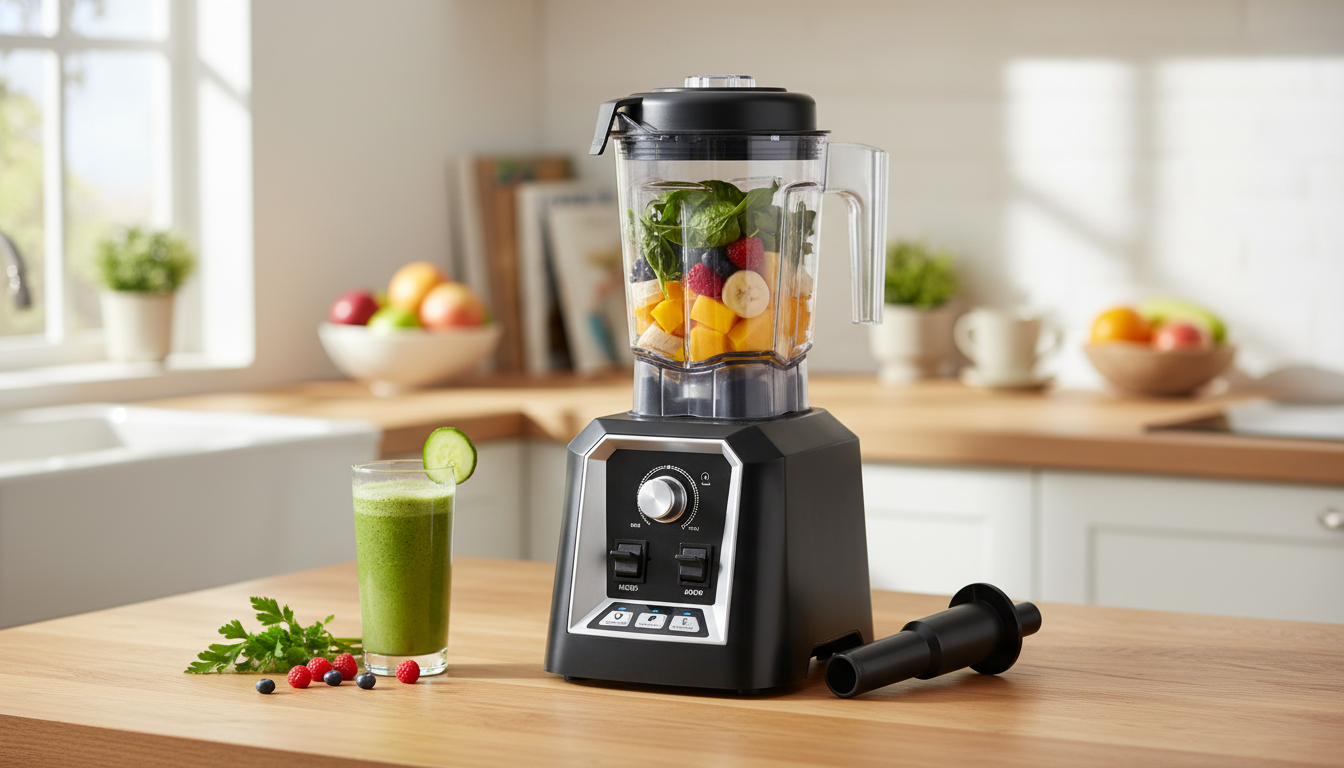
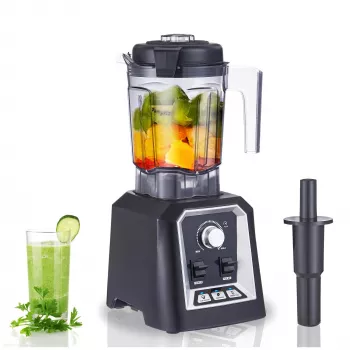
A high-power blender with built-in programs can take the guesswork out of smoothies, soups, sauces, and crushed ice—while a 2L BPA-free jar supports bigger batches for families, meal prep, and entertaining. The right setup matters just as much as the motor: ingredient order, cycle selection, and safe handling of hot blends all play a role in getting a consistently smooth texture.
This style of professional blender is designed to handle common “high-resistance” kitchen jobs without constant stopping and stirring. With strong power delivery and programmed cycles, it’s a practical fit for daily blends and bigger weekend batches.
Auto programs earn their keep when the goal is repeatability. Instead of guessing blend time and speed, a preset can control ramp-up, duration, and pulsing patterns in a way that’s hard to replicate manually—especially when you’re making the same smoothie every morning.
If a mixture stalls (common with hummus, nut butter, or very thick frozen bowls), pause early. Scrape the sides, redistribute the contents, and restart rather than letting the motor strain while the blades spin in a pocket of air.
“High-power” is less about a single number and more about what happens under load. Ice, frozen fruit, and dense mixtures all try to slow the blade down. Better torque helps maintain speed, which improves circulation and reduces chunks.
A simple technique that improves results: start low for a moment to catch and chop ingredients, then ramp up. That controlled climb often creates a smoother blend than immediately going full speed.
A 2-liter jar is built for volume—smoothies for multiple people, puréed soups for several meals, pancake batter, or frozen drinks for guests. BPA-free plastic also keeps the jar lighter than many glass options while addressing common concerns about bisphenol A in food-contact materials. For background, the FDA’s overview of BPA and food-contact applications is a helpful reference: U.S. Food & Drug Administration (FDA) – BPA in food contact applications.
Hot-blending safety is also a food-safety habit. If you’re prepping soups, sauces, or purées, it’s worth reviewing general kitchen safety basics from the CDC food safety resource center.
| Kitchen task | Helpful feature | Setup tip | What to expect |
|---|---|---|---|
| Smoothies (fresh + frozen) | Auto smoothie program | Liquids first; frozen last | Silky texture with fewer chunks |
| Crushed ice | Ice crush program / pulse | Use measured ice + a bit of liquid | Even, scoopable ice without large shards |
| Hot soups (puréed) | High power + controlled ramp | Vent lid; blend in stages | Creamy soups; warmth may increase from blending friction |
| Nut butter / thick dips | Strong torque | Small batches; pause and scrape | Thick, spreadable consistency with patience |
| Quick clean | Auto clean program | Warm water + a drop of soap | Fast rinse; deeper cleaning as needed |
If you want additional context on sanitation standards for food equipment, NSF’s consumer overview is a solid starting point: NSF – Consumer Resources.
Many BPA-free jars are made for warm or hot blending, but it’s important to follow the manufacturer’s temperature limits and venting directions. To reduce pressure buildup, don’t seal steam in a tightly closed lid, and avoid thermal shock by not adding boiling liquid to a cold jar.
Auto programs standardize common tasks, but manual control still helps with extra-thick blends, small batches, or when ingredients stall. Pausing to scrape and restarting is normal for dense mixtures like nut butter or very thick dips.
Start with colder ingredients, add liquid first, and use the smoothie preset or a gradual speed ramp. Blend only as long as needed; extended high-speed runs can raise temperature from friction and soften the texture.









Leave a comment