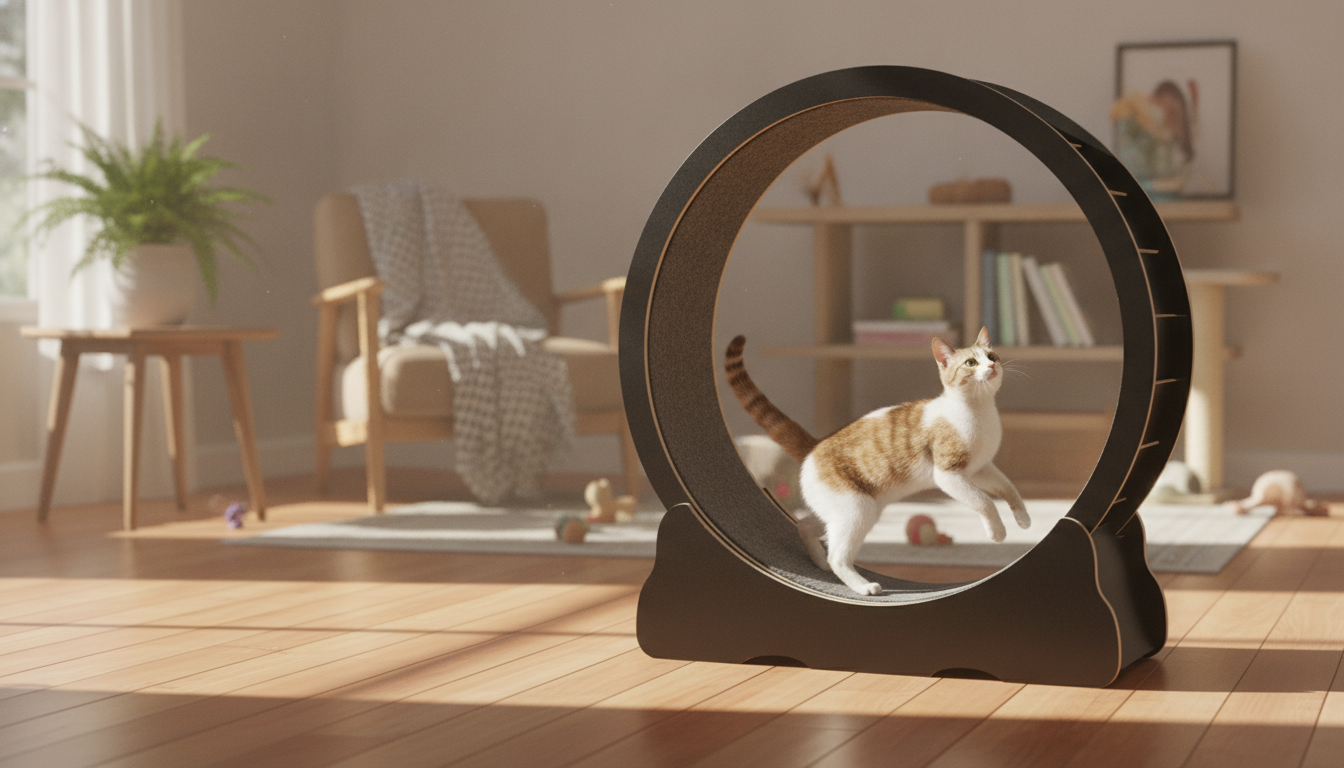
An exercise wheel can turn limited indoor space into a reliable outlet for daily movement, especially for energetic cats, multi-cat homes, or apartment living. Instead of relying on perfect weather or a long play session every day, a wheel offers a consistent “move when you want” station that many cats learn to use on their own. Below is a practical guide to how a cat wheel works, what to look for when choosing one, how to introduce it safely, and how to keep routines consistent without stressing the cat or the household.
A cat exercise wheel is essentially controlled, repeatable cardio. It gives indoor cats a way to walk or run in a straight-line pattern that can be hard to replicate with typical toys (especially in smaller homes).
Not every cat will take to a wheel, and that’s okay. The best outcomes usually come from matching the tool to the cat’s temperament and physical needs.
Cat wheels vary a lot in comfort, stability, and noise. A wheel that feels wobbly or sounds like a shopping cart is more likely to be ignored—and in some cats, it can create a fear association that’s hard to reverse.
| Feature | Why it matters | What to look for |
|---|---|---|
| Diameter | More natural stride and comfort | Large enough that the back stays relatively level while running |
| Track grip | Reduces slipping and builds confidence | Textured, non-abrasive running surface; replaceable liners are a plus |
| Base stability | Prevents wobble and fear reactions | Wide base, solid frame, low center of gravity |
| Noise control | Encourages regular use without disturbing the home | Smooth bearings; minimal rattling during start/stop |
| Ease of cleaning | Keeps odor and hair buildup down | Wipeable surfaces; accessible track area |
| Safety design | Lowers chance of injury | No sharp edges or gaps; stable entry/exit area |
If you’re organizing a dedicated corner for pet activity, closed storage can help keep wands, treats, and grooming tools consistent and easy to find. A piece like the Modern Nordic TV Stand and Storage Dresser can also help reduce clutter around the wheel area (especially cords or small items you don’t want rolling underfoot).
When treats are part of training, keep total daily calories in mind. For general feeding guidance and how complete diets are formulated, the AAFCO consumer resources are helpful for understanding labels and nutrition basics.
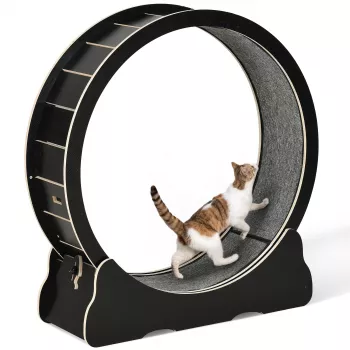
If you want a dedicated indoor movement station, an Indoor Cat Exercise Wheel can become a consistent activity zone with the right setup and a low-pressure introduction. The most reliable results come from pairing the wheel with brief training, positive reinforcement, and a predictable schedule—then letting the cat decide how much to use it day to day.
Most cats do best with short sessions that add up to about 10–30 minutes per day, depending on fitness and interest. Build up gradually, and prioritize smooth, confident movement over hitting a specific number of minutes.
Kittens can use a wheel gently with close supervision, focusing on walking and controlled movement rather than forced sprinting. Senior cats or cats with arthritis should get veterinary guidance first, and may be limited to slow, comfortable walking if appropriate.
Introduce it while stationary, reward curiosity with treats or toys, and shape progress in tiny steps during short sessions. Keep the wheel in a quiet, low-stress spot and never force the cat onto a moving wheel.









Leave a comment