
Leather furniture can look better with age—when it’s cleaned correctly, conditioned at the right pace, and protected from the everyday causes of drying, staining, and cracking. The goal is simple: remove grit and body oils before they wear the finish, use minimal moisture (especially on absorbent leathers), and condition only when the leather shows real signs of dryness.
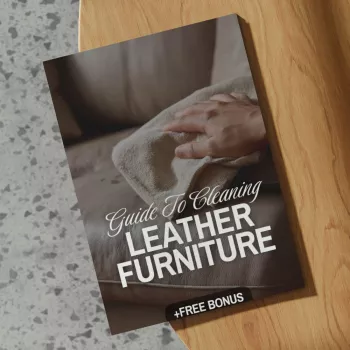
If you want a step-by-step reference you can keep on your phone or print, the Caring for Leather Furniture eBook is a handy companion for routine care and quick responses to common messes.
Before using any cleaner or conditioner, identify the leather finish. Most family-room sofas are pigmented/protected (more forgiving). Aniline and semi-aniline feel softer and look more natural, but they stain more easily. Nubuck and suede have a velvety nap and require specialty tools and products.
Check for a tag or manufacturer information (often under seat cushions). If the finish is unknown, test any method on a hidden area first—behind a skirt, under a cushion, or on the back edge.
Skip “one-bottle-fixes” on absorbent leathers. Water and oils can darken or spot aniline, nubuck, and suede, and once a tide mark forms, it’s difficult to blend out. Finally, match care to usage: high-traffic family rooms do best with frequent light cleaning, while formal spaces can focus on dusting and periodic conditioning.
| Leather type | Typical feel/look | Best routine | Avoid |
|---|---|---|---|
| Pigmented/Protected | Uniform color, slightly coated surface | Weekly dusting + monthly wipe-down; condition 2–4x/year as needed | Harsh solvents, abrasive scrubbers, heavy oiling |
| Semi-aniline | Soft with light protective finish | Gentle cleaning; condition 2–4x/year; quick blotting of spills | Soaking wet cloths, silicone-heavy polishes |
| Aniline | Very natural, absorbs quickly, shows markings | Dry dusting; minimal moisture; specialist conditioner; fast spill response | Water overuse, DIY soap mixes, aggressive rubbing |
| Nubuck/Suede | Velvety nap, matte | Brush and specialty eraser/cleaner; protectant designed for nubuck | Standard leather conditioners, wet cleaning, heat drying |
Dust with a clean microfiber cloth, then vacuum seams and creases using a soft brush attachment. This step matters more than it sounds: tiny particles act like sandpaper, slowly abrading the finish where people sit and lean.
Wipe with a lightly damp cloth (not wet) to remove body oils and everyday residue, then immediately follow with a dry cloth. If the leather feels tacky afterward, the cloth was too wet or there’s product buildup—dial back moisture and keep wiping dry until the surface feels clean.
Rotate and swap cushions when possible to distribute use and minimize uneven fading and stretching. Also aim for a stable indoor environment; extreme dryness accelerates moisture loss and can make leather feel stiff and “draggy” to the touch.
First rule: blot, don’t rub. Press a clean cloth on the spill to absorb liquid; rubbing can push it deeper and scuff the finish. Move from dry cloth → slightly damp cloth → leather-safe cleaner that matches your leather type.
Blot gently, then give it time. On protected leather, a mild leather-safe cleaner may help after the excess is lifted. On absorbent aniline, adding water can enlarge the mark, so avoid wet cleaning and consider a leather-safe absorbent powder only if it’s recommended for that finish.
Avoid household cleaners like ammonia, bleach, and all-purpose sprays. These can strip protective coatings and cause discoloration; as a general safety reminder, many household chemical products are not intended for use on leather surfaces (see New Jersey Department of Health guidance on chemicals and product caution).
For more detailed routines and finish-specific notes (especially for absorbent leathers), keep a reference like the Caring for Leather Furniture eBook accessible. And if you want to extend good habits beyond upholstery, the same “gentle cleaning, minimal moisture, no harsh chemicals” approach applies to everyday leather accessories such as the Elegant Women’s Leather Tote Bag – 14 Inch Laptop Briefcase for Work & Daily Use.
For broader craftsmanship-informed maintenance perspective, the Center for Furniture Craftsmanship offers useful context on furniture care and longevity.
Most pigmented/protected leather does well with conditioning about 2–4 times per year, adjusting for dry climates, winter heating, and heavy use. Condition when the leather looks dull or feels slightly stiff—not on a rigid schedule—because over-conditioning can leave residue and attract dirt.
Vinegar-and-water mixes are risky because acidity can dull finishes and may discolor leather, especially if overapplied. A safer approach is a lightly damp cloth for routine wipe-downs, and a leather-safe cleaner that matches your leather type for deeper cleaning, always spot-tested first.
Blot immediately with a clean cloth and avoid rubbing. If needed, follow with a slightly damp cloth and then dry-buff; escalate to a leather-safe cleaner only if residue remains, and be extra cautious with aniline, nubuck, and suede where moisture can spot.












Leave a comment