Luxury Home Decor Ideas Checklist: Modern Minimalism, Classic Elegance, and Glamour Made Simple
A polished home rarely comes from adding more—it’s the result of clear choices repeated consistently. Use this checklist-style approach to create rooms that feel refined on purpose: build a cohesive foundation, choose a few statement elements, layer lighting and texture, then finish with details that look edited (not accidental).
Start With a Luxury Baseline: Space, Palette, and Proportion
- Define the room’s purpose in one sentence. “A relaxing lounge” or “a calm bedroom” becomes the filter for every purchase and every edit.
- Choose a restrained palette. Aim for 1–2 neutrals, 1 accent color, and 1 metal finish (brass, chrome, or bronze) to keep the room cohesive.
- Prioritize negative space. Luxury tends to read as “uncluttered and intentional,” with clear circulation paths and surfaces that can breathe.
- Get scale right. Size your rug to your seating, your art to your wall, and your lighting to your ceiling height and furniture footprint.
- Keep visual lines clean. Hide cords, minimize exposed small items, and rely on closed storage for everyday necessities.
Luxury Style Quick Map: What to Add (and What to Avoid)
| Style Direction |
Signature Elements |
Best Color Approach |
Common Missteps |
| Modern Minimalism |
Sculptural shapes, high-quality basics, matte textures |
Warm neutrals with one bold contrast |
Too sterile, no texture variation |
| Classic Elegance |
Symmetry, tailored upholstery, timeless silhouettes |
Cream, taupe, soft gray with muted accents |
Overmatching sets, dated ornate details |
| Glamorous |
Reflective surfaces, statement lighting, plush textiles |
Deep jewel tones with metallic highlights |
Too many shiny finishes, cluttered surfaces |
The Checklist: 10 Upgrades That Instantly Read as High-End
- Upgrade lighting first. Use a layered plan: ambient + task + accent. (For practical lighting basics, reference the U.S. Department of Energy lighting guide.)
- Go bigger with art. Choose oversized art or one strong gallery arrangement instead of scattered small frames.
- Buy the right rug size. A large rug that fits under the front legs of key furniture instantly makes the room feel more expansive.
- Add tailored window treatments. Full-length curtains or structured shades frame the space and add architectural polish.
- Introduce one statement material. Marble, walnut, bouclé, or polished plaster—then repeat it subtly elsewhere for continuity.
- Refine hardware. Matching pulls, handles, and faucet finishes create quiet consistency across the room.
- Curate surface styling. Limit most surfaces to 3–5 objects, varying height, shape, and texture.
- Add sculptural greenery. A well-scaled plant (live or realistic faux) softens hard edges and fills vertical space beautifully.
- Choose fewer, larger accessories. A substantial vase or a heavy tray reads more “designer” than many small items.
- Edit relentlessly. Remove anything that looks temporary, worn, or mismatched—luxury is often the absence of visual noise.
Room-by-Room Luxury Prompts (Living Room, Bedroom, Entry, Dining)
Living Room
- Anchor seating around a focal point. Fireplace, statement media wall, or a single standout artwork.
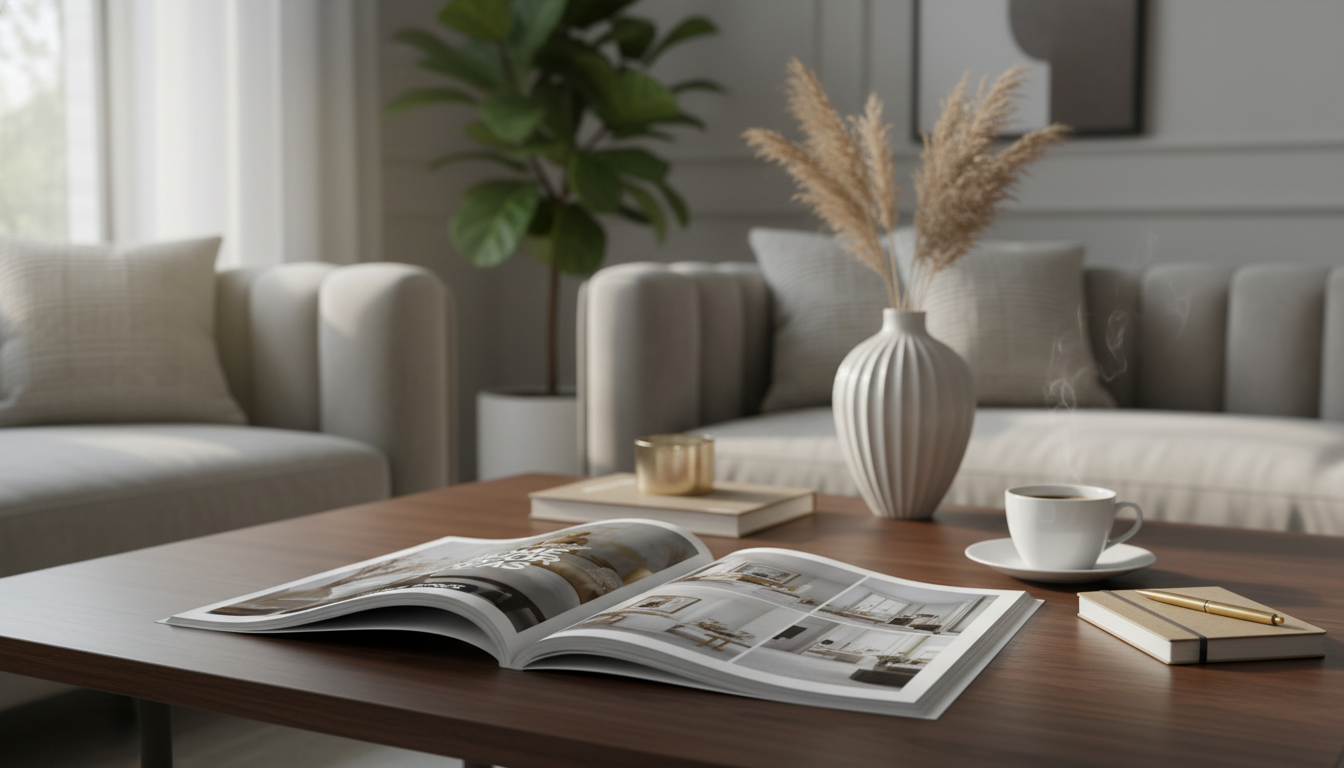
- Use one hero coffee table. Then add a tray to organize remotes and daily essentials so the surface stays composed.
- Balance softness and structure. Pair plush textiles with crisp edges (linen sofa + stone side table; velvet pillow + metal floor lamp).
If storage is part of the luxury goal, a clean-lined media piece keeps clutter out of sight. Consider the Modern Nordic TV Stand and Storage Dresser for a streamlined, modern foundation.
Bedroom
- Simplify the palette, then layer texture. Quality bedding, a substantial throw, and one grounding element like a headboard or wall treatment.
- Add symmetry. Matching nightstands or matching lamps reads calm, intentional, and hotel-like.
Entry
- Create a landing zone. Console + mirror + one dramatic element (lamp, vessel, or art) sets the tone immediately.
- Keep it clear. One catchall tray is enough; too many small items make the entry feel hectic.
Dining
- Prioritize a statement chandelier. Scale matters: it should feel proportional to the table, not like an afterthought.
- Keep the table styling minimal. One central arrangement (low, wide, and sculptural) looks elevated and functional.
For comfort and well-being considerations tied to light and ambiance, explore lighting concepts from the International WELL Building Institute (WELL).
Minimalism That Still Feels Warm: Texture, Tone, and Soft Contrast
- Let texture do the decorating. Bouclé, linen, wool, leather, natural wood grain, fluted glass, and honed stone add depth without clutter.
- Choose inviting whites. Warm whites and soft grays tend to feel more livable than stark bright white.
- Mix matte and subtle sheen. Matte walls + satin trim; linen upholstery + brushed metal—contrast prevents a flat look.
- Introduce curved forms. An arched mirror, rounded chair, or oval table softens sharp lines and feels more “designed.”
- Create one quiet focal point. A single sculptural vase or one dramatic lamp can carry the room without visual overload.
Classic Elegance Without Feeling Formal or Dated
Glamour That Looks Sophisticated (Not Overdone)
Use the Digital Checklist: A Simple 20-Minute Plan
For a ready-to-use version you can keep on your phone, try the Luxury Home Decor Ideas Checklist (digital download). For broader professional design standards and best practices, visit the American Society of Interior Designers (ASID).
FAQ
What makes decor feel “luxury” even on a budget?
Luxury comes from editing, a cohesive palette, correct scale (especially rugs and art), layered lighting, and a few high-impact materials or textures rather than many small accessories.
How can modern minimalism avoid looking cold?
Use warm neutrals, tactile textiles, subtle contrast, curved shapes, and layered lighting. Avoid overly bright white paired with flat, texture-free surfaces.
How many finishes should be in one room?
Limit to 1–2 metal finishes and repeat them across lighting, hardware, and accents. Balance shine with matte elements to keep the look controlled and refined.
Recommended for you











Leave a comment