HomeBlogBlogModern Minimalist Sideboard: Luxury Storage for Dining & Salon

Modern Minimalist Sideboard: Luxury Storage for Dining & Salon

Modern Minimalist Sideboard: Luxury Storage for Dining & Salon

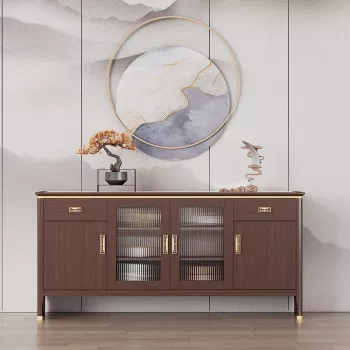
Modern Minimalist Luxury Sideboard Cabinet for Dining Room and Salon

A sideboard can anchor a dining room, elevate a salon seating area, and solve everyday storage without adding visual clutter. This modern minimalist luxury sideboard cabinet is designed to keep essentials organized while maintaining a clean, high-end look that pairs easily with contemporary, Nordic, and transitional interiors.

For a streamlined focal point with practical storage, explore the Modern Minimalist Luxury Sideboard Cabinet for Dining Room and Salon.

What Makes a Sideboard Feel Modern, Minimal, and Luxurious

Minimalism feels luxurious when every detail looks intentional. The best sideboards combine calm visual lines with smart storage, so the room reads curated rather than crowded.

  • Low, horizontal silhouette that visually widens the room and creates a calm focal line.
  • Clean faces and streamlined hardware that reduce visual noise and keep the profile crisp.
  • Balanced proportions so the cabinet looks “placed on purpose” under art, mirrors, or a TV.
  • Refined finishes that read premium under both natural light and warm evening lighting.
  • Storage that hides busy items while leaving space on top for a few well-chosen décor pieces.

Best Placements in a Dining Room

A dining room sideboard works hardest when it supports hosting while keeping the table area open and comfortable.

  • Buffet station: keep serving platters, napkins, and extra glassware close to the table.
  • Bar setup: reserve one side for bottles and tools; use the top for a tray and ice bucket.
  • Wall balance: center it under a large artwork or mirror to reinforce symmetry.
  • Traffic planning: leave comfortable clearance so guests can pass while drawers/doors open.
  • Cable-aware styling: if used near a coffee station, plan discreet routing for small appliances.

For clearance concepts that help with circulation and functional spacing, the National Kitchen & Bath Association provides widely used space-planning principles that translate well to dining and multipurpose rooms.

Best Placements in a Salon or Living Space

In a salon or living room, a sideboard can act like a quiet “architecture” piece—supporting daily habits without drawing attention away from seating, art, and light.

  • Behind a sofa: use it as a console-style storage piece for throws, games, and accessories.
  • Under a wall-mounted TV: act as a media credenza alternative with a cleaner profile.
  • Along an entry wall: store keys, bags, and seasonal items while keeping the surface tidy.
  • In a lounge corner: pair with a floor lamp and a single sculptural vase for a gallery-like vignette.
  • Acoustic calm: closed storage reduces visual clutter, helping the room feel quieter and more composed.

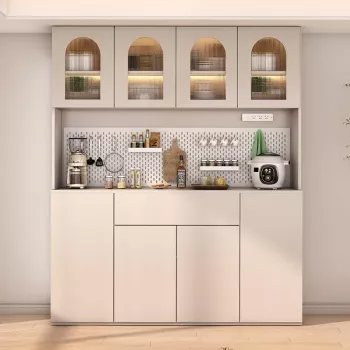
If your layout leans Nordic and you want a media-ready companion piece, consider the Modern Nordic TV Stand and Storage Dresser for a similarly clean, low-profile look.

Storage That Works for Hosting and Everyday Life

The difference between “pretty storage” and truly useful storage is how quickly you can reset the room. A sideboard earns its place when it keeps the surface clear and daily items easy to reach.

  • Closed compartments keep table linens, board games, and extra dishes out of sight.
  • Top surface supports a flexible “serve, style, or set down” zone for daily routines.
  • Zoning tip: group items by task—serving, bar, coffee/tea, and décor—so everything has a place.
  • Felt liners or trays help prevent sliding and protect finishes on frequently used shelves.
  • Keep a small “reset kit” inside (cloth, coasters, matches) for quick tidy-ups before guests arrive.

Materials, Finish, and Care for a Long-Lasting Look

A minimalist cabinet shows surfaces more clearly—so everyday care matters. Small habits (coasters, gentle cleaning) preserve that “new” look for longer.

  • Choose a finish that matches the room’s dominant tone: warm woods soften minimalism; cool tones sharpen it.
  • Protect the top with coasters and a tray where drinks or perfumes are regularly placed.
  • Avoid harsh cleaners; use a soft microfiber cloth and a gentle, non-abrasive cleaner when needed.
  • Heat protection matters: use trivets under coffee machines, kettles, or warming trays.
  • Sunlight can shift color over time; consider window coverings if the piece sits in direct sun.

For practical guidance on safe, effective cleaning of hard surfaces, reference the American Cleaning Institute’s cleaning and disinfecting recommendations.

Quick Guide: Features to Prioritize

Before choosing a style, confirm the piece fits your storage needs and your room’s clearances. A sideboard that’s slightly “too small” often leads to clutter migrating onto the top surface.

Sideboard Features and Where They Shine

Feature Why it matters Best placement
Wide top surface Creates a serving and styling zone without feeling crowded Dining room buffet wall
Closed storage Hides clutter for a calmer, luxury look Salon seating area or entry wall
Low profile Keeps sightlines open and works well under art or TV Living room / salon
Durable finish Handles frequent use and quick wipe-downs Dining room and high-traffic spaces
Cable planning Prevents tangled cords and messy visuals Under TV or near a coffee station

Styling Ideas That Keep the Look Minimal (Not Empty)

FAQ

What is the difference between a sideboard, buffet, and credenza?

The terms often overlap. Sideboards and buffets are commonly used in dining rooms for serving and storage, while credenzas are frequently used in living rooms or offices, usually with the same low, horizontal shape.

How much space should be left around a sideboard in a dining room?

Plan for a comfortable walking path and enough room for doors and drawers to open fully without hitting chairs. Measure chair pull-out space and traffic flow, then confirm clearances before final placement.

Can a sideboard be used as a TV stand in a salon or living room?

Yes—many sideboards work well as TV stands when the width and weight rating are compatible. Check viewing height, allow ventilation for devices, and plan cable routing; wall-mounting the TV can help maintain a clean, floating look.

Was this article helpful?

Yes No
Leave a comment
Top

Shopping cart

×