Automatic Dog Ball Launcher with Rechargeable Battery – Consistent Fetch with Adjustable Distance
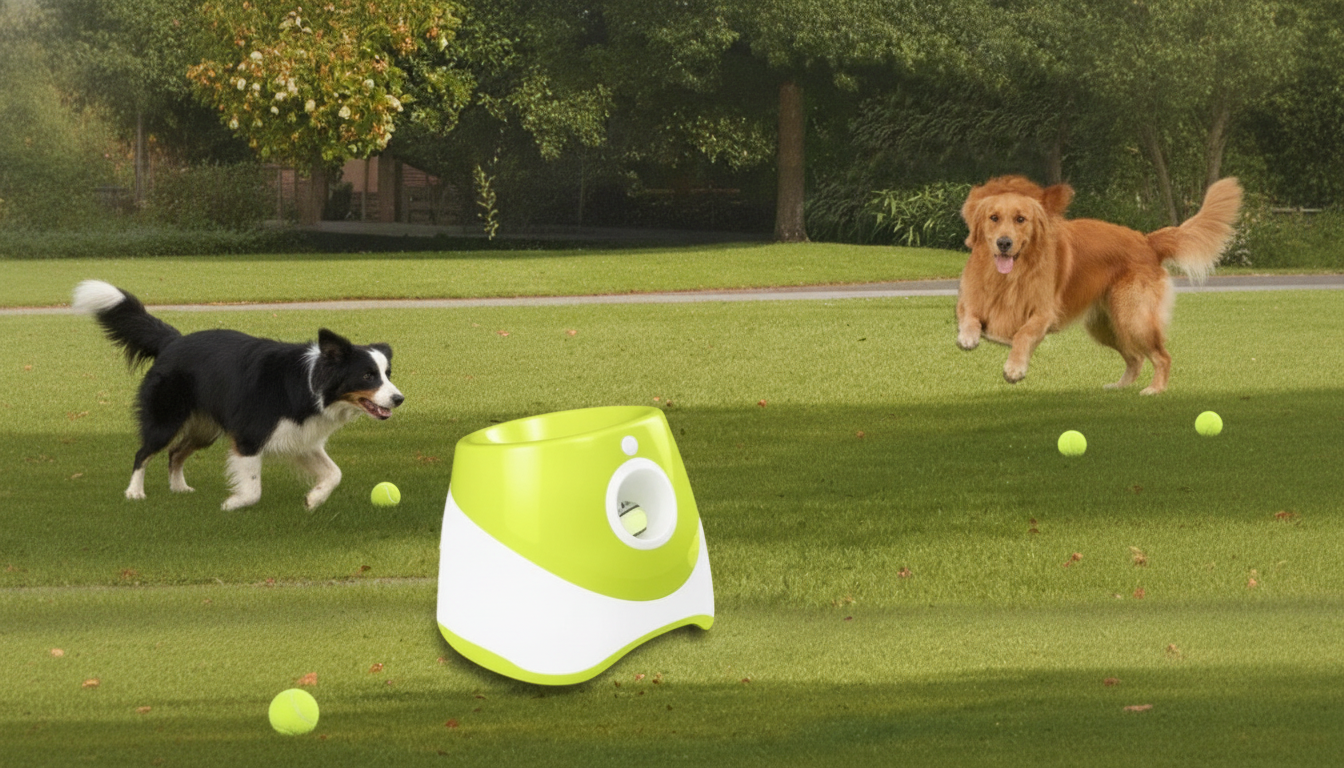
A rechargeable automatic ball launcher can turn fetch into a structured, repeatable game—helping dogs burn energy while keeping sessions consistent. With three launch distances and a six-ball set, it’s designed for quick setup, simple controls, and adjustable play in different spaces. For dogs that live for the chase, it creates a predictable “retrieve, return, repeat” loop that’s easier to maintain than nonstop manual throwing. For more guidance, see Best Ball Throwers for Dogs – Consumer Reports.
What This Launcher Helps With
- Supports daily exercise routines for dogs that love chasing and retrieving
- Creates predictable fetch cycles that can reinforce training and impulse control
- Useful for rainy days or limited time when a consistent throwing motion is hard to maintain
- Three distance options make it easier to match play intensity to available space
Many dogs do best with a short, repeatable activity window rather than a long, unstructured session. A launcher helps keep the pace steady so you can focus on your dog’s behavior—calm returns, clean “drop it,” and a smooth reset before the next launch. For further reading, see [PDF] DETC2017-68290 – Systems, Decisions, and Objectives Lab.
What’s Included in the Box
- Automatic ball launcher unit with rechargeable battery power
- Six compatible balls for continuous rotation during play
- Distance selection controls for three launch ranges
- Practical setup idea: stage 3–4 balls nearby so the dog can return and reload without long pauses
Launch Distances and When to Use Each Setting
- Short distance: best for indoor hallways, garages, or smaller yards where control matters most
- Medium distance: balanced option for most backyards—enough run without overextending the session
- Long distance: for open outdoor areas and high-energy dogs that thrive on longer sprints
- Adjust distance based on footing and temperature; reduce range on slippery ground or in hot weather
Distance Settings at a Glance
| Setting |
Best For |
Dog Energy Level |
Tips |
| Short |
Indoor / tight outdoor spaces |
Low to medium |
Use slow introductions; keep sessions short at first |
| Medium |
Typical backyard play |
Medium |
Great default; watch for overexcitement during rapid repeats |
| Long |
Parks / open fields |
Medium to high |
Confirm safe boundaries; avoid near roads or crowded areas |
Rechargeable Battery Play: What to Expect
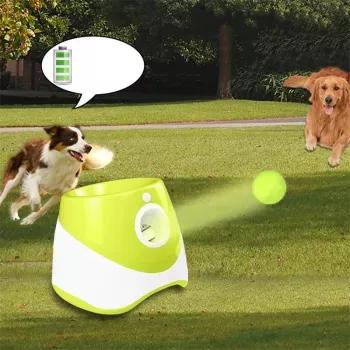
- Rechargeable design reduces ongoing cost compared to disposable batteries
- Best practice: charge after play sessions so it’s ready for the next routine
- Battery life varies with launch distance and frequency; longer distances typically use more power
- If launches weaken, pause for a quick check: ball condition, chute cleanliness, and charge level
When the launcher is part of a routine, consistency matters. A simple habit—plugging it in after a session—helps avoid “half-powered” throws the next day. If you notice shorter launches than usual, inspect the ball surface (dirt and moisture can change how it rolls) and give the launch path a quick wipe.
Choosing the Right Space (Indoor vs. Outdoor)
- Indoor: pick a straight, clear lane; remove breakables and keep traction in mind (rugs can help on slick floors)
- Outdoor: choose level ground and verify the landing zone is free of obstacles, holes, or thorny areas
- Noise awareness: some dogs are sensitive to sudden sounds—start with the launcher placed farther away
- Set boundaries: use gates, leashes, or training lines during early sessions so the dog learns a safe play loop
For many households, a garage or hallway “short distance lane” is the easiest place to build good habits—drop, step back, wait, then chase. Outdoors, prioritize a predictable landing zone so your dog isn’t scrambling into landscaping, uneven ground, or distractions.
Training Your Dog to Use an Automatic Launcher
- Step 1: let the dog investigate the unit while it’s off; reward calm sniffing
- Step 2: practice “drop it” and “leave it” away from the machine first to reduce guarding or grabbing
- Step 3: start on the shortest distance and reward the first successful retrieves
- Step 4: teach a simple reload routine—drop the ball near the intake, then reward
- If the dog startles at launch, increase distance from the unit and lower excitement with shorter sessions
Safety and Supervision Essentials
Care, Cleaning, and Troubleshooting
Quick Troubleshooting Guide
| Issue |
Common Cause |
Quick Fix |
| Weak or short launches |
Low battery or dirt in channel |
Recharge; clean the launch path |
| Ball gets stuck |
Debris or incompatible ball size |
Power off; clear debris; use included balls |
| Dog won’t approach |
Noise/startle response |
Start on short distance; reward calm behavior |
Who It’s Best For (and When to Skip It)
Product Snapshot
Shop In-Stock Picks
FAQ
How long does the rechargeable battery last during play?
Runtime depends on the distance setting and how frequently your dog triggers launches. Longer distances and rapid repeats typically use more power, so charging after sessions helps keep performance consistent—especially if you notice throws getting weaker.
Is an automatic ball launcher safe for dogs to use alone?
Supervision is recommended, especially during training and the first week of use. Risks include face-near-intake behavior, pawing at the chute, and overexertion, so short structured sessions with breaks are the safest approach.
Can other tennis balls be used with the launcher?
Using the included or compatible balls is best because mismatched sizes can jam or change launch consistency. Regularly check balls for splits or swelling and replace any that look worn to keep play smooth and safe.
Recommended for you








Leave a comment