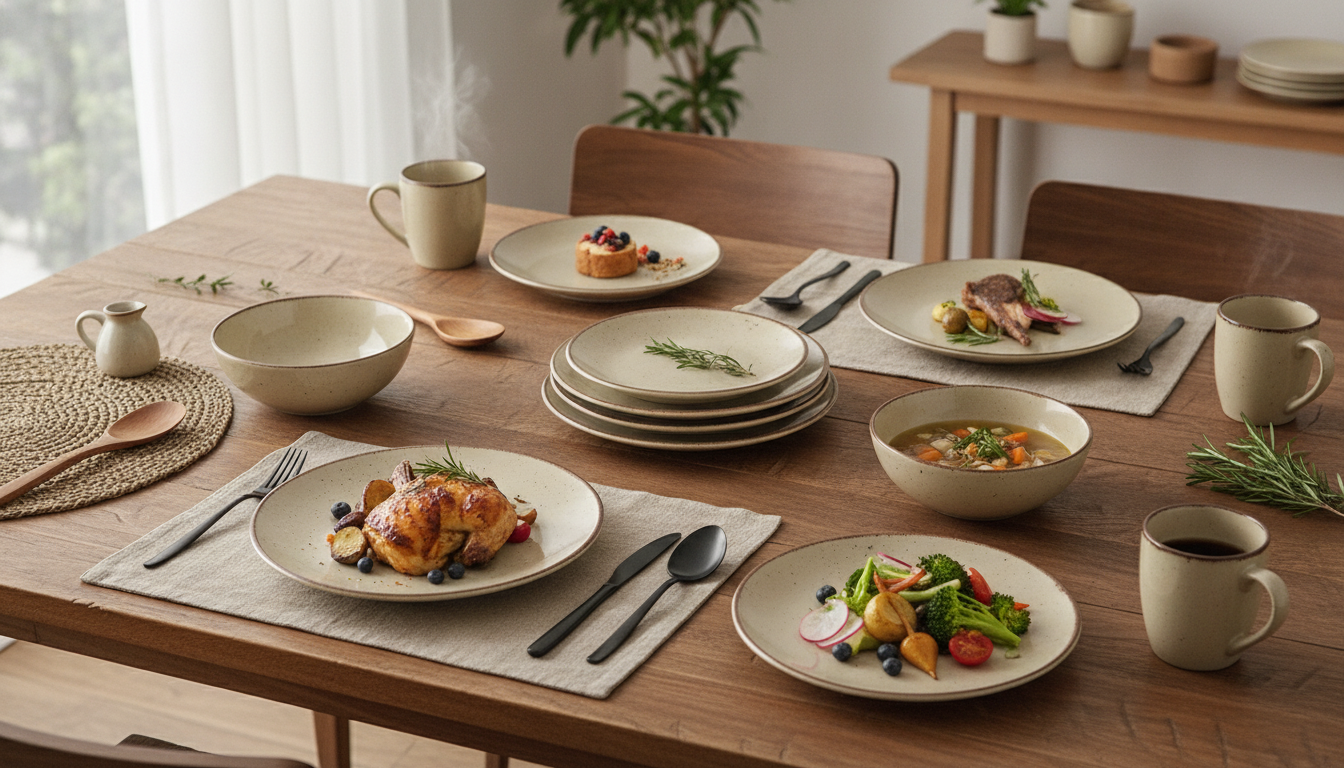
A stoneware dinnerware set can handle everyday meals while still looking pulled-together for guests. With plates, bowls, and mugs included, this kind of set makes it easier to build a coordinated table for weeknights, meal prep, and casual entertaining—without chasing down matching pieces one at a time.
Most multi-piece stoneware sets are designed as a true all-in-one: dinner plates, smaller plates, bowls, and mugs that share the same shape language and glaze. That consistency matters more than it seems—especially if you use open shelving or have limited cabinet space, where mismatched stacks can quickly look cluttered.
Piece count affects more than how many people you can seat—it also changes how often you’ll run the dishwasher, how much “buffer” you have during busy weeks, and whether you can host without constantly washing between courses.
| Option | Best for | Typical use case |
|---|---|---|
| 16-piece | 1–2 people | Daily meals, compact kitchens, starter set |
| 32-piece | 3–4 people | Family dinners, meal prep, fewer wash cycles |
| 48-piece | 5–8 place settings or entertaining | Hosting, holidays, backups for busy weeks |
Stoneware earns its place in everyday kitchens because it feels substantial and performs well across a wide range of meals. It’s fired at high temperatures, which helps create a dense body that stands up to regular handling. Many people also prefer stoneware because it looks “finished” even when the menu is casual—think cereal, reheated pasta, or a quick salad.
For cleaning and sanitizing basics—especially when washing after raw-food prep—good dishwashing practices matter as much as the dish material. The USDA offers a helpful overview of safe cleaning steps here: USDA Food Safety and Inspection Service: Dishwashing (Cleaning and Sanitizing).
If you’re curious about ceramics more broadly, the material overview from The American Ceramic Society explains how ceramic families differ and why firing and composition affect performance.
A coordinated set is as much about comfort as it is about appearance. Small design details can make everyday routines easier—like carrying plates one-handed or stacking bowls without wobble.
Stoneware is built for real life, but a few habits help keep it looking new—especially if your cabinets are tight or your dishwasher runs hot cycles frequently.
Stoneware makes it easy to set a table that feels intentional without being fussy. Once the core pieces match, small styling changes—napkins, glassware, serving boards—can shift the mood from weekday simple to weekend casual.
Many sets count one place setting as four pieces: a dinner plate, a smaller plate, a bowl, and a mug. That usually means 16 pieces equals 4 place settings, 32 pieces equals 8 place settings, and 48 pieces equals 12 place settings; choosing a set with 2–4 extra settings can make hosting and busy weeks easier.
Yes—stoneware is commonly used daily because it’s fired at high temperatures for a dense, durable feel, and the glaze helps with easier cleanup. To help prevent chips and cracking, avoid sudden temperature changes and don’t stack overly heavy piles.
Use non-abrasive cleaners and avoid harsh scouring pads that can dull some glazes. Let very hot pieces cool before rinsing, stack carefully to minimize edge-to-edge contact, and remove utensil marks with a gentle cleaner rather than aggressive scrubbing.










Leave a comment