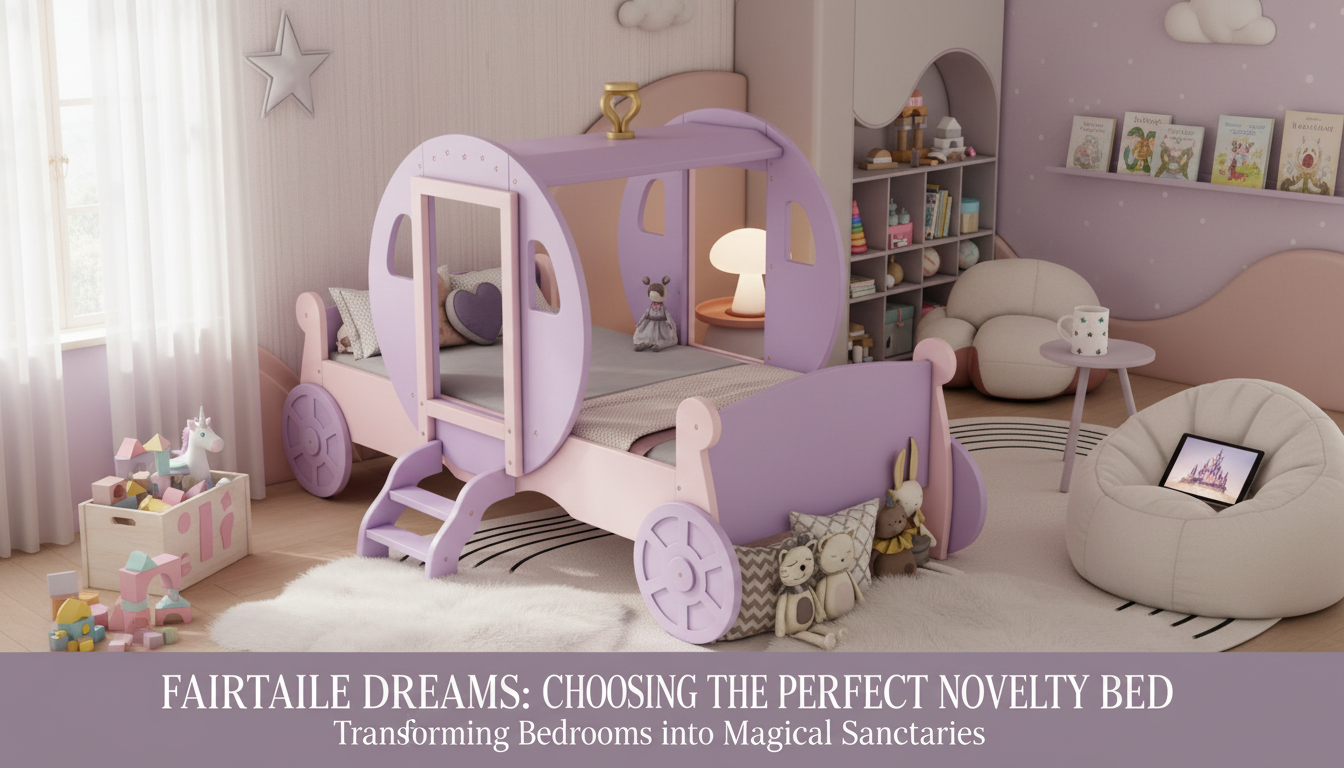
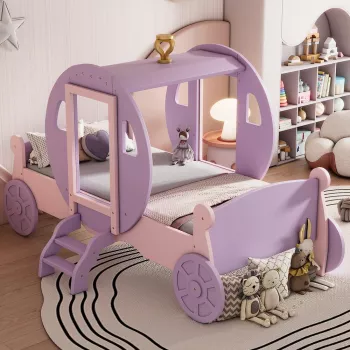
A carriage-style bed topped with a crown detail can turn a simple bedtime routine into a room-defining moment—while still working like a practical twin bed for everyday comfort. If you’re considering a twin princess carriage bed frame, it helps to think beyond the adorable silhouette and confirm the fit, support, and safety details that matter once the room is lived in. Below is a clear guide to what makes this style unique, how to plan the layout around curved panels, and how to keep the “storybook” look feeling fresh as your child grows.
A carriage bed isn’t just a bed frame—it’s a decorative structure that becomes the visual anchor of the room. The carriage silhouette often includes curved ends and side panels that create a partially enclosed feel, which can make a twin bed look more “special” without changing the mattress size.
Decorative beds can have a larger “visual footprint” than standard frames because of curved ends, thicker panels, and crown trim. Before checkout, confirm the practical specs that affect daily use:
| Item to Check | Recommended Target | Why It Matters |
|---|---|---|
| Walkway clearance | 24–36 in. around at least one long side | Helps with safe movement, changing sheets, and nighttime access |
| Head/foot clearance | 6–12 in. beyond the curved ends | Prevents tight squeezes and protects walls from scuffs |
| Rug placement | Rug edge extends 18–24 in. from bedside | Soft landing spot and balanced proportions |
| Lighting | Nightlight + overhead or lamp | Reduces trips and supports bedtime routines |
| Outlet access | Within reach for a lamp/nightlight | Avoids extension cords across walkways |
Twin is one of the easiest sizes to shop for, which makes upgrades simple later—whether you switch to a cooler-feeling mattress, a more supportive hybrid, or a different firmness as your child grows. Standard twin dimensions are widely published; a quick reference is available from Sleep Foundation’s twin mattress size guide.
Because decorative beds include curved shapes, trim details, and layered panels, it’s worth scanning the design like a safety checklist before assembly and again after a few weeks of use. For general product safety information and standards references, see the U.S. Consumer Product Safety Commission (CPSC) and ASTM International.
It depends on the support system. If the frame includes properly spaced slats or a platform base, a box spring is often unnecessary, but it’s best to follow the frame maker’s guidance and confirm what your mattress warranty requires.
A practical range is often about 6–10 inches, depending on side panel height and how easily your child can climb in and out. The goal is a comfortable sleep surface that doesn’t sit too high above any protective panels.
Plan for at least 24 inches of clearance, with 30–36 inches on one long side if possible. Leave extra room at the head and foot for curved ends, and account for space needed to change sheets without scraping walls.









Leave a comment